

Earthquake Kit Organization Guide for BC Families
Posted by Karl Lundgren on
Every Urban mother in Coastal British Columbia knows how unpredictable life can feel when earthquake risks linger. Preparing for emergencies means more than just stocking supplies—it means understanding family-specific needs and organizing every detail so your loved ones stay safe. In this guide, discover practical steps that help tailor your plan, streamline your kit, and boost your confidence in facing challenges unique to your household.
Table of Contents
- Step 1: Assess Family Needs For Earthquake Preparedness
- Step 2: Gather Essential Items As Recommended For BC
- Step 3: Sort And Label Kit Contents For Quick Access
- Step 4: Choose Storage Locations For Each Kit
- Step 5: Review And Update Kits Regularly For Safety
Quick Summary
| Key Point | Explanation |
|---|---|
| 1. Assess family needs thoroughly | Understand individual medical, mobility, and dietary needs to tailor your emergency plan effectively. |
| 2. Create a comprehensive earthquake kit | Gather essential supplies for at least 72 hours, adapting to your family’s specific requirements and challenges. |
| 3. Organize supplies for quick access | Implement a labelling system and clear categorization to ensure the rapid retrieval of items during emergencies. |
| 4. Strategically store kits in various locations | Place kits in easy-to-reach spots at home, vehicle, and workplace to maximize accessibility during crises. |
| 5. Regularly review and update kits | Conduct biannual checks to replace expired items and adjust supplies according to changing family needs and circumstances. |
Step 1: Assess family needs for earthquake preparedness
Preparing your family for an earthquake requires a comprehensive and personalised approach that considers your unique household characteristics. Effective family emergency planning starts with understanding the specific needs and vulnerabilities of each family member.
Begin by gathering your entire household for a detailed discussion about potential earthquake scenarios. This conversation should cover critical elements like individual medical requirements, mobility limitations, age-related considerations, and special dietary needs. Create a detailed inventory of each family member’s specific needs:
- Medication requirements and backup supply strategies
- Mobility assistance devices
- Age-specific emergency considerations (infants, elderly, children with special needs)
- Dietary restrictions or medical conditions
- Communication strategies for family members with hearing or speech impairments
To develop a robust earthquake preparedness plan, assess household emergency risks systematically. Map out potential communication strategies, identify designated meeting locations, and establish a clear communication protocol if family members are separated during an earthquake. Consider creating a physical emergency contact card for each family member that includes critical information like medical details, emergency contacts, and specific individual needs.
Pro tip: Conduct a family earthquake preparedness drill every six months to ensure everyone understands their role and can effectively execute the emergency plan.
Step 2: Gather essential items as recommended for BC
Preparing a comprehensive earthquake kit is crucial for ensuring your family’s survival and comfort during potential emergencies. Emergency kit essentials should be tailored to meet the specific needs of your British Columbia household, focusing on self-sufficiency for at least 72 hours.
Your earthquake kit must include a strategic combination of survival supplies that address multiple critical needs. The Oregon Hazards Lab recommends gathering these key items:
- Water supplies: Minimum 4 litres per person per day
- Non-perishable food: At least a three-day supply of calories and nutrition
- First aid kit: Comprehensive medical supplies and personal medications
- Communication devices: Battery-powered or hand-crank radio
- Sanitation items: Personal hygiene products, waste management supplies
- Important documents: Copies of identification, insurance, medical records
- Emergency lighting: Flashlights, extra batteries, candles
- Warm clothing and blankets: Protection against potential shelter challenges
Adapt your kit to accommodate specific family requirements, such as infant care products, mobility assistance devices, or specialised medical equipment. Consider the unique challenges of the Pacific Northwest’s earthquake-prone regions when selecting and storing your emergency supplies.
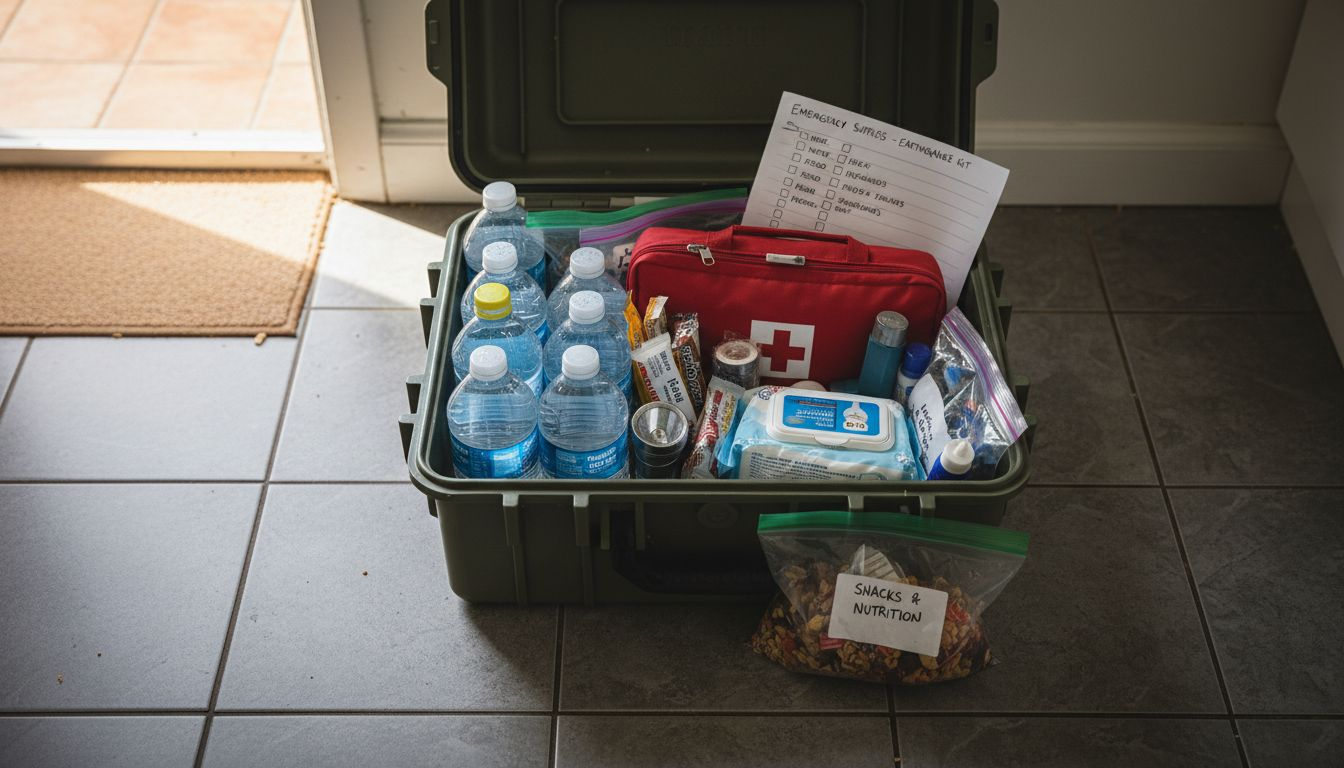
Pro tip: Store your earthquake kit in a waterproof, easily accessible container and review its contents annually to replace expired items and update supplies.
Step 3: Sort and label kit contents for quick access
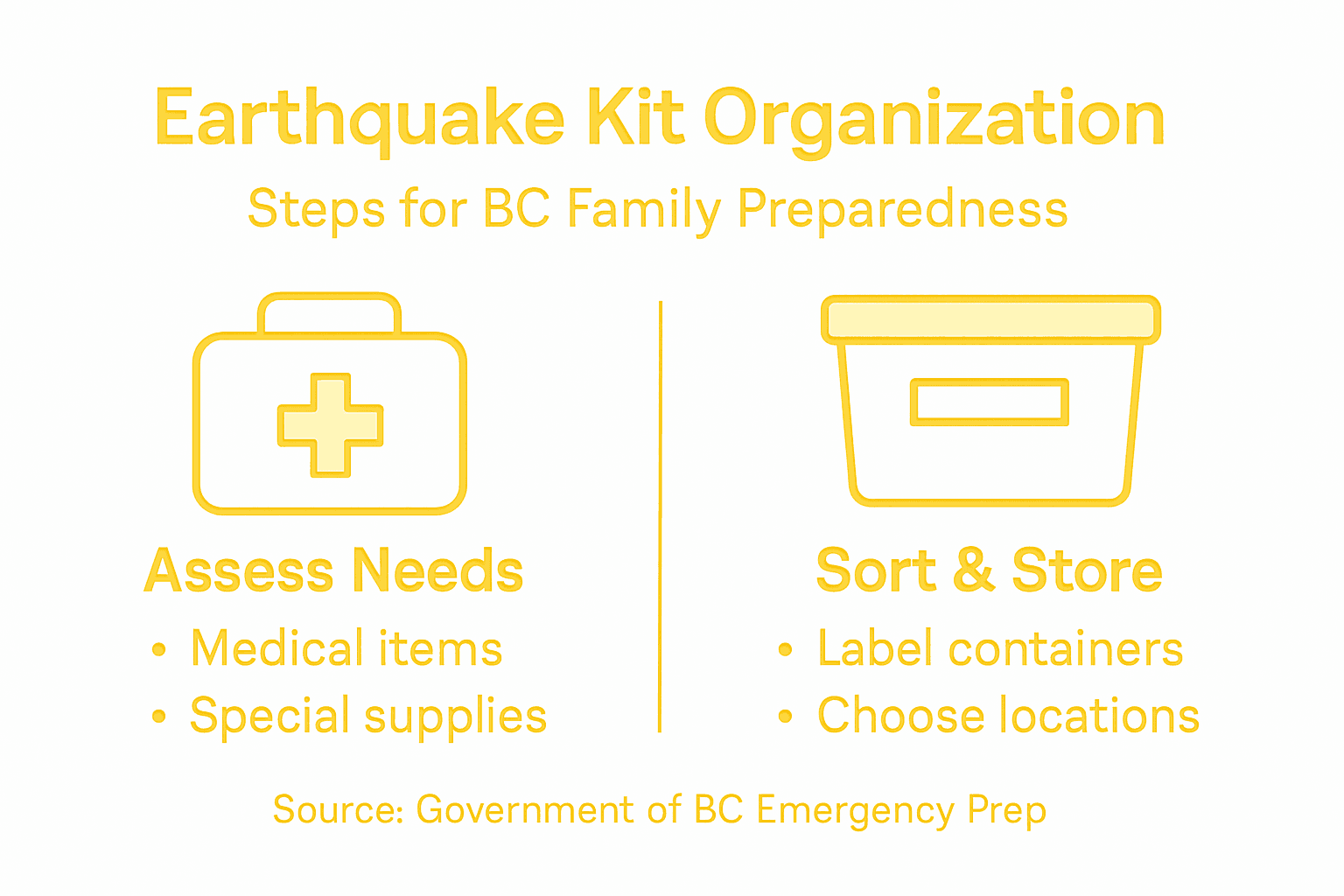
Organizing your earthquake kit is more than just gathering supplies—it’s about creating a system that ensures rapid access during high-stress situations. Emergency kit organization requires strategic planning and thoughtful categorization to help your family retrieve critical items efficiently when every second counts.
Implement a comprehensive labelling and sorting strategy that makes your emergency supplies intuitive and accessible:
- Waterproof containers: Use clear, durable bins for each supply category
- Colour-coding system: Assign specific colours to different supply types
- Detailed labels: Include contents, quantity, and expiration dates
- Grab-and-go bags: Create separate portable kits for quick evacuation
- Rotation schedule: Mark items with purchase and replacement dates
The Oregon Hazards Lab recommends creating multiple kit configurations, such as home-based emergency supplies and portable evacuation kits. This approach ensures you have strategically placed resources for various potential scenarios, whether sheltering in place or needing to leave quickly during an earthquake.
Pro tip: Place a waterproof, laminated inventory list inside each container so family members can quickly identify and locate essential supplies.
Step 4: Choose storage locations for each kit
Strategic placement of your earthquake emergency kits can mean the difference between swift action and confusion during a crisis. Emergency kit placement strategies require careful consideration to ensure your family can access critical supplies quickly and efficiently.
Design a comprehensive storage plan that covers multiple locations and scenarios:
- Home kit: Store in a central, easily accessible location
- Vehicle kit: Keep in the trunk or backseat of your car
- Workplace kit: Maintain a separate emergency supply set at your office
- Go-bag: Position near your home’s primary exit
The Oregon Hazards Lab recommends creating multiple accessible emergency stations throughout your living and working spaces. This approach ensures that even if one location becomes compromised during an earthquake, you’ll have backup resources readily available. Key considerations include avoiding moisture-prone areas, maintaining clear pathways to these kits, and ensuring all family members know their exact locations.
Here’s a quick reference guide comparing different emergency kit types and their primary uses:
| Kit Type | Ideal Location | Primary Purpose | Unique Consideration |
|---|---|---|---|
| Home Kit | Central inside home | Extended shelter, full supplies | Keep accessible for all |
| Vehicle Kit | Car trunk/backseat | On-the-road emergencies | Adapt for cold weather |
| Workplace Kit | Office/workplace | Office safety, temporary shelter | Include contacts & ID copies |
| Go-Bag | Near front/back exit | Quick evacuation, portability | Lightweight and easy to carry |
A well-placed emergency kit can save critical minutes during a disaster, potentially protecting your family’s safety.
Pro tip: Conduct a quarterly family drill where everyone practices locating and retrieving emergency kits from their designated storage spots to build muscle memory and awareness.
Step 5: Review and update kits regularly for safety
Maintaining an up-to-date earthquake kit requires consistent attention and systematic review to ensure your family remains fully prepared. Emergency kit maintenance strategies involve more than casual checking—they demand a structured approach to tracking and replacing critical supplies.
Establish a comprehensive review process that covers multiple aspects of your emergency preparedness:
- Expiration tracking: Check food, water, and medication dates
- Equipment inspection: Test batteries, tools, and electronic devices
- Family changes: Update supplies for new medical needs or household members
- Contact information: Refresh emergency contact lists
- Skills assessment: Review first aid and emergency response capabilities
The Oregon Hazards Lab emphasizes the importance of adaptive emergency preparedness. This means your kit should evolve with your family’s changing needs, ensuring that every item remains functional, relevant, and ready for potential earthquake scenarios. Conduct thorough reviews at least twice annually, preferably during predictable seasonal transitions like spring and autumn.
Below is a summary of key tasks for effective earthquake kit maintenance:
| Task | Frequency | Reason for Importance |
|---|---|---|
| Replace expired items | Twice a year | Prevents unusable supplies |
| Update contact info | Annually | Ensures accurate connections |
| Inspect equipment | Biannually | Guarantees reliable function |
| Add new medications | As needed | Addresses changing health |
Neglecting your emergency kit is equivalent to having no preparation at all—regular updates are your lifeline during unexpected disasters.
Pro tip: Set calendar reminders on all family members’ devices to synchronize your emergency kit review process and make it a collective responsibility.
Organize Your Earthquake Kit Like a BC Pro to Stay Ready for the Big One
Facing the challenge of earthquake preparedness means overcoming tough tasks like assessing your family’s unique needs, assembling the right supplies, and knowing exactly where everything is stored for fast access. The article highlights how sorting, labelling, and maintaining your emergency kits are critical steps to keep you and your loved ones safe when seconds count. The risk of a megathrust earthquake on the Cascadia fault line means BC families cannot afford delays or confusion during an emergency.
Emergency preparedness kits designed specifically for British Columbia offer a trusted solution to tackle these exact pain points. They come ready to accommodate your family’s special needs, come organised with clear labels and easy access features, and cover essential items recommended by experts. EarthquakeKit.ca is built on understanding the urgency of earthquake readiness in BC.
Don’t wait for the next big shake to catch you off guard. Explore how our compact and expert-curated earthquake kits can simplify your preparedness journey. Visit EarthquakeKit.ca now to get your family’s emergency essentials in place today. Taking action today means you are one step closer to peace of mind tomorrow.
Frequently Asked Questions
How can I assess my family’s specific needs for an earthquake kit?
Start by gathering your household for a discussion about individual medical requirements, mobility limitations, and age-related considerations. Create a detailed inventory of each family member’s needs to ensure your earthquake kit addresses everyone’s requirements.
What essential items should I include in my earthquake kit for my family?
Your earthquake kit should contain at least four litres of water per person per day, a three-day supply of non-perishable food, a first aid kit, and important documents. Prioritise items like communication devices and warmth supplies to cater to your family’s unique requirements.
How can I effectively organise the contents of my earthquake kit?
Organise your kit by using waterproof containers and a colour-coding system for easy identification of supplies. Label each container with its contents and expiration dates, and create grab-and-go bags for quick evacuation scenarios.
What is the best way to store my earthquake kit?
Store your earthquake kit in a central, easily accessible location in your home, as well as in your vehicle and workplace. Ensure all family members know where these kits are located and avoid storing them in moisture-prone areas to protect the contents.
How often should I review and update my earthquake kit?
Review your earthquake kit at least twice a year, focusing on replacing expired items and updating contact information. Establish a structured review process and mark items with purchase and replacement dates to ensure everything remains functional.
Why is practiscing retrieval of my earthquake kit important?
Practising retrieval is crucial because it builds muscle memory, enabling swift action during a crisis. Conduct quarterly drills where family members practice locating and obtaining emergency supplies from designated storage spots.