

Why disaster drills matter for BC residents
Posted by Karl Lundgren on
TL;DR:
- Regular earthquake drills build muscle memory and reveal hidden hazards in BC households in case of a Cascadia megathrust earthquake.
- Practising site-specific responses and coordinating with neighbors improve community resilience and emergency outcomes.
Many BC residents treat earthquake drills as a bureaucratic formality. Sign the sheet, crouch under a desk, move on. That attitude is understandable, but it carries real consequences. When a Cascadia Subduction Zone megathrust earthquake strikes, the difference between a calm, practised response and a panicked one will be measured in seconds. Understanding why disaster drills matter is not an academic exercise for people living in one of Canada’s highest-risk seismic zones. It is a practical necessity, and this article makes the case clearly and honestly.
Table of Contents
- Key takeaways
- Why disaster drills matter: more than just practice
- Benefits of disaster preparedness for individuals and communities
- Misconceptions that stop people from drilling
- How to conduct effective earthquake drills
- Regulations, community obligations, and advocacy
- My perspective on drills in BC
- Build your readiness with the right supplies
- FAQ
Key takeaways
| Point | Details |
|---|---|
| Drills build muscle memory | Repeating emergency actions under controlled conditions trains your body to respond quickly without thinking. |
| Drills expose hidden hazards | Blocked exits, communication dead zones, and unsafe furniture placements are often only discovered during a practised run-through. |
| Community coordination saves lives | Neighbours who have drilled together communicate faster and make better decisions before emergency services arrive. |
| Site-specific drills outperform generic ones | Practising in your actual home or workplace layout dramatically improves response quality during a real event. |
| Regular refreshers are non-negotiable | Annual drills alone are not enough. New household members, layout changes, and updated protocols require ongoing practice. |
Why disaster drills matter: more than just practice
A disaster preparedness drill is a structured rehearsal of the actions you and your household, workplace, or community would take during an emergency. The goal is not simply to know the steps in theory. It is to perform them correctly under stress, when adrenaline is high and information is incomplete.
For earthquake-prone regions like coastal British Columbia, the most relevant drill types include:
- Drop, cover, and hold on: The foundational response to ground shaking, practised in specific rooms and positions
- Evacuation drills: Identifying and testing primary and secondary exit routes from your home or building
- Shelter-in-place drills: Practising when and how to stay indoors safely, particularly relevant for aftershock sequences
- Communication drills: Testing how family members or colleagues will make contact when phone networks are congested
Each of these serves a diagnostic purpose beyond the obvious. Drills reveal hidden infrastructure failures like blocked exits or communication dead zones that would only surface under stress testing. A path that looks clear on paper may be obstructed by furniture, locked doors, or architectural features you never noticed. A drill finds these problems while you still have time to fix them.
Repetition also builds something that reading a pamphlet never will: muscle memory. When the ground starts shaking, conscious deliberation slows down. Your nervous system defaults to what it has done before. Frequent, realistic practice means your body responds correctly before your brain has finished catching up.
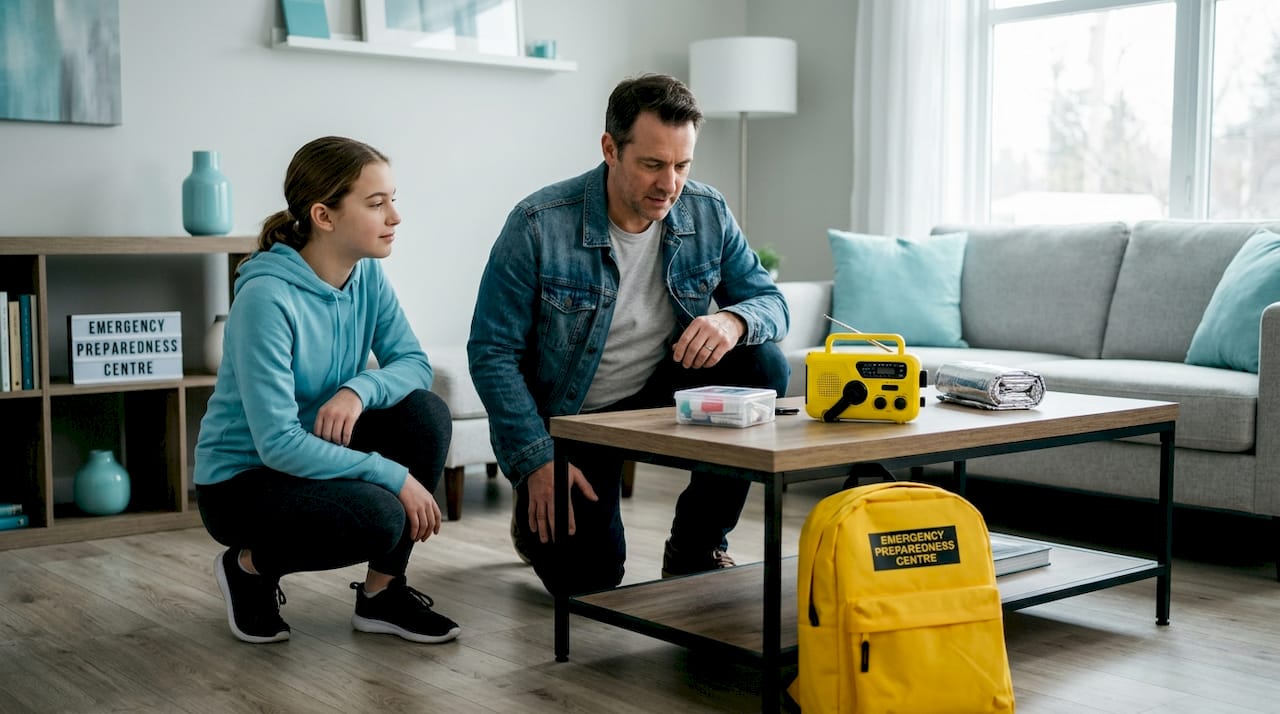
Pro Tip: Walk every exit route in your home in the dark. Power outages during earthquakes are common, and your familiarity with the route matters far more than the lighting.
Benefits of disaster preparedness for individuals and communities
The benefits of regular disaster drills extend well beyond personal safety. They reshape how individuals, families, and entire neighbourhoods function under pressure.
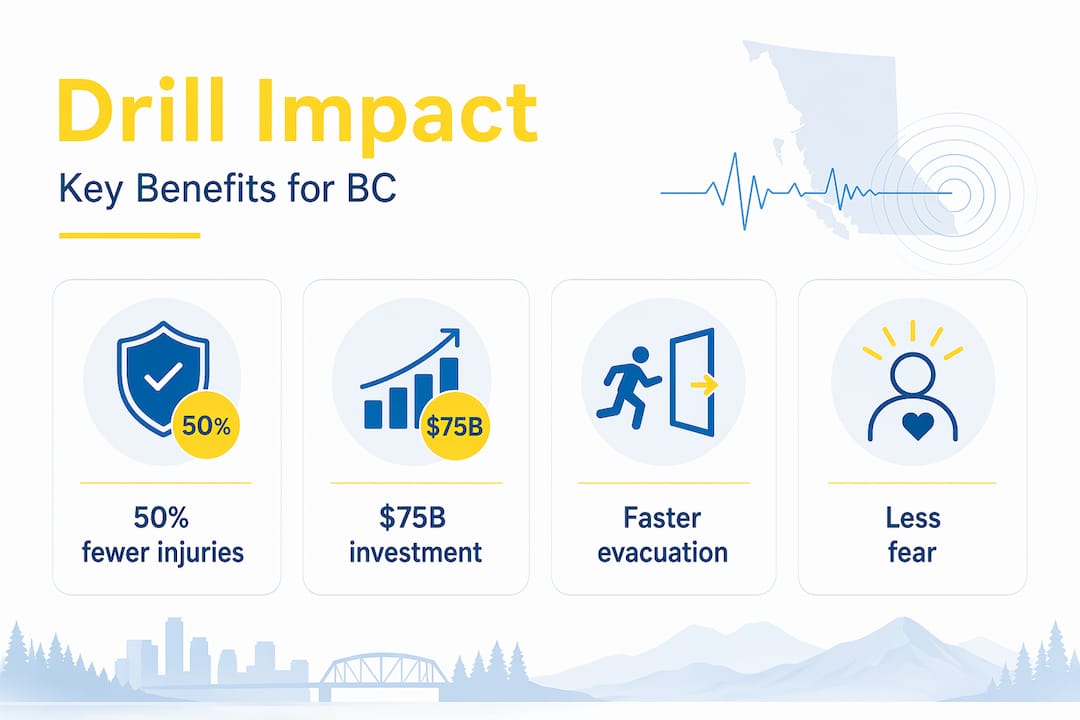
Practised households evacuate faster. They argue less. They make safer choices. Studies show that workers with safety training are twice as likely to follow protocols, cutting injury rates by up to 50 percent. The same principle applies to residents who have rehearsed their earthquake response. A practised person does not freeze at the top of the stairs debating which way to go.
At the community level, the concept of “neighbouring” is one of the most underappreciated factors in emergency management. Research confirms that neighbours are often first responders, arriving on scene long before ambulances or fire crews can reach affected areas. Communities where residents know one another, have shared a drill, and understand basic roles recover more quickly and with less trauma. That familiarity is not automatic. It is built deliberately through shared practice.
“Community familiarity enhances response effectiveness during disasters. Neighbours who drill together coordinate faster and reduce the demand on professional emergency services during the critical first hours.”
There is also a psychological dimension that rarely gets discussed. Rehearsing a disaster scenario reduces fear of that scenario. People who have mentally and physically walked through an earthquake response report significantly less panic during actual events. Emotional preparedness is not a soft benefit. It is a survival advantage.
The importance of disaster drills also shows up in economic terms. Early warning systems and drills enable quicker community recovery and protect economic stability. A neighbourhood that co-ordinates well loses fewer productive days to chaos after a seismic event.
Misconceptions that stop people from drilling
The most common reason BC residents skip drills is not laziness. It is a quiet belief that drills are disruptive, performative, or unlikely to reflect what a real earthquake would feel like. These beliefs deserve honest responses.
Common misconceptions and how to address them:
- “Drills cause unnecessary panic.” Well-designed drills do the opposite. They reduce panic by replacing uncertainty with practised knowledge. The discomfort felt during a drill is minor compared to the confusion of an actual event with no rehearsal behind you.
- “We already know what to do.” Knowing and doing are not the same thing. Communication breakdowns are the most frequent failure in large-scale emergency exercises. What people believe they will do and what they actually do under stress consistently differ.
- “One drill per year is enough.” It is a starting point, not a destination. New residents in a household, changes to your home layout, updated emergency plans, and the addition of new household members all require refresher drills.
- “Drills are designed for able-bodied adults.” Effective drills actively account for people with mobility limitations, hearing impairments, seniors, and young children. If your household’s drill does not account for every member, it is incomplete.
- “Our building manager handles that.” In a residential building, the manager may lead the drill, but every resident needs to know their personal role. Passive participation is not preparation.
Pro Tip: Rotate who leads the drill each time. If only one person in the household knows the plan, the plan has a single point of failure.
How to conduct effective earthquake drills
Conducting a meaningful drill takes planning, but it does not require a professional team or special equipment. Realistic, site-specific drills dramatically outperform generic procedures by matching local conditions. Here is how to structure one that actually prepares you.
Before the drill:
- Map your home’s layout and identify all exits, including windows if ground-floor access is available
- Designate a meeting point outside and a secondary point if the first is unsafe
- Assign specific roles: who carries the emergency kit, who checks on elderly or young household members, who makes the first contact call
- Review your earthquake kit contents and confirm supplies are accessible and not expired
During the drill:
- Practise the full sequence: drop, cover, and hold on when shaking begins; wait for shaking to stop; then evacuate if necessary
- Time the evacuation from each room in the home
- Test your communication plan. Attempt to reach your out-of-province contact who serves as a relay point
- Use your earthquake emergency kit as part of the exercise. Know where it is and confirm every member of the household can physically carry or access it
After the drill:
| What to evaluate | What to look for |
|---|---|
| Evacuation time | Did anyone take longer than expected? Why? |
| Communication success | Did the contact system work? Were there gaps? |
| Physical hazards found | Any blocked routes, unstable furniture, or locked doors? |
| Role confusion | Did anyone not know what to do? |
| Kit accessibility | Was the kit easy to locate and retrieve in under 60 seconds? |
Effective drills test actual emergency roles, communication clarity, timing, and accountability, not just alarm response speed. The debrief conversation after the drill is as valuable as the drill itself.
Regulations, community obligations, and advocacy
Disaster preparedness drills are not merely recommended in British Columbia. For schools, workplaces, and certain residential buildings, they are required. WorkSafeBC regulations mandate that employers have emergency response plans and that workers are trained in them. Schools in seismically active zones conduct scheduled earthquake drills each year.
The following table outlines common drill obligations across settings in BC:
| Setting | Requirement | Frequency |
|---|---|---|
| Workplaces (WorkSafeBC) | Emergency plan plus worker training | At minimum annually |
| Schools | Earthquake and fire drills | Multiple times per year |
| Strata/residential buildings | Evacuation plans and posted routes | Varies by municipality |
| Community groups | Voluntary but encouraged by Emergency Management BC | Recommended annually |
Federal investment in emergency preparedness has exceeded $75 billion since 2002, reflecting the scale of institutional commitment to this issue. At the individual level, participating in community drills organised by your local emergency management office builds skills and relationships that no individual household practice can fully replicate. The benefits of disaster readiness for BC families are also increasingly recognised by insurers and local governments, with some programmes linking preparedness participation to grant eligibility.
If your community does not have a drill programme, you can contact your local Emergency Program Co-ordinator through your municipality. Advocating for neighbourhood-level drills is a concrete contribution to collective safety, and it costs nothing to ask.
My perspective on drills in BC
I have spent years watching how residents approach earthquake preparedness in British Columbia, and one pattern repeats itself. People invest in supplies, read the articles, intend to drill, and then never quite get around to it. The kit sits in the closet. The plan stays in someone’s head. And the drill gets deferred to “next month” indefinitely.
What I have seen shift this is a specific change in framing. Residents who think of drills as practise for a future event stay passive. Residents who treat them as an audit of their current readiness become engaged. When you run a drill and realise your six-year-old cannot lift the kit, or that your exits are blocked, or that no one knows the out-of-province contact number, you stop thinking about preparedness as something you have done and start treating it as something you do.
The scenario-based drill approach is what I advocate for most strongly. A generic “what would you do” conversation is almost worthless compared to actually standing in your kitchen, simulating shaking, and walking your exit route. The physical act of practising creates retention that no amount of reading can match.
The other thing I would say is that your neighbours matter more than you realise. Skills exchange among neighbours strengthens a community’s ability to respond independently before outside help arrives. If you have drilled alone and never spoken to the family next door about emergency plans, you have prepared only half the picture.
— Earthquakekit
Build your readiness with the right supplies

Drills reveal what you need. Kits make sure you have it. At Earthquakekit, we stock emergency preparedness supplies designed specifically for BC residents preparing for the Cascadia Subduction Zone event. Whether you are outfitting your household or preparing an office or classroom, having accessible, reliable supplies makes every drill more realistic and every real emergency more manageable. Browse our basic earthquake kits for families and individuals, or explore our group emergency kits for workplaces, classrooms, and community organisations. Preparing now, before the need is urgent, is the most responsible decision you can make for yourself and the people around you.
FAQ
What are disaster drills and why do they matter in BC?
Disaster drills are structured rehearsals of emergency responses, such as drop, cover, and hold on, evacuation, and communication protocols. In BC, where a major Cascadia Subduction Zone earthquake is considered a credible near-term risk, drills convert knowledge into practised, automatic behaviour that performs under stress.
How often should households conduct earthquake drills?
At minimum, households should conduct a full earthquake drill once per year, but every time a new person joins the household, the layout changes, or the emergency plan is updated, a refresher drill is warranted. Annual drills alone leave too many gaps in readiness.
Do disaster drills actually reduce injury rates?
Yes. Research shows that safety training doubles protocol compliance and reduces injury rates by up to 50 percent. The same principle applies to household and community earthquake drills, where practised behaviour consistently outperforms untrained responses during real emergencies.
What makes an earthquake drill effective?
An effective drill is site-specific, timed, and includes a post-drill debrief. It tests evacuation routes in the actual home or building, confirms that all household members know their roles, and evaluates the accessibility of emergency supplies. Generic drills that do not match local conditions produce significantly lower preparedness outcomes.
Who is responsible for earthquake drills in residential buildings?
In BC workplaces, WorkSafeBC regulations require employers to maintain emergency plans and train workers. In schools, drills are mandated by the province. For strata and residential buildings, requirements vary by municipality, but every resident carries personal responsibility for knowing their household’s plan regardless of building management obligations.
Recommended
- Top benefits of disaster readiness for BC families – EarthquakeKit.ca
- How BC schools empower families for disaster preparedness – EarthquakeKit.ca
- Why practise earthquake drills in BC: Safety and readiness – EarthquakeKit.ca
- Why practise emergency drills with your family: B.C. guide – EarthquakeKit.ca