

Why practise emergency drills with your family: B.C. guide
Posted by Karl Lundgren on
TL;DR:
- Regular earthquake drills establish automatic, protective responses in families, especially children.
- Practice reduces panic, uncertainty, and injuries during real seismic events in British Columbia.
- Drills, combined with emergency kits, are essential for comprehensive family preparedness.
Over half a million British Columbians participate in earthquake drills every year, yet many parents still believe their children will instinctively know what to do when the ground starts shaking. That assumption is one of the most dangerous myths in emergency preparedness. Children, and adults, do not default to safe behaviour under sudden stress. They default to habit. Practising Drop, Cover and Hold On builds exactly that kind of habit, turning a frightening moment into a practised, automatic response. For families in British Columbia, where the Cascadia Subduction Zone poses a genuine megathrust earthquake threat, regular drill practice is not optional. It is essential.
Table of Contents
- How emergency drills build family safety instincts
- Real-life benefits for children and families in B.C.
- Common emergency drills for B.C. families
- Getting started: Step-by-step family drill practice
- What most parents underestimate about emergency preparedness
- Your next step: Equip, practice, and protect
- Frequently asked questions
Key Takeaways
| Point | Details |
|---|---|
| Drills create safe habits | Practising drills turns emergency steps into instinct for children and adults in B.C. |
| Child response improves | Kids who practise drills regularly are less likely to panic and more likely to act correctly during earthquakes. |
| Practice reduces fear | Fun, regular drills build confidence and reduce anxiety for families, especially with young children. |
| Start simple at home | Every family can schedule easy, effective drills using community resources like ShakeOut and simple home routines. |
| Combine drills with kits | Full readiness in B.C. includes both emergency practice and having a stocked kit for all family members. |
How emergency drills build family safety instincts
A drill is a repeated, deliberate rehearsal of a specific action so that the action becomes automatic under pressure. In the context of earthquake preparedness, the most important drill for B.C. families is Drop, Cover and Hold On, commonly abbreviated as DCHO. PreparedBC recommends this technique because it keeps you low, protected, and stable during violent shaking, reducing the risk of injury from falling objects and structural debris.
The science behind drills is straightforward. When you repeat a physical action consistently, your brain encodes it as procedural memory, the same type of memory that lets you ride a bicycle without thinking. Simulation training improves crisis performance significantly, even when the original training context differs from the real event. This means practising at home translates directly to better responses during an actual earthquake, regardless of where your family is when shaking begins.
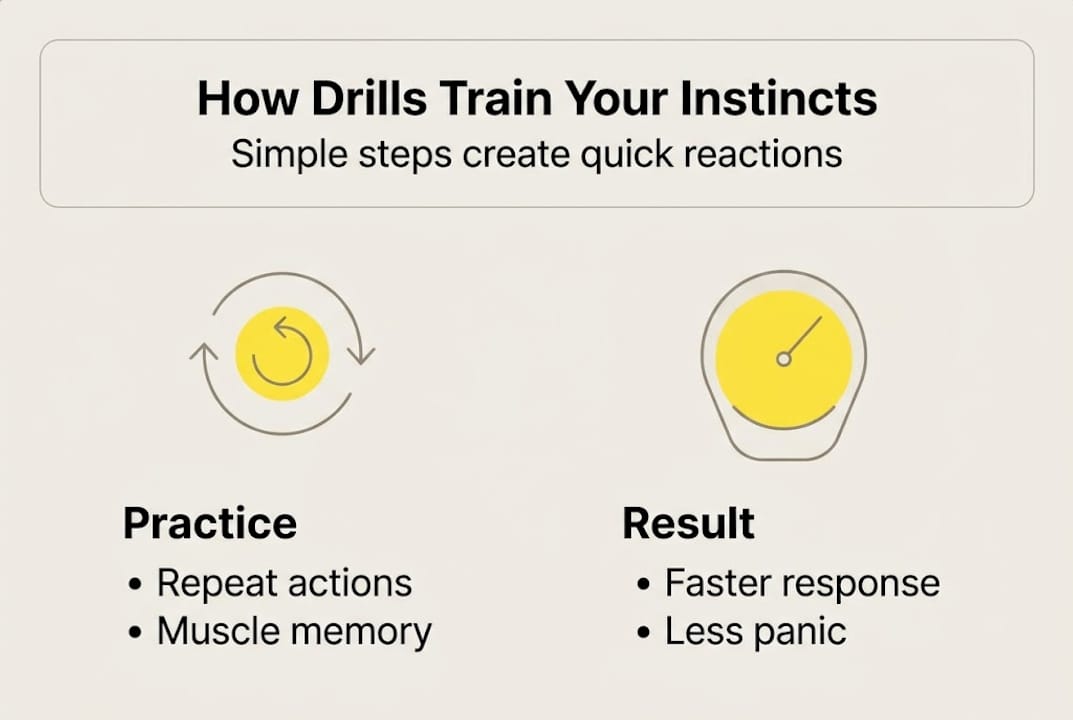
Without practice, the most common reactions during an earthquake are exactly the wrong ones: running outside, standing frozen, or rushing to doorways, a myth that has long been debunked. Children are especially vulnerable to panic-driven responses because they look to adults for cues. If a parent hesitates, a child hesitates. Drills remove that hesitation by replacing uncertainty with a clear, practised sequence of actions.
B.C. sits in one of the most seismically active regions in Canada. Emergency kits for BC are part of the broader preparedness picture, but no kit replaces the value of knowing what to do in the first thirty seconds of a quake. Those seconds are when injuries happen.
Key reasons why drills work for families:
- They replace panic with practised, automatic movement
- They teach children to act independently if separated from a parent
- They reduce the cognitive load during a high-stress event
- They create shared family language around safety (“Drop!” means something specific)
- They reveal gaps, such as furniture that blocks safe cover spots
Reviewing your emergency kit essentials alongside drill practice ensures your family is prepared on both fronts: knowing what to do and having what you need.
Real-life benefits for children and families in B.C.
Research and community experience consistently show that practised children respond correctly during real seismic events, while unpractised children are far more likely to freeze, run, or become distressed in ways that increase their risk of injury. The difference is not intelligence or bravery. It is repetition.
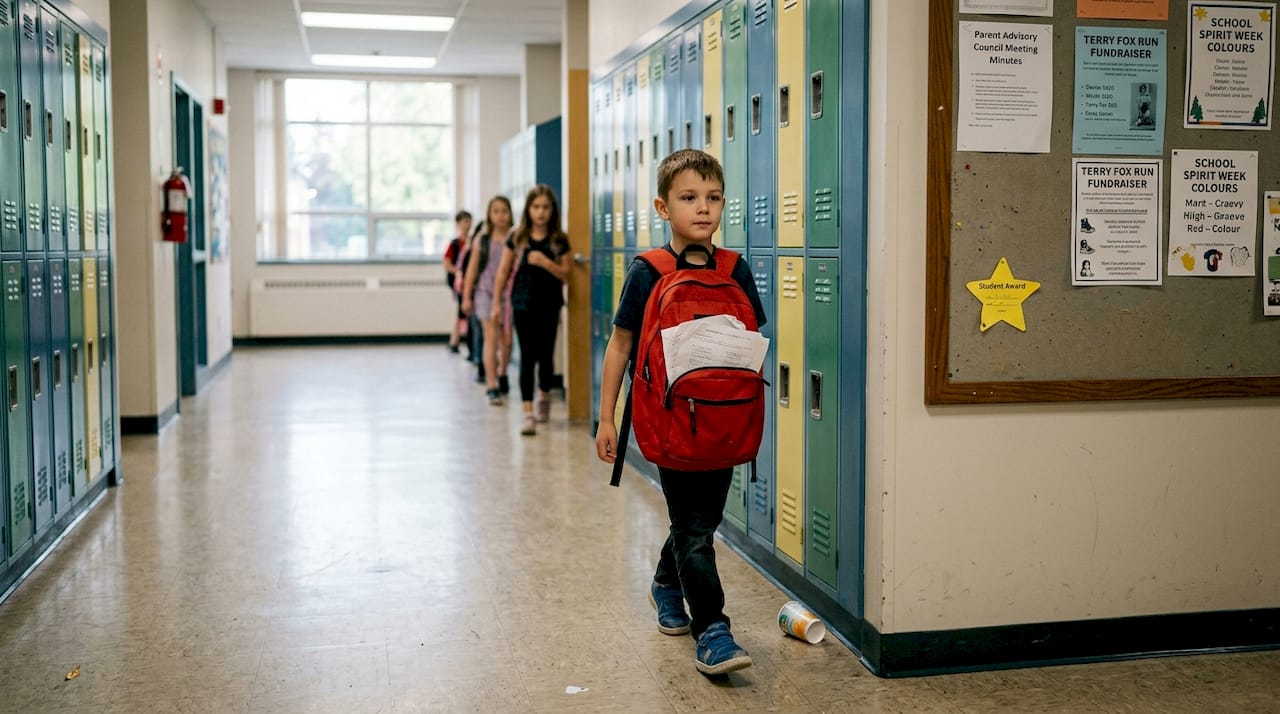
For young children, abstract instruction simply does not stick. Telling a five-year-old to “drop and cover” during a calm moment at the dinner table is very different from that child actually doing it when the floor is moving. The body needs to have done it before.
| Response type | Practised families | Unpractised families |
|---|---|---|
| Immediate DCHO response | Consistent | Delayed or absent |
| Child panic level | Low to moderate | High |
| Post-shaking evacuation | Orderly, familiar route | Confused, improvised |
| Parent hesitation | Minimal | Common |
| Grab-and-go bag retrieval | Under 2 minutes | Often forgotten |
Here are practical steps to make drills work for families with young children:
- Start with the “turtle game” for toddlers and preschoolers. Ask them to curl up small like a turtle pulling into its shell. This mirrors the Drop, Cover and Hold On position without the scary framing.
- Walk every family member through exit routes from each room. Do this slowly first, then at a brisk pace.
- Practise a two-minute grab-and-go drill where each person retrieves their bag and meets at the designated family meeting point.
- Use a simple signal, such as calling out “ShakeOut!”, to begin the drill without warning, simulating the suddenness of a real earthquake.
Drills also reduce fear. Children who have practised feel a sense of control, which is one of the most powerful antidotes to anxiety. Emergency drill practice builds confidence alongside competence, and that confidence carries into real events. The role of emergency supplies is equally important once shaking stops, but the drill gets your family safely through those first critical moments.
Pro Tip: Make drills a regular part of family life by connecting them to something your children already enjoy. A small reward, a special snack, or extra story time after a successful drill creates positive associations and dramatically improves recall.
Common emergency drills for B.C. families
Not all drills are equal, and not all are equally relevant to B.C. families. Here are the most important ones to practise at home:
- Drop, Cover and Hold On (DCHO): The core earthquake drill. Drop to hands and knees, take cover under a sturdy table or against an interior wall away from windows, and hold on until shaking stops. Practise this from every room in your home.
- ShakeOut drill: Modelled on the annual provincial exercise, this drill combines DCHO with a review of your family emergency plan and supply check. BC ShakeOut engages 500,000 to 850,000 participants each year, making it an ideal anchor for your family’s annual preparedness review.
- Quick evacuation drill: Practise moving from DCHO to a safe exit within two minutes. Include retrieving your grab-and-go bag and meeting at your designated outdoor family meeting point.
- Emergency alert response drill: When a BC Emergency Alert sounds on your phone, practise the immediate response: stop, drop, cover, and hold on. Alerts give only seconds of warning.
| Drill type | Recommended frequency | Critical steps |
|---|---|---|
| Drop, Cover and Hold On | Monthly | Drop, cover, hold for 60 seconds |
| Quick evacuation | Every 3 months | Bag retrieval, exit route, meeting point |
| ShakeOut full drill | Annually (October) | DCHO plus plan and kit review |
| Alert response | Every 6 months | Immediate DCHO on alert sound |
Edge cases matter too. After shaking stops, count to 60 before moving, as aftershocks can follow within seconds. For family members who use wheelchairs, practise braking the chair and covering the head and neck. Review your B.C. earthquake supply checklist annually to ensure supplies are current.
Pro Tip: Schedule your family’s annual full drill to coincide with ShakeOut week in October. You will benefit from community-wide messaging, school participation, and updated provincial resources all at once.
Getting started: Step-by-step family drill practice
Turning intention into action is where most families stall. Here is a clear process to get your family’s drill practice running.
- Hold a family meeting. Explain, in age-appropriate language, why you practise drills. Show children where your emergency kit is stored and what is inside.
- Identify your meeting point. Choose a spot outside your home, such as the front lawn or a neighbour’s driveway, where everyone will gather after evacuating.
- Check your kit. Before your first drill, confirm your B.C. emergency kit is stocked for three to fourteen days, as PreparedBC recommends for B.C. families. Include a first aid kit and review your first aid kit guide for family-specific needs.
- Run the drill unannounced. Call out your signal and time the response. Note where hesitation occurs.
- Debrief immediately. Ask each family member what felt easy and what felt uncertain. Adjust furniture placement or exit routes as needed.
- Schedule the next drill. Put it on the calendar before you finish the debrief.
Tips for involving young children:
- Use their favourite stuffed animal as a “drill partner” that also needs to drop and cover
- Praise effort, not perfection, especially in the first few drills
- Let older children lead younger siblings through the steps
- Connect the drill to what they practise at school so the language is consistent
Community drills like ShakeOut build resilience at a neighbourhood level, and parents who review their plans yearly are measurably better prepared. Mark October on your calendar now.
What most parents underestimate about emergency preparedness
Here is something worth saying plainly: most B.C. parents believe they are more prepared than they actually are. They have thought about what they would do. They have good intentions. But intention and practice are not the same thing, and in the first seconds of a major earthquake, only practice counts.
There is a well-documented pattern in emergency response research where low baseline preparedness persists even in high-risk communities, despite awareness campaigns. Knowing about the Cascadia Subduction Zone does not protect your family. Practising DCHO does.
The “it won’t happen while I’m home” fallacy is equally common. The reality is that a megathrust event along the Cascadia fault will not schedule itself around your convenience. Families who have run even two or three drills respond faster, communicate more clearly, and recover more quickly than those who have not. Review your readiness supply tips regularly, but do not let supply preparation replace drill practice. Both are necessary. Neither replaces the other.
Your next step: Equip, practice, and protect
Drills are the foundation of family earthquake readiness, but they work best when paired with a well-stocked kit that is ready the moment shaking stops.
At EarthquakeKit.ca, we offer kits built specifically for B.C. families, from basic earthquake kits for those just getting started to deluxe earthquake kits designed for comprehensive family protection. Our recommended BC earthquake kit aligns with provincial guidelines and is ready to support your family through the critical days after a major event. Equip your home, practise your drills, and revisit your plan every year. Preparedness is not a one-time task. It is an ongoing commitment to your family’s safety.
Frequently asked questions
How often should families in British Columbia practise earthquake drills?
Families should practise earthquake drills at least twice a year, with one drill timed to ShakeOut week in October, when 500,000 to 850,000 participants across B.C. practise together for maximum community impact.
What is the most important drill for children in B.C.?
Drop, Cover and Hold On (DCHO) is the most critical drill for children in B.C., as practising DCHO builds instinctive response and protects children from falling objects during shaking.
What are some ways to help young kids remember emergency drill steps?
Using games like the “turtle game”, simple checklists, or letting children lead younger siblings makes drill steps memorable and fun for young children.
Does emergency drill practice actually lower panic in a real earthquake?
Yes. Regular drills create muscle memory and reduce panic, replacing the instinct to freeze or run with a clear, automatic sequence of protective actions.
Recommended
- Why practise earthquake drills in BC: Safety and readiness – EarthquakeKit.ca
- Family emergency planning for earthquakes: A BC guide – EarthquakeKit.ca
- 6 Practical Examples of Family Emergency Plans for BC Moms – EarthquakeKit.ca
- Family earthquake preparedness: Protecting your loved ones in BC – EarthquakeKit.ca