

Step-by-step emergency kit guide for British Columbians 2026
Posted by Karl Lundgren on
British Columbia experiences 3,000 earthquakes annually, and although most of them are minor, the threat of "The Big One" makes emergency preparedness essential for every household. Whether you live along the vulnerable west coast or inland, having a well-stocked emergency kit reduces stress and improves your family’s safety when disaster strikes. This guide walks you through assembling an effective, affordable earthquake emergency kit tailored to BC’s unique risks, plus creating an actionable emergency plan that transforms your supplies into a lifesaving resource.
Table of Contents
- Understanding Earthquake Risks And Preparedness Essentials In BC
- Step-By-Step Guide To Assembling Your Emergency Kit
- Creating And Practising An Emergency Plan With Your Kit
- Additional Safety Measures And Preparedness Tips For BC Residents
- Find The Best Earthquake Kits For BC Residents
Key takeaways
| Point | Details |
|---|---|
| BC earthquake frequency | British Columbia records thousands of seismic events yearly, requiring consistent preparedness efforts from all residents. |
| Essential kit components | Water, non-perishable food, flashlights, batteries, first aid supplies, and important documents form your survival foundation. |
| Emergency plan integration | Your kit works best alongside a clear family plan with designated contacts, meeting points, and assigned responsibilities. |
| Affordable preparation | Quality emergency supplies are accessible through budget-friendly retailers, making preparedness achievable for every household. |
| Regular maintenance | Updating supplies every six months and practising drills ensures your kit remains effective when needed most. |
Understanding earthquake risks and preparedness essentials in BC
British Columbia sits in one of Canada’s most seismically active zones. The province records 3,000 earthquakes each year, though most go unnoticed by residents. The real concern centres on the Cascadia Subduction Zone, a fault line capable of producing a magnitude 9.0 megathrust earthquake. Scientists project this event could trigger widespread destruction and tsunamis along coastal communities.
Regions along the west coast face the highest tsunami risk, but inland areas aren’t immune to significant shaking. Vancouver Island, the Lower Mainland, and communities near the US border experience regular tremors that serve as reminders of the constant geological pressure beneath our feet. Understanding this reality helps you recognise why preparedness isn’t optional, it’s necessary.
Emergency kits serve as your first line of defence when infrastructure fails. Roads buckle, power grids collapse, and supply chains break down during major seismic events. Your kit ensures you can survive independently for at least 72 hours while emergency services prioritise life-threatening situations. This self-sufficiency reduces strain on first responders and protects your family simultaneously.
Pairing your kit with knowledge saves lives. Learning proper safety actions like Drop, Cover, and Hold On gives you a proven response strategy when shaking starts. You drop to your hands and knees, take cover under sturdy furniture, and hold on until tremors stop. This technique prevents injuries from falling objects and reduces panic through clear, practiced actions.
BC families benefit from exploring earthquake readiness steps that complement physical supplies. Mental preparedness matters just as much as stockpiling water and food. When you understand risks and rehearse responses, you transform fear into confidence.
“Preparedness begins with understanding your local risks and taking concrete action to protect your household before disaster strikes.”
Key preparedness fundamentals include:
- Identifying safe spots in each room of your home
- Securing heavy furniture and appliances to walls
- Storing emergency supplies in accessible locations
- Teaching children age-appropriate safety responses
- Maintaining updated contact lists for family reunification
The earthquake preparedness guide from BC authorities provides detailed regional information. Review it annually to stay current with evolving recommendations and local hazard assessments.
Step-by-step guide to assembling your emergency kit
Building an effective earthquake kit doesn’t require expensive specialty gear. Affordable emergency supplies from local retailers work perfectly when chosen thoughtfully. Start by gathering containers that seal tightly and resist water damage. Plastic bins with secure lids protect contents from moisture and make transport easier during evacuations.
Follow this systematic approach to assemble your kit:
- Store four litres of water per person per day for three days minimum
- Select non-perishable foods requiring no refrigeration or cooking
- Pack a manual can opener and disposable utensils
- Include a battery-powered or hand-crank radio for emergency broadcasts
- Add multiple flashlights with extra batteries stored separately
- Prepare a comprehensive first aid kit with prescription medications
- Pack a portable phone charger and backup power bank
- Store copies of important documents in waterproof bags
- Include cash in small denominations for purchases when systems fail
- Add personal hygiene items and sanitation supplies
- Pack warm clothing and emergency blankets for each family member
- Include tools like a whistle, multi-tool, and duct tape
Organise supplies by category using smaller bags or containers within your main bin. This system lets you locate items quickly during stressful situations. Label everything clearly so other household members can find supplies if you’re unavailable.
Pro Tip: Shop dollar stores and discount retailers for most kit components, then invest in quality items only for critical gear like flashlights and first aid supplies. Rotate food and water every six months to maintain freshness.
Different households need different approaches. Compare these options:
| Kit Type | Water Supply | Food Duration | Special Items | Best For |
|---|---|---|---|---|
| Basic Individual | 12 litres | 3 days | Minimal tools | Single adults, students |
| Family Kit | 48 litres | 3 days | Child supplies, games | Households with children |
| Deluxe Kit | 72 litres | 5 days | Generator, advanced medical | Extended self-sufficiency |
| Vehicle Kit | 8 litres | 2 days | Jumper cables, road flares | Commuters, travellers |
Customise your kit based on household size and special needs. Families with infants require formula, bottles, and nappies. Pet owners need food, water, and supplies for animals. Elderly household members might need additional medications or mobility aids.
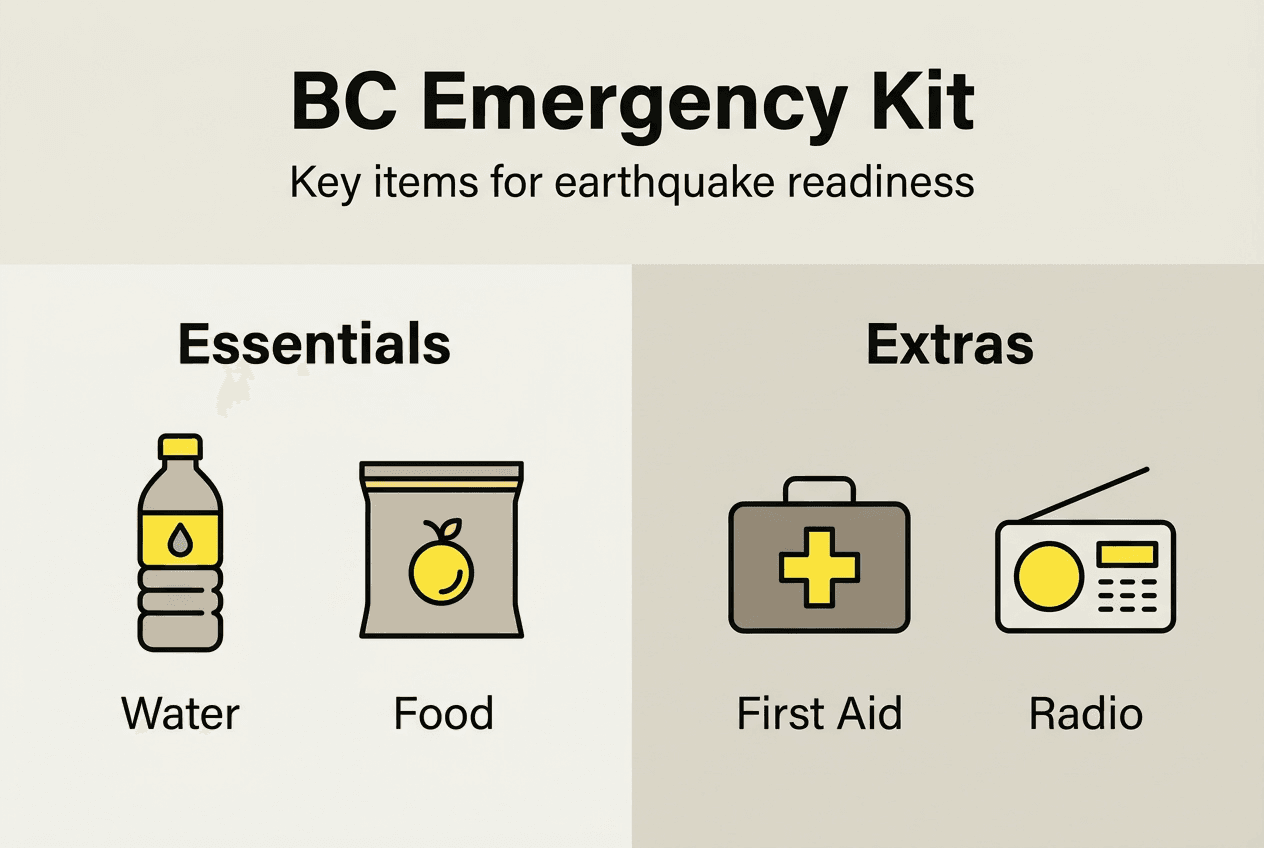
Explore comprehensive emergency supplies for earthquake preparedness that address BC-specific challenges. Coastal residents should add tide tables and tsunami evacuation route maps. Those in rural areas benefit from extra fuel storage and communication devices.
Efficient earthquake kit organisation keeps supplies accessible and maintained. Store kits near exits but away from heavy furniture that might block access during shaking. Keep smaller kits in vehicles, workplaces, and children’s schools to ensure coverage wherever family members spend time.
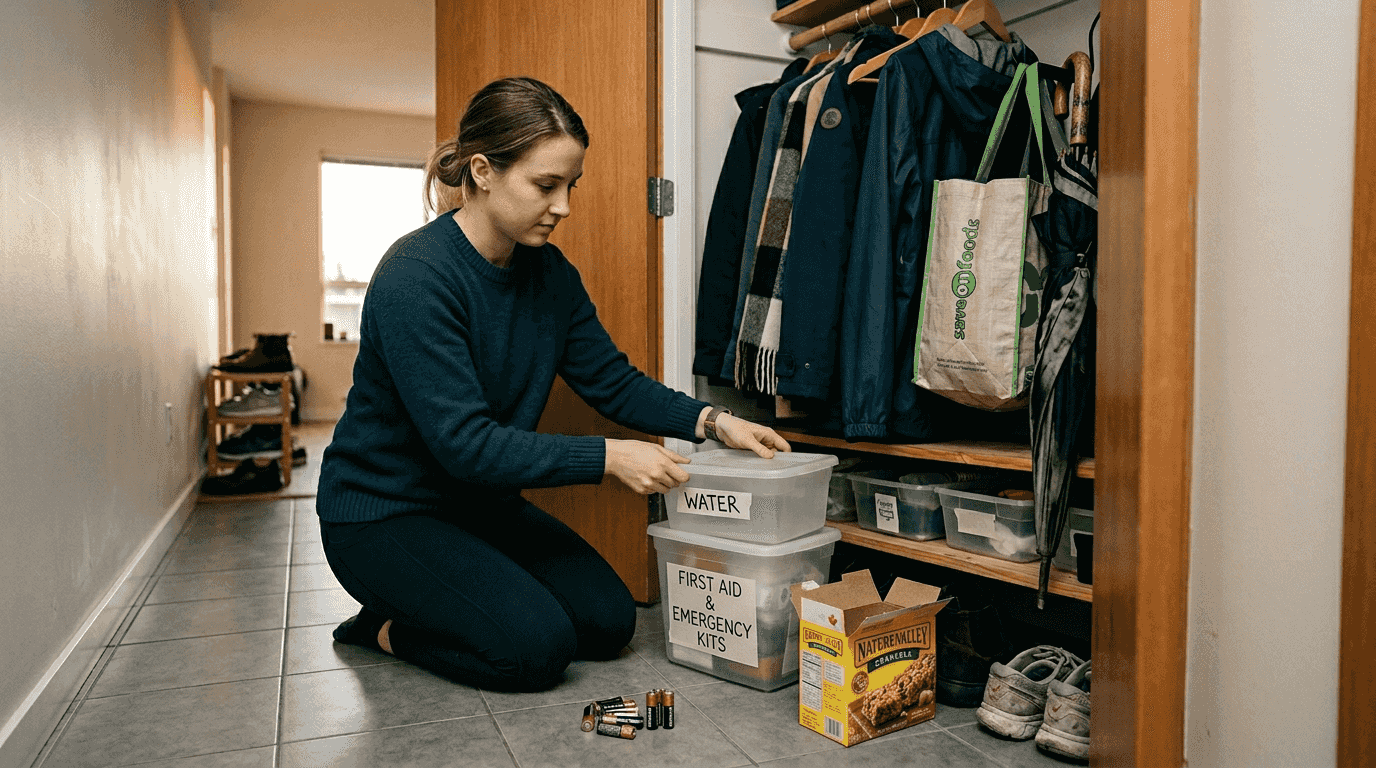
Review and update your kit twice yearly. Check expiration dates, replace batteries, and adjust supplies as family circumstances change. This maintenance routine ensures your kit remains ready when seconds count.
Creating and practising an emergency plan with your kit
Your emergency kit reaches full potential only when paired with a clear, practiced plan. Emergency planning reduces stress and improves response speed during actual disasters. Start by designating two meeting locations: one near your home for minor emergencies and another outside your neighbourhood for major events requiring evacuation.
Identify an out-of-province contact person everyone can reach. Local phone networks often fail during disasters, but long-distance calls sometimes connect when local circuits overload. This contact becomes your family’s communication hub, relaying messages between separated members until you reunite.
Assign specific responsibilities to each household member based on age and ability. One person grabs the emergency kit, another secures pets, someone else assists elderly or disabled family members. Clear roles eliminate confusion and ensure nothing gets forgotten during chaotic evacuations.
Key planning steps include:
- Creating laminated contact cards for every family member’s wallet
- Photographing important documents and storing copies digitally
- Teaching children how to text for help when voice calls fail
- Establishing check-in protocols with schools and workplaces
- Identifying neighbours who might need assistance during emergencies
- Documenting medical conditions, allergies, and medication requirements
Families with young children benefit from age-appropriate preparedness activities. Turn planning into games that teach safety without creating fear. Practice Drop, Cover, and Hold On as a family activity. Let children help pack emergency kits and choose comfort items like favourite toys or books to include.
Elderly household members require additional considerations. Ensure mobility aids remain accessible and medications stay current. If someone uses medical equipment requiring power, investigate backup battery systems or generator options. Document all health conditions and care requirements in your emergency plan.
Pet owners must include animals in every aspect of planning. Prepare separate pet emergency kits with food, water, medications, and comfort items. Research pet-friendly evacuation shelters in advance since many emergency facilities don’t accommodate animals. Keep current photos and identification tags on all pets to aid reunification if you become separated.
Pro Tip: Participate in the annual Great BC ShakeOut drill every October to practice your plan with millions of other residents. This province-wide event creates accountability and reveals gaps in your preparedness that need addressing.
Regular practice transforms plans from theoretical documents into automatic responses. Schedule quarterly drills that simulate different scenarios: earthquakes during dinner, middle of the night, or when family members are scattered at work and school. Time how long reunification takes and identify bottlenecks slowing your response.
Review choosing the right earthquake emergency kits to ensure your supplies match your plan’s requirements. As your plan evolves through practice and feedback, adjust kit contents accordingly. This iterative process builds genuine readiness rather than false confidence.
Update contact information whenever phone numbers or addresses change. Review and revise your plan annually, or immediately after major life changes like moves, new family members, or health diagnoses. Keeping plans current ensures they remain useful when crisis strikes.
Explore additional earthquake readiness steps that strengthen your household’s resilience. Combining physical supplies with practiced plans creates comprehensive preparedness that protects everyone you care about.
Additional safety measures and preparedness tips for BC residents
Beyond emergency kits and plans, home safety modifications significantly reduce injury risk during earthquakes. Securing furniture and appliances prevents the most common earthquake injuries: falling objects striking occupants. Anchor bookcases, water heaters, and televisions to wall studs using appropriate hardware. Install safety latches on cupboards to prevent dishes and glassware from becoming dangerous projectiles.
Store heavy items on lower shelves where they’re less likely to fall. Move beds away from windows and large mirrors that might shatter during shaking. These simple adjustments cost little but provide substantial protection when tremors strike.
Insurance considerations deserve careful attention. Standard homeowner policies typically exclude earthquake damage, requiring separate earthquake insurance riders. Review your coverage annually and understand deductibles, which often range from 10 to 25 percent of your home’s value. This high threshold means you’ll pay significant out-of-pocket costs before insurance coverage begins.
| Safety Measure | Cost Range | Difficulty | Impact |
|---|---|---|---|
| Furniture anchoring | £20 to £100 | Easy | High injury prevention |
| Cupboard latches | £30 to £80 | Easy | Moderate property protection |
| Water heater strapping | £15 to £50 | Moderate | Prevents flooding, fire |
| Earthquake insurance | £200 to £800 yearly | Easy | Financial recovery |
| Foundation bolting | £2,000 to £5,000 | Professional | Structural integrity |
Earthquake early warning systems represent cutting-edge preparedness technology. Early warning systems detect initial seismic waves and send alerts seconds before stronger shaking arrives. While seconds might seem insignificant, they provide enough time to drop, cover, and hold on, or to stop vehicles and move away from hazards.
Canada’s earthquake early warning system continues expanding across BC. Download the AlertReady app to receive automatic notifications on your mobile device. Enable location services and notification permissions so alerts reach you immediately. These precious seconds of warning can mean the difference between injury and safety.
“Stay clear of windows, heavy furniture, and exterior walls during shaking. Move to interior doorways or under sturdy tables until tremors stop completely.”
Additional preparedness actions for BC residents:
- Locate your home’s gas, water, and electrical shut-off points
- Learn how to safely shut off utilities after earthquakes
- Keep adjustable wrenches near shut-off valves for quick access
- Identify your building’s designated earthquake assembly areas
- Participate in community emergency response team training
- Maintain relationships with neighbours for mutual assistance
- Store important documents in fireproof, waterproof containers
- Create digital backups of critical files and photos
Understand your building’s construction type and age. Older structures built before modern seismic codes face higher collapse risk. If you rent, discuss earthquake preparedness with your landlord and request safety upgrades. Building owners have legal responsibilities to maintain safe premises, including earthquake resilience measures.
Stay informed about local hazards through municipal emergency management offices. Many communities offer free preparedness workshops and home safety assessments. Take advantage of these resources to identify vulnerabilities specific to your property and neighbourhood.
Consider choosing earthquake kits that include advanced safety tools like gas shut-off wrenches and pry bars. These specialised items help you respond to post-earthquake hazards effectively.
Explore home safety tips from insurance providers who understand common damage patterns. Their recommendations come from analysing thousands of earthquake insurance claims, revealing which preventive measures provide the best return on investment.
Volunteer with local emergency services to deepen your preparedness knowledge. Emergency Social Services teams, Search and Rescue groups, and Community Emergency Response Teams welcome trained volunteers. This involvement builds practical skills while strengthening community resilience networks.
Find the best earthquake kits for BC residents
EarthquakeKit.ca specialises in emergency preparedness solutions designed specifically for British Columbia’s unique seismic risks. Our basic earthquake kits provide essential supplies at affordable prices, making preparedness accessible for every household budget. Each kit includes carefully selected items that meet provincial emergency management recommendations.
Explore our earthquake kit personal supplies for individual needs, or browse government-approved BC earthquake kits that exceed official preparedness standards. We understand BC families need reliable, quality supplies they can access quickly without spending hours researching and shopping.
Our kits eliminate guesswork by bundling proven emergency supplies into ready-to-use packages. Whether you’re starting your preparedness journey or upgrading existing supplies, EarthquakeKit.ca offers solutions that protect what matters most: your family’s safety and peace of mind.
FAQ
How often should I check and update my emergency kit?
Review your kit every six months, ideally when changing clocks for daylight saving time. Replace expired food and water, check battery function, and update documents or medications. This regular maintenance ensures supplies remain effective when needed.
What if I live alone — do I still need an emergency kit and plan?
Absolutely. Single adults face the same earthquake risks as families and may have fewer support options during disasters. Prepare a comprehensive kit and establish check-in protocols with friends, family, or neighbours who can verify your safety after major events.
Can I rely on earthquake insurance to cover damages?
Earthquake insurance provides financial recovery but comes with high deductibles, often 10 to 25 percent of your home’s value. It’s valuable for catastrophic damage but won’t cover minor repairs. Combine insurance with prevention measures like securing furniture and strengthening your home’s structure.
What is involved in the Great BC ShakeOut drill?
The Great BC ShakeOut is an annual province-wide earthquake drill held each October. Participants practice Drop, Cover, and Hold On at a designated time, then review their emergency plans and supplies. Millions of British Columbians participate, making it the largest earthquake drill in Canada.
How do early warning systems work and how can I receive alerts?
Earthquake early warning systems detect initial seismic waves and calculate the earthquake’s location, magnitude, and expected shaking intensity. Alerts are sent through the AlertReady app and wireless emergency alert systems seconds before strong shaking arrives. Download AlertReady and enable notifications to receive these critical warnings.