

Earthquake readiness steps for BC families in 2026
Posted by Karl Lundgren on
British Columbia experiences approximately 1,200 earthquakes per year and faces a one in three chance of major damaging events within 50 years. Despite this reality, many families feel overwhelmed about where to begin their preparedness journey. This guide provides practical, evidence-based steps to help you protect your loved ones and property in 2026. From structural improvements to emergency supplies and response training, you’ll learn actionable strategies that reduce risk and build confidence. Whether you live in Vancouver, Victoria, or smaller coastal communities, these readiness measures apply to your household.
Table of Contents
- Assessing And Strengthening Your Home For Earthquake Safety
- Securing Your Home Interior To Minimise Injury And Damage
- Preparing Emergency Kits And Family Plans For 2026
- Practising Safety Actions And Using Warning Systems
- Prepare Your Family With Ready-To-Go Earthquake Kits
- Frequently Asked Questions
Key takeaways
| Point | Details |
|---|---|
| Structural assessment | Older homes require foundation retrofits to prevent collapse during major earthquakes. |
| Interior securement | Anchoring furniture and appliances reduces injury risk by up to 40 percent. |
| Emergency supplies | Maintain kits with 72 hours of essentials and practise family evacuation plans regularly. |
| Response training | Annual drills and early warning systems improve survival outcomes significantly. |
| Professional solutions | Ready-made kits ensure completeness and save time for busy families. |
Assessing and strengthening your home for earthquake safety
Your home’s structural integrity determines how well it withstands seismic forces. Older properties built before modern codes face greater collapse risk during major events. Retrofitting raised foundations built before the 1990s with brace and bolt techniques significantly reduces damage. Houses or garages constructed before 1950 need special attention to ensure they’re securely fastened to foundations.
Start by inspecting your property’s foundation type and construction era. Raised foundations with crawl spaces require cripple wall bracing and sill plate bolting. These upgrades prevent the house from sliding off its base during shaking. Concrete slab foundations generally perform better but still benefit from inspection for cracks or deterioration. You can hire a structural engineer for a professional assessment or use earthquake resistance guidance to identify vulnerabilities yourself.
Pro Tip: Schedule retrofits during other renovation projects to reduce costs and minimise disruption to your family’s routine.
Consider these strengthening actions based on your home’s characteristics:
- Install foundation anchor bolts every 1.2 metres along sill plates
- Add plywood sheathing to cripple walls for lateral strength
- Reinforce garage door openings with metal strapping
- Secure brick chimneys with metal straps or rebuild with reinforced masonry
- Upgrade water heater strapping to prevent gas line ruptures
| Home Feature | Retrofit Action | Estimated Cost |
|---|---|---|
| Raised foundation | Brace and bolt installation | $3,000 to $7,000 |
| Brick chimney | Metal strapping or rebuild | $2,000 to $5,000 |
| Garage door opening | Metal reinforcement | $500 to $1,500 |
| Water heater | Flexible connectors and straps | $150 to $300 |
These investments protect your family’s safety and preserve your home’s value. Many BC homeowners qualify for retrofit grants through local programmes. Check with your municipality about available funding before starting work. Combining structural improvements with home preparedness steps for BC families creates comprehensive protection.
Securing your home interior to minimise injury and damage
Interior hazards cause most earthquake injuries. Falling furniture, toppling appliances, and flying objects create dangerous conditions during shaking. Securing tall furnishings to wall studs and moving heavy items lower minimises these risks. Research shows properly secured furniture reduces injuries by up to 30 to 40 percent.
Start with the tallest, heaviest pieces in each room. Bookcases, wardrobes, and china cabinets need L-brackets or furniture straps anchored into wall studs, not just drywall. Locate studs using a stud finder or by knocking along walls to find solid spots. Attach brackets at the top of furniture for maximum stability. For rental properties where drilling isn’t allowed, use museum putty and tension rods as temporary solutions.
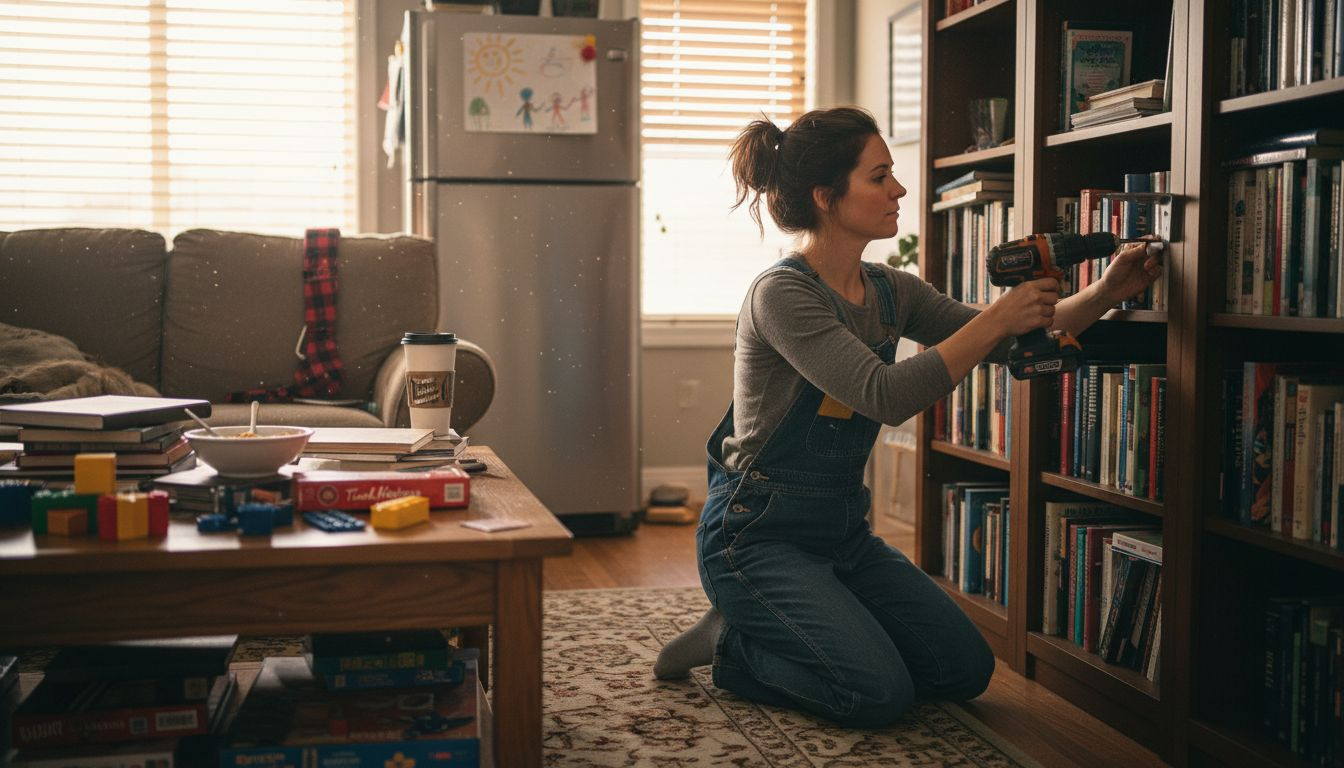
Appliances pose special challenges because they’re heavy and often have utility connections. Refrigerators, washing machines, and water heaters should have flexible connectors for gas and water lines. These prevent ruptures that cause fires or flooding. Strap appliances to walls using heavy-duty nylon straps rated for their weight. Television sets and computer monitors need velcro or non-slip pads to prevent falls.
Pro Tip: Place a strip of museum putty under decorative items on shelves to keep them in place without visible hardware.
Follow these steps room by room:
- Anchor all furniture taller than one metre to wall studs
- Move heavy books, dishes, and collectibles to lower shelves
- Install latches on cabinet doors to prevent contents from spilling
- Secure mirrors and picture frames with closed hooks or wire
- Store hazardous materials in low, secured cabinets
- Replace rigid utility connections with flexible hoses
Bedrooms deserve special attention because you spend significant time there unconscious. Position beds away from windows and heavy furniture. Secure overhead light fixtures and ceiling fans properly. Keep sturdy shoes and a torch near your bed for safe movement after shaking stops. Organising your space thoughtfully complements earthquake kit organization efforts.
Identify and eliminate common household hazards:
- Unsecured water heaters that can rupture gas lines
- Heavy items stored on high shelves above seating areas
- Unlocked wheels on furniture and appliances
- Glass items displayed without secure mounting
- Chemical storage in upper cabinets
Preparing emergency kits and family plans for 2026
Emergency supplies sustain your family when services fail after major earthquakes. Well-maintained kits and practiced plans increase survival in the first 72 hours by 50 percent. Government guidance recommends supplies for at least 72 hours, though two weeks provides better security. Store kits in accessible locations that won’t be blocked by structural damage.
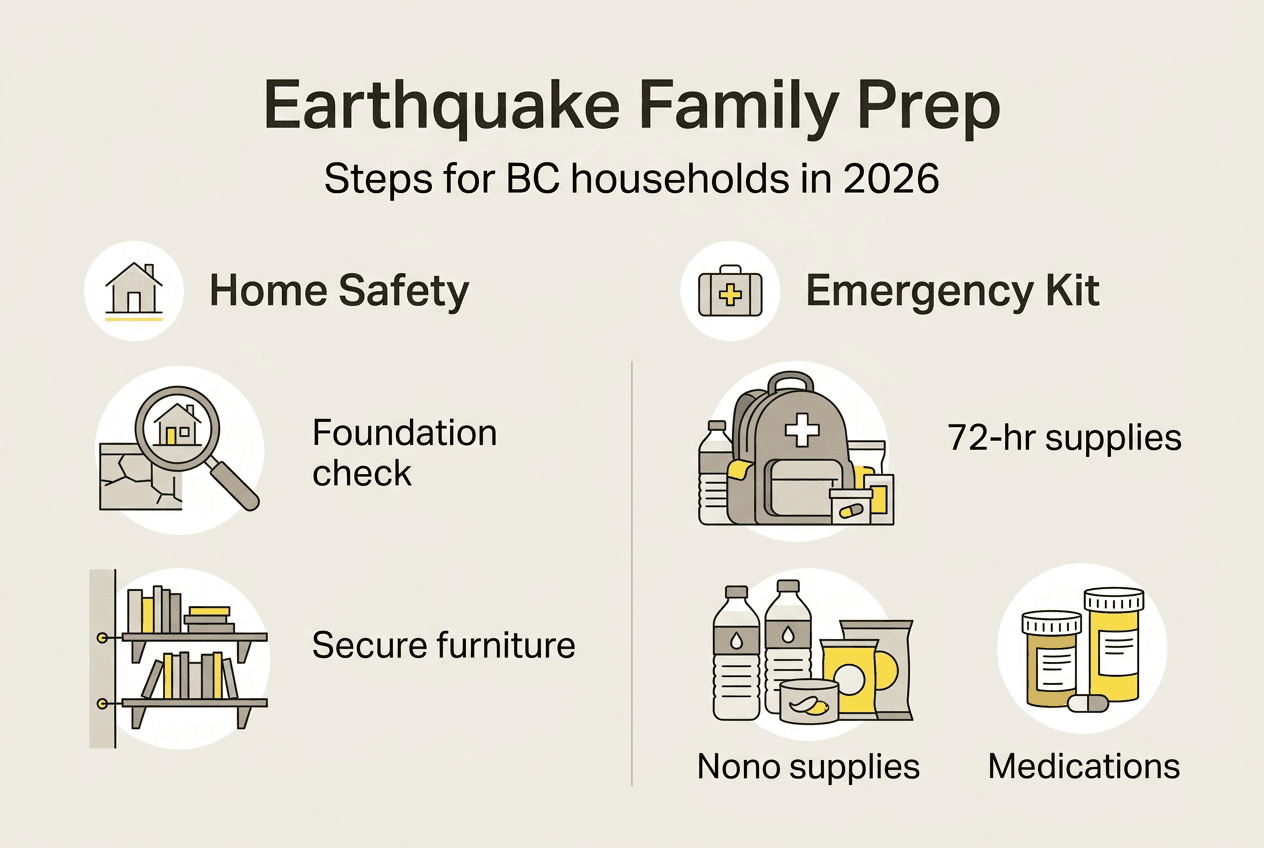
Your primary kit should remain at home in a designated storage area. Assemble a portable grab-and-go bag for quick evacuations. Keep smaller kits in vehicles and workplaces for comprehensive coverage. Regularly update kits every six months to replace expired food, water, and medications. Rotate batteries and check equipment functionality during updates.
| Kit Component | Quantity per Person | Notes |
|---|---|---|
| Water | 12 litres minimum | Store in food-grade containers |
| Non-perishable food | 72 hours worth | Include manual can opener |
| First aid supplies | One complete kit | Add prescription medications |
| Torch and batteries | Two torches | LED models last longer |
| Emergency radio | One per household | Hand-crank or battery powered |
| Sanitation items | 72 hours worth | Toilet paper, soap, waste bags |
| Clothing and bedding | One change per person | Include sturdy shoes |
| Important documents | Copies in waterproof bag | ID, insurance, medical records |
Pro Tip: Store a week’s worth of your family’s regular medications plus copies of prescriptions in your emergency kit.
Family communication plans prevent separation and confusion during crises. Designate an out-of-province contact person everyone can reach if local networks fail. Programme this number into all family members’ phones. Identify multiple evacuation routes from your home and neighbourhood. Choose primary and backup meeting places both near your home and outside your immediate area.
Practise your plan through regular drills:
- Discuss evacuation routes and meeting places with all household members
- Assign specific responsibilities to each family member
- Practise evacuating your home in under two minutes
- Test communication methods including text messages and social media
- Review and update contact information quarterly
- Include plans for pets and livestock
Children need age-appropriate involvement in planning. Teach them your out-of-province contact’s number. Show them how to turn off utilities if safe to do so. Explain what to expect during earthquakes to reduce fear. Elderly family members and those with disabilities require customised plans addressing mobility and medical needs. Following an emergency kit guide for BC ensures you cover all essential elements.
Practising safety actions and using warning systems
Immediate response during earthquakes determines injury outcomes. The ‘Drop, Cover, and Hold On’ technique protects you from falling objects and structural collapse. Participating in annual ShakeOut drills and practising this method improves safety outcomes significantly. Muscle memory developed through repetition helps you react correctly when fear and confusion strike.
Drop to your hands and knees before the shaking knocks you down. This position prevents falls whilst allowing you to move if needed. Cover your head and neck under a sturdy desk or table. If no furniture is available, cover against an interior wall away from windows. Hold On to your shelter and be prepared to move with it. Stay in position until shaking stops completely.
Different locations require adapted responses:
- Indoors: Stay inside, avoid doorways, move away from windows
- Outdoors: Move to open areas away from buildings, trees, and power lines
- In vehicles: Pull over safely, stay inside with seatbelt fastened
- In bed: Stay there and cover your head with a pillow
- In a wheelchair: Lock wheels and cover head and neck
Pro Tip: Practise ‘Drop, Cover, and Hold On’ in different rooms and situations so your family can respond automatically anywhere.
Canada’s Earthquake Early Warning system provides crucial seconds to prepare before shaking starts. This technology detects initial seismic waves and sends alerts to smartphones and other devices. Even 10 to 20 seconds of warning allows you to take protective action, stop dangerous tasks, or move to safer locations. Download the AlertReady app and enable location-based alerts for your area.
The Great ShakeOut drill occurs annually in October across British Columbia. Millions of residents, schools, and businesses participate simultaneously. Registration is free and provides access to planning resources and educational materials. Use this annual event to:
- Test your family’s response speed and technique
- Identify gaps in your preparedness plans
- Practise communication protocols
- Review and update emergency supplies
- Engage children in age-appropriate safety education
- Coordinate with neighbours for community resilience
“Earthquake early warning systems provide crucial seconds to prepare before shaking starts, allowing people to drop, cover, and hold on, or stop hazardous activities.”
Combine technological tools with physical preparation. Early warnings work best when you’ve already secured your environment and practised responses. Technology fails during power outages, so don’t rely solely on electronic alerts. Teaching children and elderly family members proper techniques ensures everyone can protect themselves. Regular practice through earthquake readiness steps for BC families builds household-wide competence.
Prepare your family with ready-to-go earthquake kits
Assembling comprehensive emergency supplies takes significant time and research. Ready-made kits eliminate guesswork whilst ensuring you meet government recommendations. EarthquakeKit.ca offers professionally curated solutions designed specifically for British Columbia families facing seismic risks.
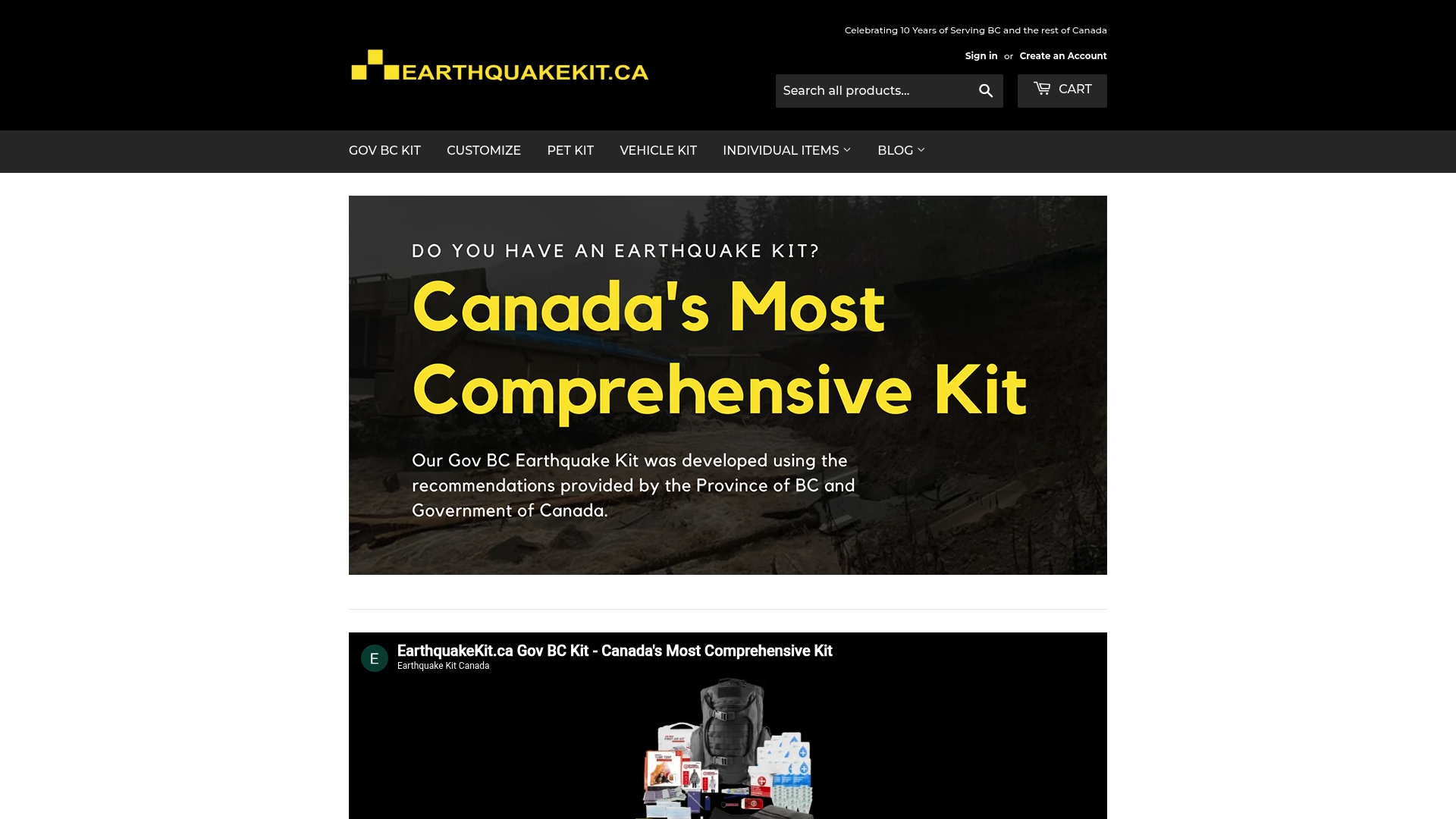
Our basic earthquake kits provide essential 72-hour supplies for households of various sizes. Personal earthquake supplies create portable grab-and-go options for quick evacuations. Families requiring compliance with provincial guidelines can choose gov BC earthquake kits that meet official standards. Each kit includes quality components selected for reliability and shelf life. Invest in your family’s safety today with solutions that work when seconds count.
Frequently asked questions
How often should I update my emergency kit?
Review your kit every six months to replace expired items and update seasonal clothing. Water and food typically last two to five years depending on storage conditions. Batteries lose charge over time even when unused. Check first aid supplies for expiration dates and replace medications as needed. Update important documents whenever family circumstances change, such as new insurance policies or medical conditions.
What are the most important items to include in an earthquake emergency kit?
Water, non-perishable food, first aid supplies, torch, radio, medications, and personal hygiene items form the foundation. Plan supplies for at least 72 hours, though two weeks provides better security. Include copies of important documents in waterproof containers. Don’t forget items for infants, elderly family members, and pets. Manual tools like can openers and matches are essential when power fails.
How can I practise safety during an earthquake?
Participate in the annual Great ShakeOut drill each October to build muscle memory. Practise ‘Drop, Cover, and Hold On’ in different rooms and situations throughout your home. Conduct family drills quarterly to maintain readiness. Teach children the proper technique through games and repetition. Review your response after each practise session to identify improvements needed.
Should I purchase earthquake insurance for my home?
Earthquake insurance is optional but highly recommended to recover up to 80 percent of damage costs. Standard homeowner policies exclude earthquake damage in British Columbia. Many BC homeowners, especially in high-risk coastal areas, have purchased coverage. Premiums vary based on location, construction type, and coverage limits. Consult insurance providers about deductibles and policy details specific to your property.
How do I create and maintain a family emergency plan?
Identify multiple evacuation routes from your home and neighbourhood. Choose primary and backup meeting places both nearby and outside your immediate area. Designate an out-of-province contact everyone can reach if local networks fail. Regularly practise and update communication strategies with all family members, including children. Review your plan quarterly and after any household changes like moves or new family members.