

Choose the right earthquake emergency kits for BC families
Posted by Karl Lundgren on
Over 70% of BC’s population lives in high-risk seismic zones near the Cascadia fault. Earthquake preparedness requires more than one kit—home, vehicle, and workplace kits each serve distinct needs. Families often feel overwhelmed deciding which kits to prepare and what supplies to include, but understanding the core selection criteria makes the process manageable and effective.
Table of Contents
- Selection Criteria For Earthquake Emergency Kits
- Home Emergency Kits
- Vehicle Emergency Kits
- Specialised Family Emergency Kits (Children And Pets)
- Comparison Of Ready-Made Vs DIY Emergency Kits
- Maintaining And Storing Emergency Kits
- Situational Recommendations Summary
- Get Your Complete Earthquake Emergency Kits At EarthquakeKit.ca
- Frequently Asked Questions
Key takeaways
| Point | Details |
|---|---|
| Multiple kit types needed | Home, car, and workplace kits ensure full coverage across all locations where family members spend time. |
| Specialized kits address unique needs | Children and pets require dedicated supplies for safety and comfort during emergencies. |
| Ready-made vs DIY trade-offs | Pre-assembled kits offer convenience at higher cost; DIY kits allow customization and save money. |
| Regular maintenance essential | Check kits every six months to replace expired items and maintain readiness. |
Selection criteria for earthquake emergency kits
Consider where you spend most time: home, vehicle, workplace. Each location demands different supplies and storage approaches. Families who identify their primary activity centres can prioritise kit purchases effectively.
Determine needed supply duration. Home kits typically support 3 to 14 days of survival. Vehicle and workplace kits focus on shorter timeframes, usually 24 to 72 hours.
Customise for family members. Infants need formula and nappies. Seniors may require specific medications. Pets need food, water, and carriers. A generic kit rarely meets everyone’s needs.
Portability matters more for vehicle and work kits. Home kits can be larger and heavier since they stay in one location. Vehicle kits must fit in limited boot space and remain lightweight for transport.
Government of Canada recommends updating and checking earthquake emergency kits every six months for expiry dates and functionality. Set reminders on your phone for March and September to make maintenance routine.
Key selection factors to evaluate:
- Household size and ages of family members
- Medical conditions requiring ongoing medication
- Dietary restrictions or allergies
- Pet species and sizes
- Available storage space at each location
- Budget constraints and phased purchasing options
Pro Tip: Start with a basic home kit, then add vehicle and workplace kits over time rather than attempting to purchase everything at once.
Following an earthquake kit organisation guide helps you arrange supplies logically and access them quickly. Clear labelling and inventory lists prevent confusion during stressful moments.
Home emergency kits
Home kits contain water and food supplies lasting from 3 to 14 days. You need one gallon of water per person daily for drinking and sanitation. Non-perishable foods like canned goods, granola bars, and dried fruits provide necessary calories without refrigeration.
Include essential first aid supplies and multiple communication devices. Battery-powered radios keep you informed when power fails. Whistles signal your location to rescue teams. Mobile phone chargers and spare batteries maintain contact with emergency services.
Add comfort items that reduce stress during extended emergencies. Blankets provide warmth when heating fails. Hygiene products maintain health and dignity. Child-friendly distractions like books and small toys ease anxiety for young family members.
Home kits are ideal for families wanting comprehensive preparedness for extended outages. BC’s geography means some communities may face delayed rescue access. Stocking adequate supplies ensures your family can shelter safely until help arrives.
Store kits in accessible, dry locations within the home. Basements work well if they remain above flood risk. Cupboards near exits allow quick retrieval if evacuation becomes necessary.
Essential home kit components:
- Water (minimum 3 litres per person per day)
- Non-perishable food for each family member
- First aid kit with bandages, antiseptics, and pain relievers
- Prescription medications (rotate regularly)
- Flashlights and extra batteries
- Battery-powered or hand-crank radio
- Sanitation supplies (toilet paper, rubbish bags, wet wipes)
- Important documents in waterproof container
- Cash in small denominations
- Clothing and sturdy shoes
Pro Tip: Keep a smaller grab-and-go bag near your main home kit for rapid evacuation scenarios where you can’t carry everything.
Browse basic earthquake kits to see expertly assembled options that meet Government of Canada standards. These pre-configured kits eliminate guesswork and ensure you haven’t missed critical supplies.
Vehicle emergency kits
Vehicle kits focus on lightweight, portable essentials for immediate survival. You might be stranded away from home when an earthquake strikes. A well-stocked car kit bridges the gap until you reach safety or help arrives.
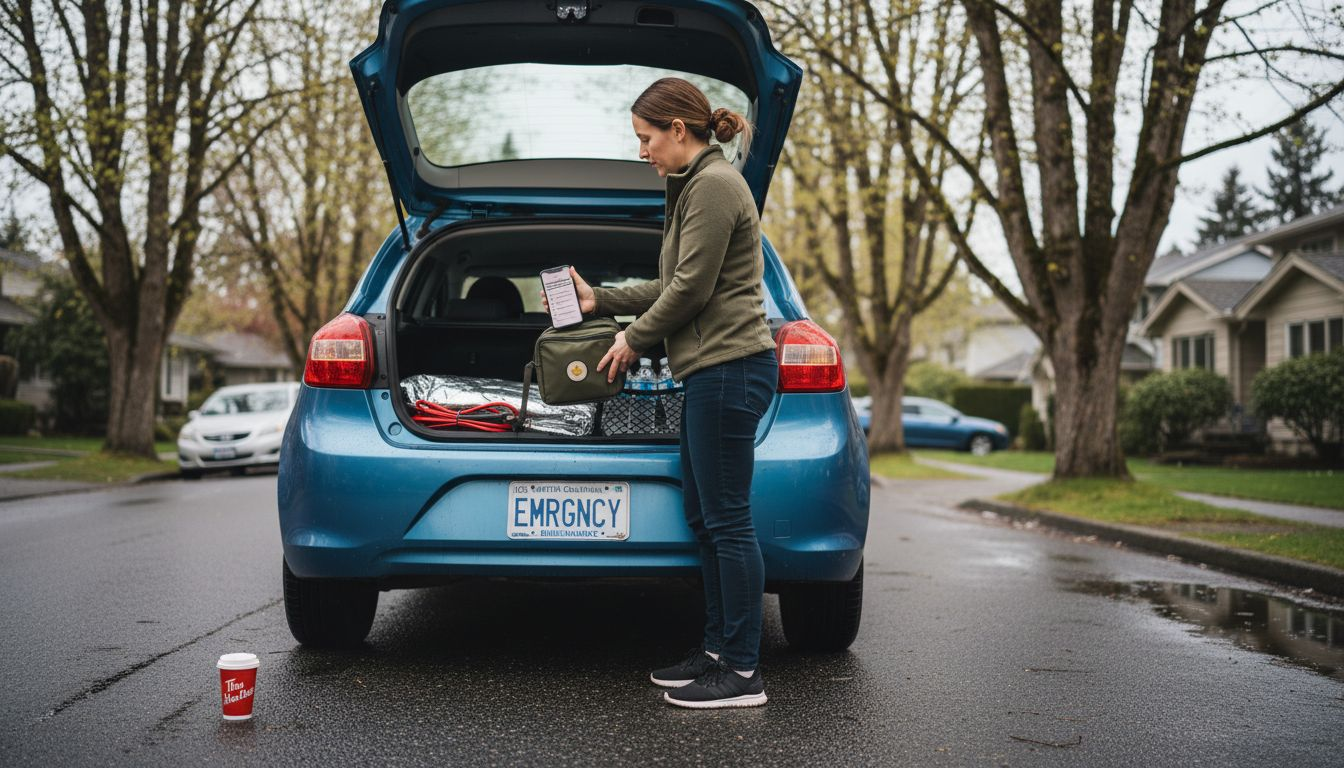
Typical contents include water bottles, non-perishable snacks, flashlight, blankets, and basic tools. Jumper cables, tyre inflators, and multi-tools help address mechanical issues that could trap you. Reflective triangles warn other drivers of your stopped vehicle.
These kits are designed to support family members during mobility emergencies. Children travelling to school or parents commuting to work face different risks than those at home. Vehicle kits address roadside scenarios where shelter and supplies aren’t immediately available.
Easy storage in the boot or vehicle cabin allows quick access. Soft-sided bags compress better than hard cases. Organise supplies in clear containers so you can see contents without unpacking everything.
A smaller, minimal kit proves critical for short-term emergencies. You won’t need 14 days of food in your car. Focus on 24 to 72 hours of essentials that keep you safe until roads reopen or rescue arrives.
Essential vehicle kit items:
- Water bottles (minimum 2 litres)
- Energy bars or trail mix
- Warm blankets or emergency thermal blankets
- Flashlight and spare batteries
- First aid supplies
- Jumper cables and basic tools
- Reflective vest and warning triangles
- Road maps (don’t rely solely on phone navigation)
Pro Tip: Replace water bottles in your vehicle kit every six months as temperature fluctuations degrade plastic containers faster than home-stored supplies.
The 72HRS roadside emergency kit provides specifically designed supplies for vehicle emergencies. This ready-made option ensures your car is prepared without requiring assembly time.
Specialised family emergency kits (children and pets)
Children’s kits include nappies, formula, medications, comfort toys, and easy feeding items. Babies require frequent nappy changes and specific nutrition. Toddlers need familiar objects that provide security during frightening situations.
Pet kits require food, water, leash, carrier, medication, and vaccination documentation. Pets should have food, water, a leash, carrier, medication, and vaccination records to ensure safety during an earthquake. Many emergency shelters accept pets only if owners can prove current vaccinations.
Dedicated kits ease stress and speed caregiving during disrupted conditions. When you’re managing an emergency, searching for scattered pet supplies wastes precious time. Pre-packed kits let you focus on safety rather than hunting for items.
Ensure all items are labelled clearly for easy identification. If another family member needs to grab supplies quickly, clear labels prevent confusion. Include preparation and feeding instructions for anyone caring for young children or pets.
Including specialised kits increases overall family readiness and peace of mind. You’ve addressed every family member’s needs, not just adult requirements.
“Preparing emergency supplies for children and pets demonstrates comprehensive family planning that significantly improves survival outcomes during major earthquakes.”
Children’s kit essentials:
- Nappies and wipes (one week supply minimum)
- Formula and bottles (if applicable)
- Baby food or age-appropriate snacks
- Comfort items (favourite toy, blanket)
- Children’s medication (paracetamol, any prescriptions)
Pet kit essentials:
- Pet food (one week supply)
- Collapsible water bowl
- Leash, collar with ID tag
- Pet carrier or crate
- Medication and medical records
- Recent photo of pet (for identification if separated)
Comparison of ready-made vs DIY emergency kits
Ready-made kits cost approximately CAD 200 to 400 with expert-selected supplies. Companies specialising in emergency preparedness research optimal supply combinations. You receive tested, reliable products that meet government standards.
DIY kits cost around CAD 150 to 300 and allow tailored contents but require time and knowledge. You must research what supplies you need, compare products, and ensure nothing critical is missing. This approach demands more effort but offers significant cost savings.
Ready-made kits offer convenience and completeness with less risk of missing essentials. You order, receive, and store the kit immediately. No shopping trips or assembly required.
DIY kits provide high customisation and often better suit unique family needs. If someone has severe allergies or specific medical conditions, pre-made kits may not include appropriate alternatives. Building your own ensures every item matches your requirements.
Consider budget, time, and confidence when choosing between options. Busy families with limited emergency preparation experience benefit from ready-made solutions. Those with more time and specific needs might prefer DIY approaches.
| Factor | Ready-made kits | DIY kits |
|---|---|---|
| Cost | CAD 200-400 | CAD 150-300 |
| Convenience | High (arrives complete) | Low (requires shopping/assembly) |
| Customisation | Limited to available options | Complete control over contents |
| Quality assurance | Professionally tested | Depends on research quality |
| Time investment | Minimal | 3-5 hours research and shopping |
| Missing items risk | Very low | Moderate to high |
Key considerations for each approach:
- Ready-made: Best for families wanting immediate preparedness without research time
- DIY: Ideal when budget is tight or family has very specific needs
- Hybrid: Purchase basic ready-made kit, then add personalised supplements
Explore basic earthquake kits to compare professionally assembled options. Reviewing pre-made configurations also helps DIY planners identify supplies they might otherwise overlook.
Maintaining and storing emergency kits
Store kits in dry, accessible locations known to all family members. Moisture damages food packaging and degrades medical supplies. Everyone should know exactly where to find kits during an emergency.
Proper kit maintenance follows these steps:
- Mark your calendar for March and September kit inspection dates
- Check all food items for expiration dates and replace as needed
- Test flashlights and replace weak or dead batteries
- Inspect water containers for leaks or contamination
- Update any medications approaching expiry dates
- Review and update emergency contact information
- Adjust kit contents as family needs change
Check and rotate supplies every six months to replace expired or used items. Food gradually loses nutritional value. Batteries lose charge even when unused. Regular rotation ensures everything functions when needed.
Inspect water containers and food packaging for integrity. Bulging cans or packages indicate spoilage. Cloudy water suggests container degradation. Replace compromised items immediately.
Update medications and battery-powered device batteries as needed. Prescription medications have strict expiry dates. Work with your pharmacist to obtain emergency supply refills before current stocks expire.
Maintain an inventory list for quick reference and replenishment. A simple spreadsheet tracks what you have, quantities, and expiry dates. This organised approach prevents over-purchasing or forgotten items.
Consider the Gov BC earthquake kit as a baseline meeting official provincial standards. Following Government of Canada emergency preparedness guidelines ensures your kit addresses all recommended supply categories.
Situational recommendations summary
Families with young children and pets benefit most from combined home and specialised kits. You address basic survival needs plus unique care requirements. This comprehensive approach reduces stress when managing dependents during emergencies.
Commuters and drivers should prioritise vehicle kits with portable essentials. If you spend significant time travelling between locations, being stranded away from home poses real risk. A well-stocked vehicle kit provides critical support until you reach safety.
Office workers need workplace kits focused on accessibility and health needs. Many employers provide basic emergency supplies, but personal medical needs require individual preparation. Keep prescription medications, spare eyeglasses, and comfort items at your desk.
Home emergency kits provide broader, long-term coverage for all family members. This remains your primary preparedness investment. Everything else supplements your core home supplies.
Combining multiple kit types ensures preparedness across all likely earthquake scenarios. You can’t predict where you’ll be when disaster strikes. Distributed supplies mean you’re never caught completely unprepared.
Recommendations by situation:
- Families with infants: Home kit plus specialised children’s kit
- Pet owners: Home kit plus dedicated pet supplies
- Daily commuters: Home kit plus vehicle kit
- Multi-location families: All three main kit types (home, vehicle, workplace)
- Budget-conscious: Start with basic home kit, add others gradually
- First-time preparers: Ready-made home kit for immediate baseline protection
Get your complete earthquake emergency kits at EarthquakeKit.ca
Find a full range of ready-made kits designed for British Columbia earthquake risks at EarthquakeKit.ca. Our basic earthquake kits provide essential supplies for immediate family protection.
Choose from basic, deluxe, and government-recommended options tailored for families, workplaces, and vehicles. The Gov BC earthquake kit meets official provincial standards for comprehensive emergency readiness.
Shop personal emergency supplies to customise your own kit easily. Add specialised items that match your unique family requirements while maintaining core supply standards.
Benefit from expert-selected contents and BC-specific preparation guidance. Our kits reflect years of emergency planning experience and government recommendations. Start your preparedness today with trusted earthquake emergency solutions.
Frequently asked questions
What items should be included in a home emergency kit for earthquakes?
Include water for at least 3 days per person, non-perishable food, first aid supplies, communication devices, blankets, and sanitation products. Customise for family needs including infants and pets. Store in an accessible, dry location and regularly check expiry dates to maintain kit effectiveness.
How often should emergency kits be checked and updated?
Check and update your emergency kits at least every six months to replace expired supplies and ensure functionality. Set calendar reminders for March and September to make maintenance routine. Regular upkeep keeps your kits ready when you need them most.
What are the key differences between vehicle and home emergency kits?
Home kits are larger, designed for long-term survival with comprehensive food, water, and comfort items supporting 3 to 14 days. Vehicle kits are smaller and portable with lightweight essentials for immediate safety during stranded situations lasting 24 to 72 hours. Each kit addresses different needs and storage constraints.
Should I buy a ready-made earthquake kit or assemble my own?
Ready-made kits offer convenience and expertly selected supplies but cost CAD 200 to 400. DIY kits allow complete customisation and cost CAD 150 to 300 but require time and research. Choose based on your budget, available time, and confidence in identifying all necessary supplies for your family’s specific needs.
Recommended
Share this post
- 0 comment
- Tags: en, types of emergency kits