

First aid kits in earthquake readiness for BC families
Posted by Karl Lundgren on
Immediate first aid can reduce infection risks from earthquake injuries by up to 50%, yet many BC families remain unprepared with inadequate kits. When the Big One strikes along the Cascadia fault line, professional medical help may be delayed for hours or days. A well-equipped first aid kit bridges this critical gap, providing trauma care that saves lives and prevents complications. This guide walks you through essential supplies, common misconceptions, and best practices to ensure your family is ready.
Table of Contents
- Understanding The Role Of First Aid Kits In Earthquake Emergencies
- Essential First Aid Kit Contents Tailored For Earthquake Injuries
- Common Misconceptions About First Aid Kits In Earthquake Contexts
- Comparison Of Standard Vs Earthquake-Specific First Aid Kits
- Government And Expert Recommendations For BC Residents
- Best Practices For Kit Maintenance And Upkeep
- Case Studies Illustrating First Aid Kit Impact
- Integrating First Aid Kits With Training And Practical Preparedness
- Explore Earthquake Kits Designed For BC Families
- Frequently Asked Questions
Key takeaways
| Point | Details |
|---|---|
| Immediate care saves lives | First aid within the first hour drastically cuts infection risk and improves outcomes when emergency services are overwhelmed. |
| Specialised supplies matter | Earthquake kits require trauma-specific items like tourniquets, burn dressings, and splints beyond standard household supplies. |
| Maintenance is critical | Kits need checks every 6 months to replace expired items and ensure readiness for BC’s seismic threats. |
| Government recommendations guide choices | BC authorities endorse kits supporting multiple casualties for 72 hours with emphasis on trauma care. |
| Training amplifies effectiveness | Combining kits with family drills and first aid skills maximises response capabilities during emergencies. |
Understanding the role of first aid kits in earthquake emergencies
First aid kits serve two vital functions during earthquakes: they provide immediate physical care for injuries and offer psychological reassurance when families face uncertainty. Research confirms that first aid kits significantly improve survival rates by enabling prompt wound care, especially when professional medical help is delayed.
Delays in emergency response are common during major earthquakes. Roads buckle, hospitals overflow, and first responders prioritise the most critical cases. Your family may wait hours or days for medical attention. During this window, a properly stocked kit allows you to control bleeding, stabilise fractures, and clean wounds to prevent infections that could turn life-threatening.
The psychological impact matters too. When you can take action to help an injured family member, panic subsides and calm decision-making follows. This confidence ripples through your household, helping everyone respond more effectively.
Pro tip: Store your first aid kit in a highly visible, accessible location that all family members know. Seconds count during emergencies.
Consider the 1996 Biak earthquake, where communities with basic medical supplies documented fewer severe complications from untreated wounds. The lesson is clear: immediate care bridges the gap until professional help arrives, reducing long-term health impacts and saving lives.
“In disaster scenarios, the first hour of care determines outcomes. Families equipped with proper supplies can prevent infections and stabilise injuries that would otherwise worsen.” — Emergency Medicine Research
Essential first aid kit contents tailored for earthquake injuries
BC earthquakes cause predictable injury patterns: crush injuries from falling debris, fractures from structural collapses, and burns from ruptured gas lines or fires. Standard household first aid kits lack the specialised supplies needed to address these trauma scenarios effectively.
Your earthquake first aid kit must include:
- Tourniquets to control severe bleeding from crush injuries
- Burn dressings and cooling gels for thermal injuries
- SAM splints or rigid splints to stabilise fractures
- Israeli bandages for pressure wound dressing
- Sterile gauze pads in multiple sizes
- Medical tape and elastic bandages
- Antiseptic wipes and antibiotic ointment
- Pain relievers and anti-inflammatory medication
- Tweezers, scissors, and safety pins
- Disposable gloves to prevent contamination
Research shows that specialised trauma supplies like tourniquets are critical for treating crush wounds and severe bleeding that standard bandages cannot handle. These items distinguish earthquake kits from basic household versions.
Quantity matters for families. A four-person household needs supplies to treat multiple casualties simultaneously. The Gov BC earthquake kit includes over 40 items calibrated for this reality, ensuring you’re not caught short when everyone needs care at once.
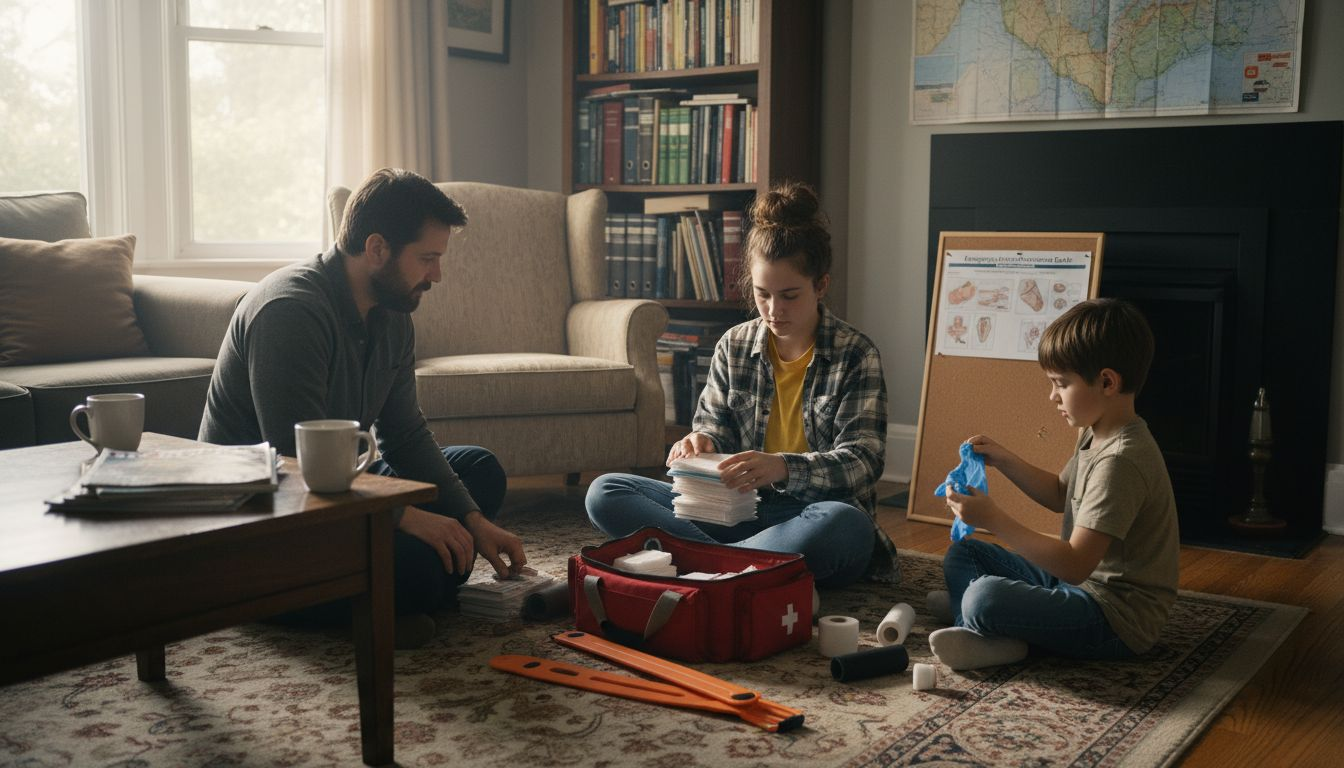
Pro tip: Balance kit comprehensiveness with portability. A kit you can’t quickly grab or carry is useless during evacuation scenarios.
Storage constraints force trade-offs, but prioritise trauma supplies over minor ailment items. You can improvise a cold compress, but you cannot improvise a tourniquet. Explore earthquake kit organisation strategies to maximise space efficiency while maintaining readiness.
Common misconceptions about first aid kits in earthquake contexts
Many BC families believe their standard first aid kit suffices for earthquakes, but this assumption creates dangerous gaps in preparedness. Basic kits designed for minor cuts and scrapes lack the trauma-specific supplies needed when buildings collapse and infrastructure fails.
The most prevalent myths include:
- Standard kits provide adequate earthquake coverage
- First aid kits never expire or degrade
- Kits eliminate the need for professional medical care
- Larger kits are always better regardless of training
- Once assembled, kits require no further attention
These misconceptions breed false security. First aid kits require maintenance every 6 months minimum. Adhesives lose stickiness, medications expire, and sterile packaging degrades. Neglected kits fail when you need them most.
Understand that first aid kits provide immediate stabilisation, not definitive treatment. They bridge the gap until professional care arrives, but they do not replace doctors or paramedics. Families who grasp this distinction prepare more comprehensively, combining kits with communication plans and evacuation strategies.
Shelf life myths cause under-preparedness. Families assume kits remain effective indefinitely, leading to expired supplies and missing items discovered only during emergencies. Regular checks prevent this scenario, ensuring readiness when the Big One strikes.
Recognise your kit’s limits to empower better planning. If you know your supplies handle immediate trauma but not extended care, you’ll prioritise additional resources like prescription medication reserves and backup water for wound cleaning. This realistic assessment strengthens overall preparedness. Learn more about choosing the right earthquake kit for your family’s specific needs.
Comparison of standard vs earthquake-specific first aid kits
Understanding the differences between standard and earthquake-specific kits helps you make informed decisions about your family’s preparedness investment. The contrast is substantial across content, capacity, and intended use.
| Feature | Standard first aid kit | Earthquake-specific kit |
|---|---|---|
| Number of items | 15-25 basic supplies | 40+ specialised supplies |
| Trauma care | Limited to minor wounds | Tourniquets, burn dressings, splints |
| Multi-casualty capacity | Single person focus | Designed for multiple casualties |
| Cost range | $20-$40 | $75-$150 |
| Shelf life attention | Often overlooked | Maintenance guidelines included |
| Suitability for prolonged emergencies | Inadequate | Calibrated for 72+ hours |
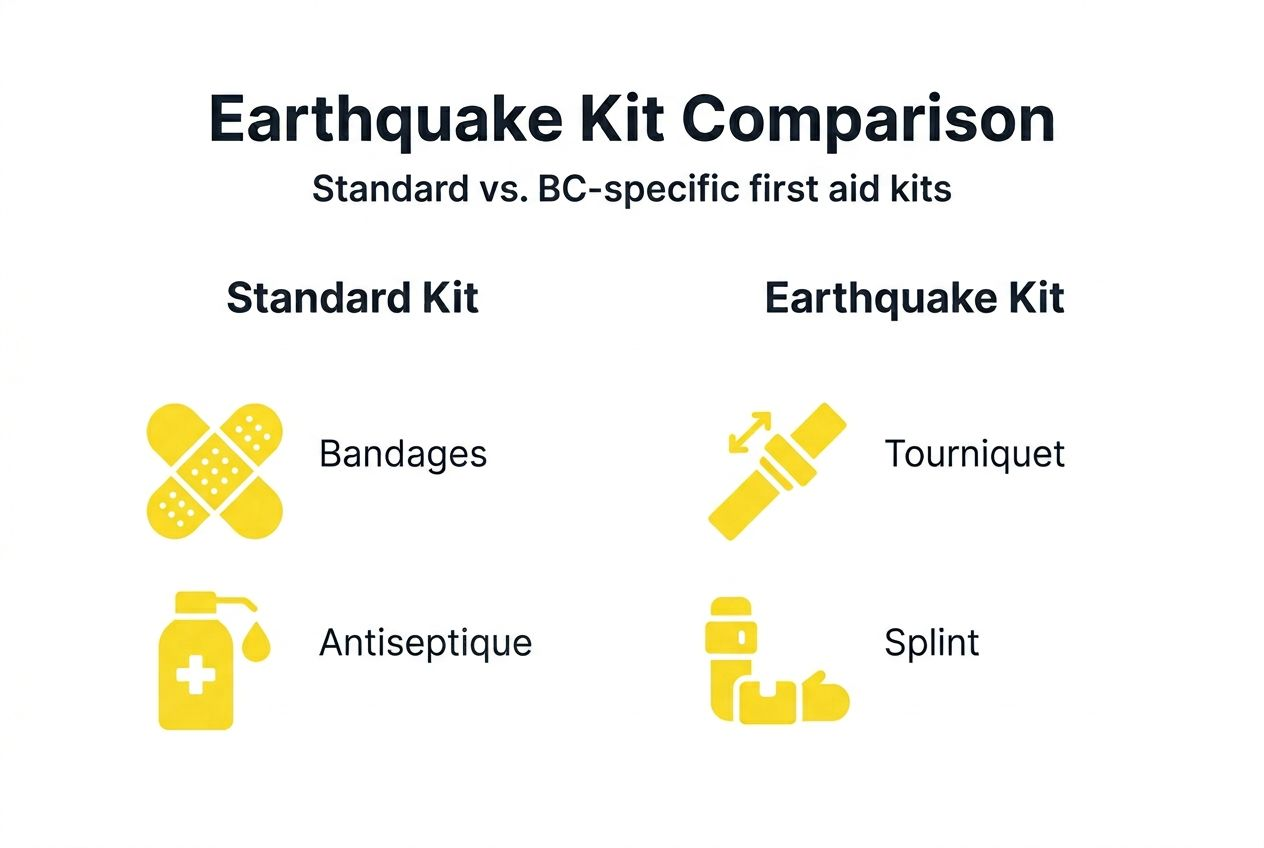
Standard kits serve everyday minor injuries well but falter during major disasters. They contain basic bandages and antiseptics suitable for kitchen cuts or scraped knees, not crushed limbs or severe burns.
Earthquake-specific kits like the Gov BC earthquake kit include trauma supplies that address the unique injury patterns earthquakes cause. The higher cost reflects expanded contents and quality standards necessary for life-threatening situations.
Pro tip: If budget constrains you, prioritise trauma supplies first, then fill gaps with standard items. A tourniquet matters more than extra adhesive strips.
Family situation dictates the best choice. Households with medical training may customise kits more effectively, whilst those without benefit from pre-assembled earthquake kits meeting government standards. Evaluate your household’s capabilities and risks, then select accordingly. Resources on choosing earthquake kits for BC families provide detailed selection guidance.
Government and expert recommendations for BC residents
The BC provincial government and health agencies provide clear guidelines for earthquake first aid kit specifications, reflecting the unique seismic risks facing coastal communities. These authoritative standards ensure families prepare adequately for the Cascadia Subduction Zone threat.
Key BC government recommendations include:
- Kits must support multiple casualties for a minimum 72-hour period
- Trauma care supplies take priority over minor ailment items
- Regular maintenance schedules to replace expired supplies
- Integration with broader household emergency plans
- Accessibility for all family members including children
The Gov BC earthquake kit aligns directly with these provincial standards, offering families a vetted solution that meets official preparedness benchmarks. Public health authorities stress that individual household readiness reduces strain on emergency services, allowing professionals to focus on the most critical cases.
“Every household in earthquake-prone regions should maintain a first aid kit with trauma supplies. This preparation saves lives and reduces complications when professional help is delayed.” — BC Emergency Health Services
Experts emphasise that kit preparation forms one component of comprehensive readiness. Families should combine first aid supplies with water reserves, food stores, communication plans, and evacuation routes. This integrated approach maximises survival and recovery outcomes.
Community preparedness amplifies individual efforts. When neighbours maintain proper kits and training, entire blocks become more resilient. BC authorities encourage families to share preparedness knowledge and coordinate neighbourhood response plans. Explore the full range of Gov BC earthquake kits to find options matching your household size and needs.
Best practices for kit maintenance and upkeep
Maintaining your first aid kit ensures it functions when disaster strikes. Neglected kits with expired supplies and missing items fail families during critical moments. Establish a systematic maintenance routine to keep your kit ready.
Follow these maintenance steps:
- Schedule biannual checks every March and September to review all supplies
- Replace expired medications, ointments, and sterile items immediately
- Replenish used items after any emergency or practice drill
- Inspect packaging integrity for tears, moisture damage, or contamination
- Update your kit’s inventory list to track contents and expiration dates
- Test battery-powered items like torches to confirm functionality
Storage conditions significantly impact supply longevity. Keep your kit in a cool, dry location away from direct sunlight and temperature extremes. Garages and garden sheds often experience temperature swings that degrade medications and adhesives. Interior cupboards near exits provide ideal storage combining protection with accessibility.
Pro tip: Photograph your kit’s contents and inventory list. Store digital copies in cloud storage so you can reference them if evacuating without the physical kit.
Educate every family member about kit location and contents. Children old enough to understand should know where the kit lives and how to alert adults during emergencies. This shared knowledge prevents confusion when seconds matter.
Regular upkeep transforms your kit from a static box into a reliable life-saving resource. The small time investment pays enormous dividends when earthquakes strike without warning. Detailed guidance on earthquake kit organisation helps streamline your maintenance routine.
Case studies illustrating first aid kit impact
Real-world evidence demonstrates the tangible difference first aid kits make during earthquakes. Examining specific disasters reveals patterns that underscore the importance of preparedness for BC families facing similar seismic threats.
The 2011 Tohoku earthquake and tsunami in Japan provides compelling data. Studies tracking outcomes showed households with well-stocked first aid kits experienced fewer serious complications from injuries compared to unprepared households. Timely wound care within the first hour reduced infection risk by up to 50%, preventing secondary health crises that overwhelmed medical facilities.
Key lessons from earthquake case studies:
- Immediate bleeding control prevented fatalities from crush injuries
- Burn dressings reduced infection rates in fire-related injuries
- Splinting fractured limbs before evacuation improved long-term recovery
- Psychological benefits of taking action reduced panic and improved decision-making
- Communities with higher preparedness rates recovered faster overall
The 1996 Biak earthquake demonstrated how even basic medical supplies improved outcomes in isolated communities. When professional help took days to arrive, residents with first aid kits stabilised injuries that would have otherwise deteriorated.
These examples highlight a consistent pattern: preparedness directly correlates with survival and recovery. Families who invest time and resources in proper earthquake first aid kits document measurably better outcomes. The evidence is clear and the stakes are high for BC residents living in one of North America’s most earthquake-prone regions.
Integrating first aid kits with training and practical preparedness
A first aid kit’s effectiveness multiplies when paired with proper training and coordinated family emergency planning. Many BC households own kits but lack the skills to use supplies correctly during high-stress situations. This gap undermines preparedness efforts.
First aid training teaches essential skills that complement your kit:
- Enrol family members in Red Cross or St. John Ambulance first aid courses
- Practise applying tourniquets, dressings, and splints during calm moments
- Conduct quarterly family drills simulating earthquake scenarios
- Assign specific roles to each family member for efficient response
- Review and update skills annually to maintain competency
Training transforms supplies from intimidating medical items into familiar tools. When you’ve practised applying a pressure bandage multiple times, you’ll execute the task confidently during actual emergencies instead of fumbling whilst a loved one bleeds.
Pro tip: Include children in age-appropriate training. Even young kids can learn to fetch supplies, apply simple bandages, or comfort injured family members.
Integrate your first aid kit into comprehensive household emergency plans that address communication, evacuation, and reunion strategies. Your kit is one tool in a larger preparedness ecosystem. Coordinate with family emergency plans that specify who retrieves the kit, where you regroup, and how you contact emergency services.
Regular practice reduces panic and improves outcomes. When earthquakes strike, trained families respond systematically instead of reactively. This calm competence saves lives and prevents injuries from escalating. Explore household emergency planning resources to build comprehensive preparedness that integrates first aid readiness with broader safety strategies.
Explore earthquake kits designed for BC families
Equip your household with earthquake kits specifically designed to meet BC’s unique preparedness needs. Whether you need portable personal supplies, comprehensive basic kits, or deluxe options for larger families, purpose-built solutions ensure you’re ready when the Big One strikes.
Our curated selection includes trauma-specific supplies recommended by BC authorities, from tourniquets and burn dressings to splints and sterile wound care. Each kit reflects provincial preparedness standards, giving you confidence that your family can respond effectively during emergencies.
Options range from compact personal earthquake kits for individuals to basic earthquake kits covering small families, up to deluxe earthquake kits supporting larger households or extended emergencies. All kits accommodate various storage constraints whilst maintaining comprehensive coverage.
Ordering from a trusted local BC supplier means faster delivery and products calibrated for regional seismic risks. Don’t wait until earthquake warnings escalate. Enhance your family’s readiness today with kits designed specifically for the challenges BC residents face.
Frequently asked questions
What are the top 3 items to always have in an earthquake first aid kit?
Tourniquets for severe bleeding control, burn dressings for thermal injuries, and rigid splints for fracture stabilisation are the three most critical trauma supplies. These items address the most common life-threatening injuries from earthquakes and cannot be improvised effectively.
How often should I update the supplies in my first aid kit?
Check your kit every 6 months, replacing expired medications, degraded adhesives, and damaged sterile packaging. Mark your calendar for March and September reviews to establish a consistent routine that ensures readiness year-round.
Can children in the family be trained to use first aid kits effectively?
Yes, children as young as 8 can learn age-appropriate first aid skills like applying simple bandages and fetching supplies. Training reduces panic and creates additional household capacity during multi-casualty scenarios when adult help is divided.
Are store-bought earthquake kits better than assembling your own?
Store-bought kits meeting BC government standards offer convenience and completeness, whilst custom kits allow specialisation for unique family needs. Pre-assembled options work well for most families, but those with medical training may prefer tailored solutions.
What should I do if I use supplies from the kit during an emergency?
Replace used items immediately after the emergency resolves to restore full kit capacity. Keep a running inventory list to track what needs replenishing, and consider ordering backup supplies to avoid gaps whilst waiting for replacements to arrive.
Recommended
Share this post
- 0 comment
- Tags: en, role of first aid kits