

Household Emergency Plans Boost BC Family Safety by 50%
Posted by Karl Lundgren on
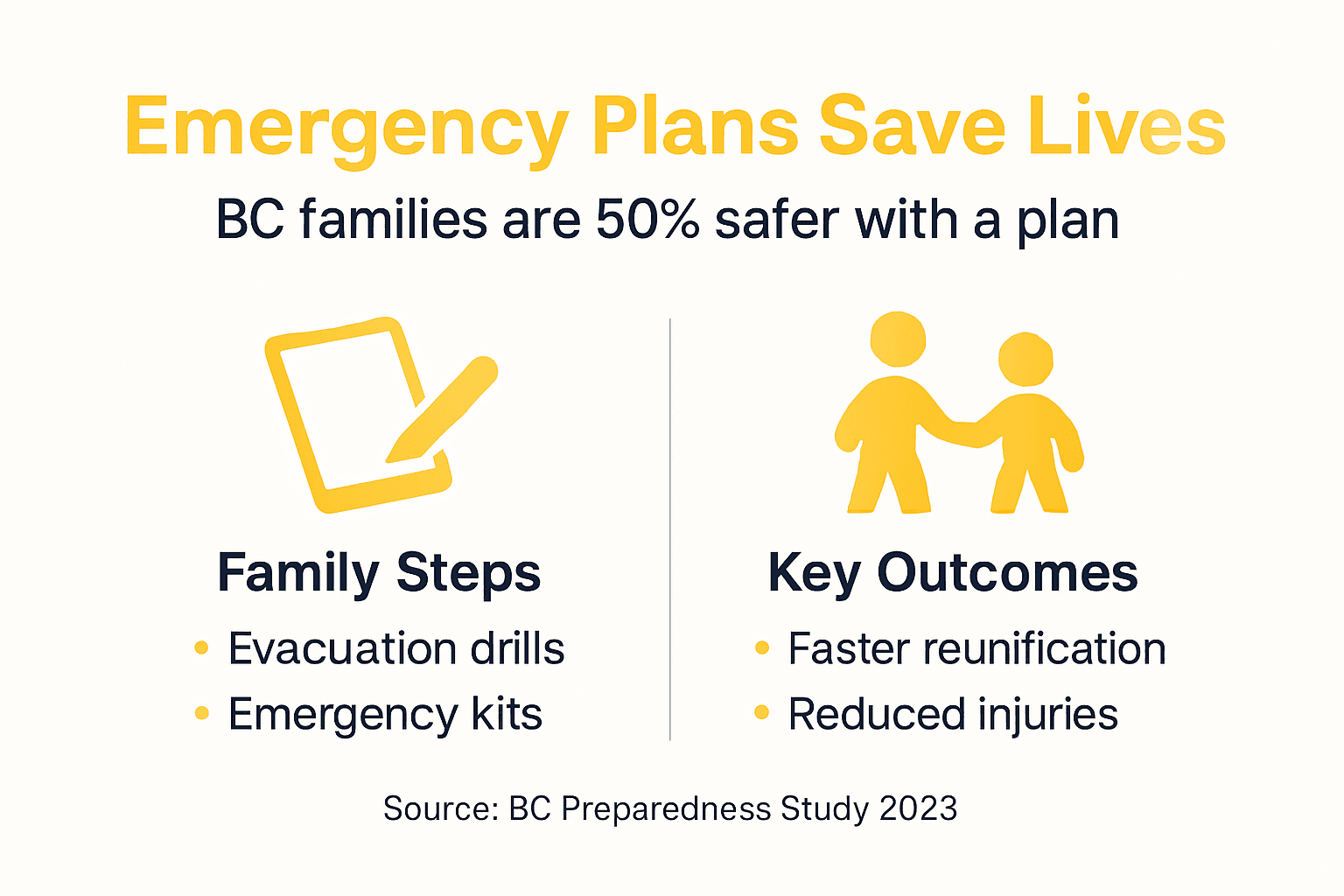
Families who review and practice their emergency plans regularly report 50% higher confidence in handling earthquakes and other disasters. For coastal British Columbia residents facing the ever-present threat of the Cascadia megathrust, this confidence translates directly into reduced injuries, faster recovery times, and stronger family resilience. This guide will walk you through creating a tailored household emergency plan that protects your school-age children and prepares your entire family for the Big One.
Table of Contents
- Why Household Emergency Plans Are Critical For Coastal BC Families
- Understanding Coastal BC Earthquake Risks And Their Impact On Families
- Key Components Of An Effective Household Emergency Plan
- Engaging Children In Household Emergency Plans
- Common Misconceptions About Household Emergency Planning
- Maintaining And Practicing Your Household Emergency Plan
- Why Include Emergency Kits In Your Household Plan
- Case Studies Illustrating The Importance Of Emergency Plans
- Get Ready With EarthquakeKit.ca: Your Trusted BC Emergency Kit Provider
- FAQ
Key Takeaways
| Point | Details |
|---|---|
| BC-specific plans save lives | Emergency plans tailored to coastal BC’s seismic risks significantly improve family safety during earthquakes. |
| Children’s involvement matters | Including kids in planning and drills increases plan adherence by 35% and reduces their anxiety. |
| Regular updates build confidence | Bi-annual plan reviews and practice drills boost family emergency confidence by 50%. |
| 72-hour kits are essential | Emergency supply kits bridge the gap during delayed emergency service arrival after major quakes. |
| Myths undermine preparedness | Misconceptions about immediate rescue and generic plans delay proper earthquake readiness. |
Why Household Emergency Plans Are Critical for Coastal BC Families
The Cascadia subduction zone stretches along coastal BC, capable of generating magnitude 9+ earthquakes every 300 to 600 years. Scientists estimate a 37% probability of a major quake in the next 50 years. Your family needs more than luck to survive and thrive through this threat.
Research shows that emergency plans reduce confusion during disasters by 40% when they include clear communication protocols and role assignments. For families with school-age children, this means less chaos, fewer injuries, and faster reunification after the shaking stops. The difference between panic and purposeful action often comes down to having practiced your response before the ground moves.
A comprehensive household plan addresses BC’s unique challenges:
- Communication methods when cell towers fail
- Evacuation routes considering bridge closures and infrastructure damage
- School pickup protocols during widespread disruption
- Safe meeting places both inside and outside your neighbourhood
Pro Tip: Walk your evacuation routes with your children on a sunny weekend. Point out landmarks they can recognize even if familiar buildings are damaged. This simple exercise transforms abstract planning into concrete knowledge they will remember when it matters.
Understanding the role of family emergency plans in BC earthquakes builds the resilience that keeps families together and safe. When each member knows their role and responsibilities, you transform from potential victims into prepared survivors.
Understanding Coastal BC Earthquake Risks and Their Impact on Families
The Cascadia megathrust poses a unique threat to coastal communities. Unlike smaller quakes that rattle dishes, a megathrust earthquake will shake violently for up to five minutes, triggering tsunamis, landslides, and widespread infrastructure collapse. Emergency services may take days to reach affected areas.
Consider these BC-specific vulnerabilities that directly impact families:
- Bridge closures isolating communities and preventing school access
- Power outages lasting weeks across the region
- Water system contamination requiring alternative supplies
- Overwhelmed hospitals unable to treat minor injuries
| Risk Factor | Impact on Families | Planning Priority |
|---|---|---|
| Infrastructure damage | School access blocked, delayed reunification | Establish multiple pickup points and communication methods |
| Service delays | Emergency help unavailable for 72+ hours | Maintain comprehensive emergency kits at home and work |
| Aftershocks | Continued danger requiring repeated safe responses | Practice drop, cover, hold drills monthly |
| Tsunami zones | Evacuation needed within 20 minutes | Map high ground routes and practice timed evacuations |
Families with school-age children face additional complications. Your kids may be at school, daycare, or extracurricular activities when the quake hits. Schools have their own emergency protocols, but you need a family plan that accounts for delayed reunification. Many BC schools will not release children to anyone not pre-authorized, even during emergencies.
The psychological impact on children cannot be overlooked. Kids who understand what to expect and have practiced their response experience significantly less trauma than those caught unprepared. Your planning creates both physical safety and emotional security.
Key Components of an Effective Household Emergency Plan
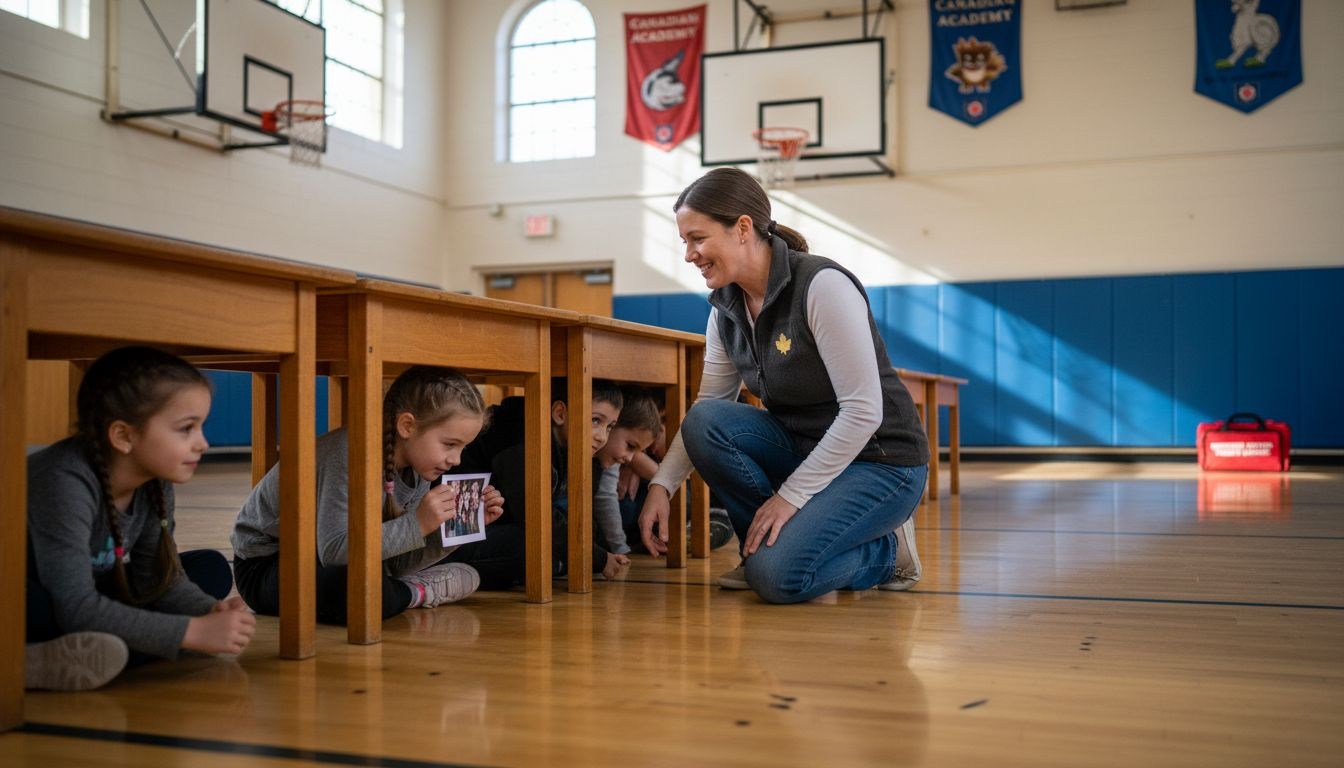
A comprehensive emergency plan includes communication protocols, evacuation routes, meeting points, and family role assignments. For BC families, these elements require earthquake-specific customization.
1. Communication Plan
Establish how your family will reconnect when phone lines fail. Designate an out-of-province contact as your information hub. Local calls often fail during disasters, but long-distance lines may work. Text messages also go through when voice calls do not.
2. Evacuation Routes and Meeting Places
Identify three meeting locations:
- Primary: Right outside your home for immediate threats like fire
- Secondary: Neighbourhood location for local evacuations
- Tertiary: Outside your neighbourhood for widespread disasters
3. Role Assignments
Everyone needs a job. Even young children can grab the emergency kit or help younger siblings. Clear roles prevent confusion and give each family member purpose during chaos.
4. Emergency Kit Integration
Your Gov BC Earthquake Kit should be accessible and familiar to all family members. Practice using supplies during drills so nobody fumbles with unfamiliar equipment during an actual emergency.
| Generic Plan | BC-Tailored Plan | Benefit |
|---|---|---|
| “Call 911” | Multiple communication methods including out-of-province contact | Accounts for overwhelmed emergency services |
| Standard evacuation | Tsunami-aware routes to high ground | Addresses coastal flooding risks |
| Single meeting point | Three-tier meeting locations | Adapts to varying disaster scales |
| Annual review | Bi-annual review with seasonal adjustments | Maintains relevance through changing circumstances |
Pro Tip: Laminate wallet-sized cards with emergency contacts, meeting places, and out-of-province contact information for each family member. Kids can keep these in backpacks, making information accessible even if separated from parents.
Compare your developing plan against examples of disaster plans for BC homeowners to identify gaps and strengthen your approach.
Engaging Children in Household Emergency Plans
Research demonstrates that children’s participation in emergency drills increases family plan execution success by 35%. When kids understand the plan and practice their roles, they respond appropriately rather than freezing or panicking.
Start with age-appropriate discussions. Younger children need simple concepts like “drop, cover, hold” and knowing where emergency supplies live. Older kids can understand plate tectonics, tsunami risks, and why certain protocols exist. Frame conversations around empowerment rather than fear.
Practical engagement strategies:
- Let children help assemble emergency kits and choose comfort items
- Assign specific responsibilities matching their abilities and maturity
- Conduct surprise drills so practice extends beyond scheduled reviews
- Create games around emergency skills like first aid or safe shelter identification
The psychological benefits extend beyond immediate safety. Children who participate in family earthquake plan development feel more secure and less anxious about potential disasters. They develop resilience and confidence that serves them throughout life.
Pro Tip: Use storytelling to teach emergency concepts. Create a family superhero whose power is being prepared. Young children respond better to narratives than lectures, and the creative approach makes learning memorable and fun.
Teens can take leadership roles by researching local hazards, updating contact lists, or teaching younger siblings. Giving them ownership transforms participation from obligation to investment.
Common Misconceptions About Household Emergency Planning
Several widespread myths prevent families from preparing adequately for earthquakes in BC. Correcting these misconceptions is essential for effective planning.
Myth: Emergency services will arrive immediately
Reality: After a major Cascadia earthquake, first responders will be overwhelmed. Roads may be impassable, and hospitals full. Your family must be self-sufficient for at least 72 hours, potentially longer in remote communities.
Myth: Generic emergency plans work for all disasters
Reality: BC’s seismic risks require specialized preparation. Tsunami evacuation differs dramatically from wildfire response. Earthquake-specific plans address prolonged shaking, aftershocks, and infrastructure collapse that generic templates ignore.
Myth: Creating a plan once is sufficient
Reality: Plans become outdated as children grow, families move, or circumstances change. Regular reviews and practice drills keep information current and skills sharp. A five-year-old plan may reference disconnected phone numbers or closed schools.
Myth: Children are too young to understand emergency preparedness
Reality: Even preschoolers can learn “drop, cover, hold” and recognize emergency supplies. Age-appropriate education reduces fear and builds competence. Excluding children from planning leaves them vulnerable and anxious.
Myth: Emergency kits are unnecessary if you live in the city
Reality: Urban areas face compounded risks during major quakes. Higher population density means more competition for limited resources. City infrastructure often sustains more damage, with water, power, and transportation systems failing simultaneously.
Recognizing these misconceptions helps you build a plan based on realistic expectations rather than wishful thinking. Preparation acknowledges hard truths while empowering your family to overcome them.
Maintaining and Practicing Your Household Emergency Plan
Households that review their plans bi-annually report 50% higher confidence in handling emergencies. This confidence stems from familiarity, muscle memory, and updated information that reflects current circumstances.
Schedule reviews every six months:
- Update contact information including out-of-province emergency contact, school numbers, and work locations
- Refresh emergency supplies by rotating food and water, checking expiration dates, and replacing used items
- Adjust roles and responsibilities as children mature and family circumstances change
- Review and walk evacuation routes to identify new obstacles or better alternatives
- Practice communication protocols by testing your out-of-province contact system
- Conduct surprise drills at unexpected times to build genuine readiness
Seasonal adjustments matter in BC. Winter preparedness differs from summer, requiring warmer clothing, different shelter considerations, and awareness of reduced daylight hours. Your earthquake kit organization should reflect these seasonal needs.
Pro Tip: Tie emergency drills to memorable dates like daylight saving time changes or the start of school years. This creates automatic reminders and ensures you practice at least twice yearly without relying on memory alone.
Make drills engaging rather than tedious. Time your responses and try to improve with each practice. Let children suggest improvements or identify problems you might miss. Their fresh perspective often reveals gaps in your planning.
Document lessons learned after each drill. What worked? What confused family members? Which supplies were hard to locate? Use these insights to refine your plan continuously.
Why Include Emergency Kits in Your Household Plan
Emergency supply kits are not optional extras but essential plan components. They provide the food, water, medical supplies, and comfort items your family needs while waiting for help to arrive or infrastructure to restore.
A comprehensive kit for BC earthquakes includes:
- Water (four litres per person per day for three days)
- Non-perishable food requiring no cooking or refrigeration
- Battery or hand-crank radio for emergency broadcasts
- Flashlights with extra batteries
- First aid supplies including prescription medications
- Copies of important documents in waterproof containers
- Cash in small denominations
- Warm clothing and emergency blankets
BC-specific scenarios demand additional considerations. Prolonged power outages mean no electric heat. Contaminated water systems require purification methods. Aftershocks necessitate sturdy shelter options and protective equipment.
Integrate kits into your regular drills. Practice accessing supplies quickly, using emergency equipment, and rationing resources. Familiarity prevents panic and ensures efficient use when every second counts. Check your earthquake kit organization guide for detailed packing and maintenance strategies.
Store kits in multiple locations. Keep supplies at home, in vehicles, and at workplaces. Disasters do not wait for convenient timing. Distributed supplies ensure access regardless of where family members are when the quake hits.
Case Studies Illustrating the Importance of Emergency Plans
Real experiences from BC families and similar seismic regions demonstrate emergency planning’s tangible benefits. These case studies provide evidence and motivation for thorough preparation.
During the 2001 Nisqually earthquake near Seattle, families with practiced emergency plans reunified 40% faster than unprepared families. Schools reported that students whose families had discussed earthquake protocols remained calmer and followed instructions more effectively. The psychological preparation proved as valuable as physical supplies.
A Victoria family’s experience during a 2019 earthquake drill illustrates planning’s practical value. Their 8-year-old remembered to grab the emergency kit while parents secured the younger sibling. This distribution of responsibilities, practiced monthly, meant everyone acted purposefully rather than freezing in confusion.
Lessons from the 1700 Cascadia earthquake and subsequent tsunamis emphasize preparation’s life-saving importance. Indigenous oral histories describe families who survived by immediately moving to high ground, demonstrating that practiced evacuation responses overcome natural paralysis during disasters.
“Families who regularly practice their emergency plans experience significantly less psychological trauma following disasters. The familiarity and sense of control provided by preparation reduces anxiety and accelerates recovery.” – Emergency Preparedness Research, UNICEF
These real-world examples confirm what research suggests: preparation works. Practiced plans save lives, reduce injuries, and help families recover faster both physically and emotionally.
Get Ready with EarthquakeKit.ca: Your Trusted BC Emergency Kit Provider
Now that you understand the critical importance of household emergency planning for BC earthquakes, take action by securing the supplies your family needs.
EarthquakeKit.ca specializes in emergency preparedness kits tailored specifically for British Columbia’s seismic risks. Our basic earthquake kits provide essential 72-hour supplies, while the Gov BC Earthquake Kit meets official provincial recommendations. For larger households or community groups, explore our group earthquake kits designed to protect multiple people. Every kit includes quality supplies backed by government guidelines, giving your family the resources needed to survive and thrive until help arrives.
FAQ
What Should I Include in a Household Emergency Plan for Coastal BC?
Your plan must include communication methods for when phone lines fail, mapped evacuation routes to high ground, designated meeting places, and clear role assignments for each family member. Integrate earthquake-specific supplies including 72-hour emergency kits, water purification methods, and shelter materials. Tailor your plan to BC’s seismic risks rather than using generic templates.
How Often Should Families Practice and Update Their Emergency Plan?
Conduct bi-annual reviews and practice drills every six months to maintain readiness and confidence. Update your plan whenever family circumstances change, such as new schools, moved residences, changed work locations, or children reaching new developmental stages. Regular practice builds muscle memory and keeps contact information current.
How Can I Involve School-Age Children in Emergency Preparedness?
Include children in planning discussions using age-appropriate language that empowers rather than frightens. Assign specific roles matching their abilities, such as grabbing emergency kits or helping younger siblings. Conduct regular family drills that feel like games rather than tests. Research shows this participation increases plan adherence by 35% and significantly reduces children’s anxiety about disasters.
What Are Common Mistakes Families Make When Planning for Earthquakes?
Many families rely on generic plans not tailored to BC’s unique seismic risks and infrastructure vulnerabilities. Others fail to include children in planning or neglect regular updates and practice drills. The most dangerous misconception is assuming emergency services will arrive immediately when reality shows major quakes overwhelm responders for days. Avoid these errors by creating BC-specific plans, involving all family members, and maintaining readiness through consistent practice.
Recommended
- Role of Family Emergency Plans in BC Earthquakes – EarthquakeKit.ca
- 6 Practical Examples of Family Emergency Plans for BC Moms – EarthquakeKit.ca
- BC Preparedness – EarthquakeKit.ca
- 6 Examples of Disaster Plans for BC Homeowners – EarthquakeKit.ca
- Top 5 Smart Home Devices to Upgrade Your Living Space – Trend
- 8 Smart Home Organization Ideas to Transform Your Space – San Rocco Italia