

Role of Family Emergency Plans in BC Earthquakes
Posted by Karl Lundgren on
Every parent in coastal British Columbia understands the worry that comes with living in a place where earthquakes and tsunamis are real risks. Creating a family emergency plan is more than a checklist—it empowers your household to respond quickly and stay connected when it matters most. With straightforward steps, you can make sure every family member knows how to communicate, where to meet, and what to do if disaster strikes, helping you swap chaos for confidence during emergencies.
Table of Contents
- Family Emergency Plans Explained for BC Quakes
- What Makes a Family Plan Different From General Preparedness
- Why BC Families Need This Specific Planning
- Getting Your Family to Actually Use the Plan
- Key Components for Coastal BC Families
- The Five Essential Elements
- Communication Plans for Coastal Areas
- Meeting Places and Evacuation Routes
- 72-Hour Supply Kits for Coastal Living
- How Plans Support Safety and Recovery
- Reducing Stress During the Immediate Aftermath
- Staying Safe When Help Isn’t Coming
- Supporting Faster Recovery
- Building Resilience Through Practice
- Common Mistakes and Gaps to Avoid
- The Contact List That Nobody Updates
- Missing Meeting Points or Unclear Locations
- Overlooking Vulnerable Family Members
- Plans That Never Get Practised
- Plans Without Written Backup
Key Takeaways
| Point | Details |
|---|---|
| Family Emergency Plans Essential | A family emergency plan is crucial for ensuring safety and coordination during an earthquake. It helps families respond effectively rather than react chaotically. |
| Specific Needs for BC Families | Coastal BC families must account for unique risks such as tsunamis and ensure clear communication and evacuation strategies are in place. |
| Regular Practice is Critical | Practising the emergency plan regularly enhances readiness and helps family members remember their roles during a crisis. |
| Update Information Consistently | Keeping contact lists and meeting points current is vital to avoid confusion and ensure timely communication after an earthquake. |
Family Emergency Plans Explained for BC Quakes
A family emergency plan is your household’s roadmap for staying safe and connected when an earthquake hits. It’s not just a document you file away—it’s a living guide that everyone in your home understands and can follow when stress and panic might otherwise take over.
Think of it as the difference between reacting and responding. When the ground stops shaking, families with plans know exactly what to do next. Those without plans scramble, search for missing family members, and waste precious time figuring out basic steps.
What Makes a Family Plan Different from General Preparedness
You might already have an emergency kit at home. That’s excellent. But a kit alone won’t tell your teenager where to meet you if your house becomes unsafe, or help your partner know whether to stay put or evacuate.
A family emergency plan addresses the human side of disaster response. It covers communication, decision-making, and accountability—the things that keep your family connected when normal systems fail.
Here’s what a solid family plan typically includes:
- A contact list of family members and trusted neighbours
- Meeting locations (one near home, one outside your neighbourhood)
- Communication methods (cell phone numbers, out-of-province contacts)
- Special needs for children, elderly parents, or pets
- Evacuation routes from your home and neighbourhood
- Key shut-off locations (gas, water, electrical) in your house
A family emergency plan transforms individual preparedness into household coordination, ensuring everyone knows their role when disaster strikes.
Why BC Families Need This Specific Planning
Coastal British Columbia sits directly above the Cascadia Subduction Zone. The next major earthquake isn’t a question of if, but when. Your family’s survival and recovery depend significantly on decisions made in the first minutes and hours after shaking stops.
Household emergency plans for earthquake-prone areas account for needs across all household members, including older adults, children, pets, and those with special health considerations. Natural Resources Canada emphasises that communication strategies and practice drills are just as critical as having supplies on hand.
BC’s PreparedBC program goes further by offering fill-in-the-blank home emergency plans specifically designed for BC residents, helping households coordinate actions to stay safe and respond effectively during earthquakes.
Your plan needs to reflect your neighbourhood’s specific risks. A family in downtown Vancouver faces different challenges than one in a rural area. Older homes have different vulnerabilities than newer construction.
Getting Your Family to Actually Use the Plan
The best plan sitting in a drawer helps no one. Involve every family member in creating it so they own their role.
Children as young as five can understand basic concepts like “meet at the big oak tree” or “stay under a table during shaking.” Teenagers can help map evacuation routes and document home features.
Schedule regular practice drills—even informal ones. Have everyone run through their meeting place scenario. Update contact lists when phone numbers change. Revisit the plan annually or after major life changes.
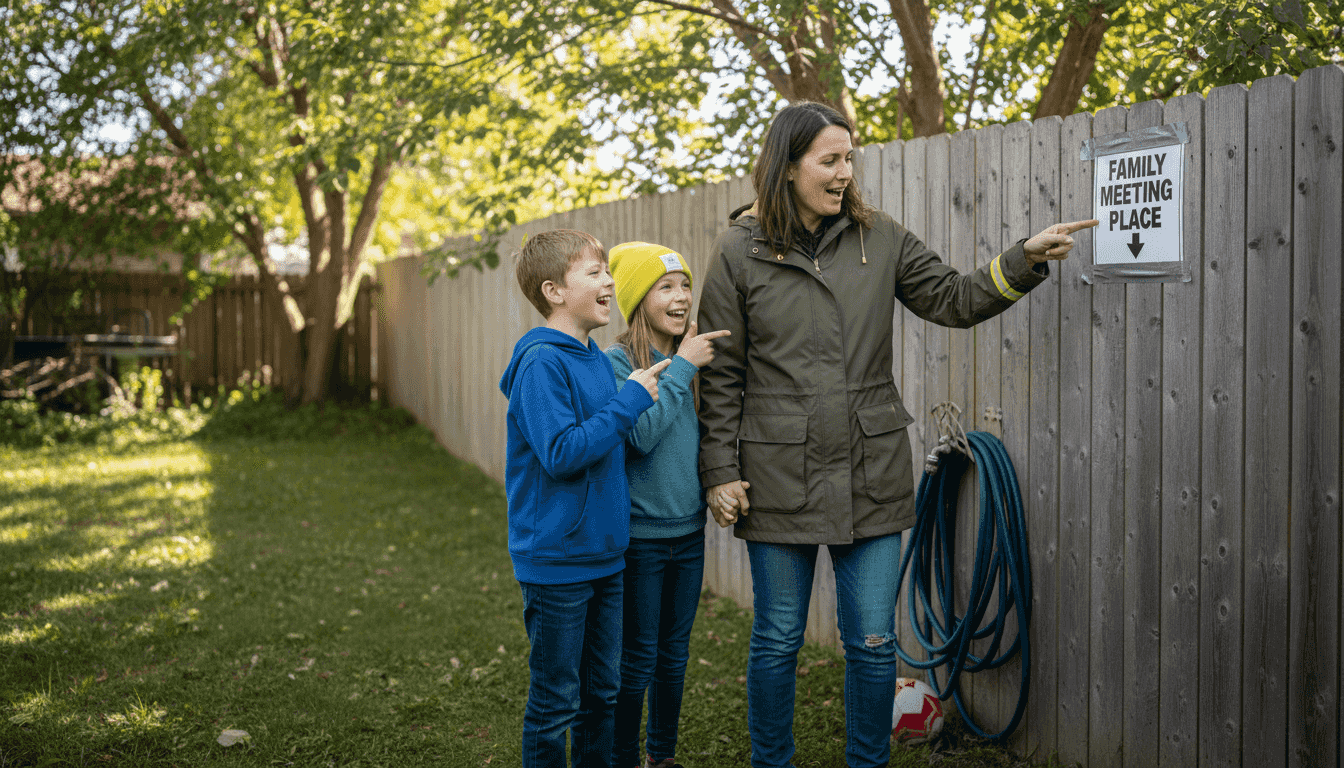
Pro tip: Start your family plan this week by gathering everyone for a 20-minute conversation about what happens immediately after an earthquake—who calls whom, where does everyone go, and what’s the first decision point.
Key Components for Coastal BC Families
Coastal BC families face unique earthquake risks that inland residents don’t. Your emergency plan needs to account for these specific threats, starting with the possibility of tsunami waves that can follow major earthquakes along the Cascadia Subduction Zone.
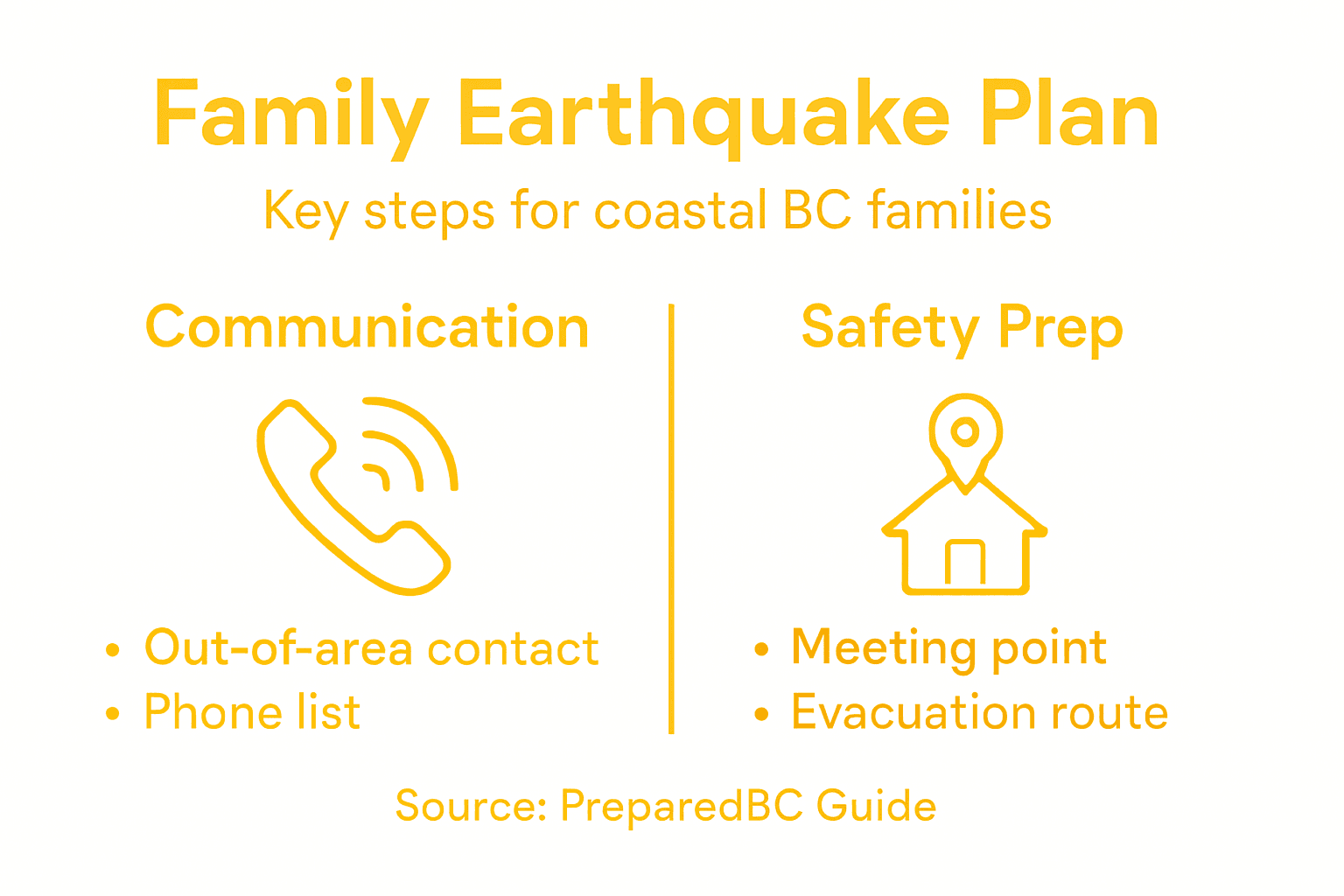
The Province of British Columbia’s Earthquake and Tsunami Preparedness Guide outlines comprehensive steps tailored specifically for coastal living. Your family’s safety depends on understanding what makes coastal preparedness different and building a plan around those realities.
Here’s how coastal and inland BC family emergency plans differ:
| Planning Focus | Coastal BC Families | Inland BC Families |
|---|---|---|
| Tsunami Risk | High, needs specialised evacuation routes | Minimal, evacuation less urgent |
| Water Supply Concern | Risk of contamination by tsunamis | Stable supplies more likely |
| Meeting Place Choices | May require locations outside evacuation zones | Usually local neighbourhood |
| Communication Strategy | Out-of-province contacts vital | Local contacts may be sufficient |
| Supply Storage | Duplicates in multiple safe areas | Single home storage typical |
The Five Essential Elements
Every solid family emergency plan for coastal BC includes these core components:
- Household emergency plan documenting roles and responsibilities
- 72-hour emergency supply kit with food, water, and first aid
- Communication strategy with out-of-area contact numbers
- Designated meeting places both near home and outside your neighbourhood
- Home retrofit information to reduce earthquake damage and injury risk
Each element serves a specific purpose. Your plan coordinates people. Your kit sustains life. Communication keeps you connected. Meeting places reunite families. Home retrofits prevent the collapse or damage that traps people in the first place.
Coastal BC families need plans that account for both earthquake shaking and potential tsunami risk—two distinct hazards requiring different response strategies.
Communication Plans for Coastal Areas
When cell towers go down during a major earthquake, local calls often fail while long-distance calls sometimes work. This counterintuitive reality shapes how your family communicates.
Communication plans for earthquake-prone areas should include an out-of-area contact person—someone living outside British Columbia who family members call to report their status. Your teenager in one part of the city, your partner at work, your elderly parent at home—all call the same out-of-province person to confirm they’re safe.
Write down actual phone numbers on paper. Apps won’t help if your phone’s dead or the network’s down. Everyone in your family should memorise the out-of-area contact number as a backup.
Meeting Places and Evacuation Routes
Pick two meeting locations. One should be within walking distance of your home—maybe a nearby park or schoolyard. The second must be outside your immediate neighbourhood in case your area becomes unsafe or blocked off.
Mark these locations on a printed map you keep at home. Walk the route with your children so they can navigate it alone if necessary. Teach younger children to recognise landmarks rather than rely on street names.
Your evacuation route depends on your home’s vulnerability. Older wooden-frame houses might need immediate evacuation. Newer concrete buildings might be safer to remain in. Know your home’s structural type and decide in advance.
72-Hour Supply Kits for Coastal Living
Coastal families should store emergency supplies at home and consider keeping duplicate supplies in accessible locations. After a major earthquake, roads may be blocked and rescue operations may take days to reach your area.
Beyond standard supplies, coastal residents should include extra drinking water due to potential contamination from tsunami inundation or broken water mains. Store at least 4 litres per person per day.
Pro tip: Write your family’s out-of-area contact number on the inside cover of your emergency kit and on a card each family member carries—this single piece of information often matters most in the chaotic hours after an earthquake.
How Plans Support Safety and Recovery
A family emergency plan isn’t just paperwork—it’s the difference between chaos and coordination when everything around you is broken. After a major earthquake, electricity fails, water systems rupture, and emergency services become overwhelmed within minutes.
Families without plans spend those critical first hours making basic decisions under extreme stress. Families with plans already know what to do.
Reducing Stress During the Immediate Aftermath
When an earthquake stops, your mind races. Is everyone safe? Where do I go? What do I do first? Without a plan, these questions create decision paralysis at the worst possible moment.
Well-developed family emergency plans reduce stress by giving everyone clear, predetermined answers. Your teenager knows exactly where to go. Your partner knows who to call. You know whether to stay home or evacuate.
This isn’t about eliminating fear. Stress after an earthquake is normal and healthy. A plan channels that stress into purposeful action instead of panic.
Staying Safe When Help Isn’t Coming
After the 1995 Kobe earthquake, emergency services couldn’t reach some neighbourhoods for two weeks. After major earthquakes in other regions, critical services remained unavailable for days or even weeks.
Coastal BC faces the same risk. With a major earthquake likely to cause widespread damage across the region, rescue teams will be stretched thin and infrastructure may be severely disrupted.
Your family cannot depend on emergency responders arriving quickly. Preparation through family emergency plans enables households to be self-sufficient during this critical window. Your emergency kit sustains life. Your communication plan connects you to loved ones. Your meeting places reunite separated family members.
Families with practised plans recover faster because they avoid confusion, reduce injuries, and stay self-sufficient while emergency services are overwhelmed.
Supporting Faster Recovery
Recovery doesn’t start when emergency services arrive. It starts in the first moments after shaking stops, when your family’s coordinated response determines your immediate safety and resilience.
Families with plans experience measurably better outcomes:
- Lower injury rates from knowing where to take shelter
- Faster family reunification through pre-arranged meeting places
- Reduced anxiety from having clear protocols
- Better resource management with designated supply locations
- Quicker adaptation to disrupted infrastructure
The first 72 hours set the tone for everything that follows. Families who are organised, calm, and self-sufficient in those early hours can focus on helping neighbours, supporting elderly relatives, and managing longer-term recovery.
Building Resilience Through Practice
The plan only works if people know it. Talking through scenarios once isn’t enough—regular practice builds muscle memory and confidence.
Quarterly reviews keep information current. Annual drills involving the whole family build familiarity. Even informal conversations about “what would we do if…” strengthen your family’s collective readiness.
Children who have practised earthquake safety respond with less panic. Adults who have thought through decisions respond with more clarity. This isn’t theoretical—it’s the foundation of family resilience.
Pro tip: Schedule a 10-minute family check-in every six months to update contact numbers, revisit meeting places, and ask everyone to recite your out-of-area contact person’s phone number—this simple habit keeps your plan alive and active rather than forgotten on paper.
Common Mistakes and Gaps to Avoid
Most BC families start their emergency planning with good intentions. They create a plan, feel prepared, and then life gets busy. Months pass. Phone numbers change. Children grow. The plan sits in a drawer becoming outdated and useless.
The gap between “having a plan” and “having an effective plan” is where most families fail.
The Contact List That Nobody Updates
Outdated phone numbers are perhaps the most common planning mistake. Your teenager changes schools. Your partner switches jobs. Your out-of-area contact moves to a new province. You update your phone contacts but forget about your emergency plan.
When an earthquake hits and your family tries to call the numbers in your plan, half of them don’t work anymore. The plan becomes a liability because family members waste precious time trying numbers that lead nowhere.
Common mistakes include neglecting to update contact lists and failing to include out-of-area contacts. Each family member should have a physical copy with current numbers, and you should review the list every six months.
Missing Meeting Points or Unclear Locations
You’ve designated a meeting place with your family. But is it specific enough? “The park near home” works until your children are in different parts of the city during the earthquake.
Multiple meeting points eliminate this guessing game. Your first meeting point should be very close to home for those who can walk immediately. Your second should be outside your neighbourhood for situations where your area becomes unsafe or inaccessible.
Children need to recognise these locations by landmark, not by street name. Walk them there. Have them describe what they see. Take photos if necessary.
Overlooking Vulnerable Family Members
Plans often assume a standard household of healthy adults and school-age children. Real families are messier. You might have:
- Elderly parents with mobility limitations
- Young children who can’t walk far alone
- Pets requiring special care
- Someone with medical conditions needing medications
- A teenager with anxiety or sensory sensitivities
Your plan must address these realities explicitly. Who helps your parent evacuate? Where do medications stay? How do you keep your pet safe? What reassurance does your anxious teenager need? Vague plans leave these people vulnerable.
A plan that works for some family members but ignores others isn’t actually a family plan—it’s an incomplete plan waiting to fail.
Plans That Never Get Practised
Talking about your plan once isn’t practice. Real practice means actually walking through scenarios, identifying what doesn’t work, and adjusting.
Your child might not remember the meeting place. The route to your secondary gathering spot might be blocked by imaginary debris. Someone might not know the out-of-area contact number. These problems surface only through practice drills.
Schedule informal drills quarterly. Ask random questions: “Where’s our out-of-province contact?” “What do you do if you’re at school during an earthquake?” “Can you walk to our meeting place?” These moments build actual readiness.
Plans Without Written Backup
You remember your plan. Your partner remembers most of it. Your children remember some of it. That’s not good enough when panic and adrenaline override memory.
Write everything down. Keep copies at home, in vehicles, at work, and give copies to relatives and caregivers. Laminate them so they survive water damage. Your written plan becomes your family’s reference guide when memory fails.
The following table summarises common family emergency planning pitfalls and simple solutions:
| Mistake | Impact on Family Safety | Practical Solution |
|---|---|---|
| Outdated contact list | Delays connecting after disaster | Review numbers every 6 months |
| Vague meeting places | Confusion if routes are blocked | Use landmark-based locations |
| Ignoring vulnerable members | Risk of injury or isolation | Assign roles for their support |
| No practice drills | Low confidence, memory gaps | Conduct quarterly mini drills |
| Missing paper backups | Lost info during power outages | Store copies in multiple spots |
Pro tip: Set a calendar reminder for your half-year review date today—update contact numbers, verify meeting places still make sense, and have each family member recite the plan aloud to you, which identifies gaps far faster than silent reading.
Take Charge of Your Family’s Safety with a Complete Earthquake Kit
Creating a thorough family emergency plan for BC earthquakes is vital but it is only one part of ensuring your loved ones are truly safe when disaster strikes. Your plan needs the right tools—like a well-stocked earthquake kit—that meets the specific challenges faced by Coastal British Columbia families including tsunami risks and prolonged isolation. Without proper supplies, your plan risks falling short at the moment it matters most.
Be ready for the “Big One” with carefully curated emergency kits from Gov BC Earthquake Kits – EarthquakeKit.ca that include 72-hour supplies tailored for BC residents. Extend preparedness beyond home by exploring Group Earthquake Kits for Office, Classrooms, Businesses and Groups – EarthquakeKit.ca to protect everyone important in your daily life. Don’t wait until uncertainty becomes panic. Visit EarthquakeKit.ca now to secure peace of mind and build your family’s resilience today.
Frequently Asked Questions
What is a family emergency plan and why is it important for earthquakes?
A family emergency plan outlines the actions and responsibilities of each family member during an earthquake, helping to ensure safety and effective communication when chaos ensues.
How can BC families effectively create and implement their emergency plan?
Families should involve all members in the planning process, designate meeting places, establish communication strategies, and conduct regular practice drills for preparedness.
What unique considerations should BC families include in their emergency plans due to earthquake risks?
BC families should account for the potential of tsunamis, plan for vulnerable family members, and include details on evacuation routes and safe gathering locations specific to their neighbourhood.
How often should families update their emergency plans and practice drills?
Families should review and update their plans at least every six months or after significant changes, and conduct practice drills quarterly to build familiarity and confidence.
Recommended
- 6 Practical Examples of Family Emergency Plans for BC Moms – EarthquakeKit.ca
- BC Preparedness – EarthquakeKit.ca
- 6 Essential Family Earthquake Plan Steps for BC Parents – EarthquakeKit.ca
- Earthquake Kit Organization Guide for BC Families – EarthquakeKit.ca
- 7 Must-Know Family Camping Safety Checklist Tips – Hazli Collection