

Why earthquake preparedness saves BC families: 40% boost
Posted by Karl Lundgren on
British Columbia faces a startling reality: a 37% chance of experiencing a magnitude 7+ earthquake within the next 50 years. The Cascadia fault lurking offshore threatens devastating megathrust earthquakes that could reach magnitude 9+. For families across the province, earthquake preparedness isn’t paranoia, it’s a practical life-saving strategy that reduces harm, speeds recovery, and builds resilience when disaster strikes.
Table of Contents
- Introduction To Earthquake Risks In British Columbia
- Understanding Why Preparedness Saves Lives And Reduces Harm
- Common Misconceptions About Earthquake Preparedness
- Building An Effective Earthquake Preparedness Kit For BC Families
- Psychological And Practical Benefits Of Preparing In Advance
- Official British Columbia And Canadian Government Guidelines
- Conclusion: Taking Action To Prepare Your Family Now
- Earthquake Preparedness Solutions For BC Families
Key takeaways
| Point | Details |
|---|---|
| Survival advantage | Preparedness increases survival chances by up to 40% during major earthquakes. |
| Regional threat | BC’s Cascadia fault poses unique megathrust earthquake risks requiring tailored response. |
| Strategic placement | Emergency kits at home, work, and vehicles ensure immediate access when needed most. |
| Mental readiness | Prepared families experience 50% less anxiety and recover 30-40% faster post-quake. |
| Official guidance | BC government mandates 72-hour emergency kits for all provincial residents. |
Introduction to earthquake risks in British Columbia
The Cascadia subduction zone stretches 1,000 kilometres along BC’s coastline, where the Juan de Fuca plate slides beneath the North American plate. This geological arrangement creates the potential for magnitude 9+ megathrust earthquakes that could devastate coastal communities. BC has a 37% chance of a magnitude 7+ earthquake in the next 50 years, with risk concentrated along the Cascadia fault.
Historical records reveal the last major Cascadia earthquake occurred in 1700, producing a magnitude 9.0 event. Geological evidence shows these megathrust earthquakes recur roughly every 300 to 600 years. We’re now 326 years into that cycle.
BC’s unique vulnerabilities compound seismic risks:
- Coastal geography limits evacuation routes and isolates communities after infrastructure damage
- Older building stock in Vancouver and Victoria lacks modern seismic retrofitting
- Critical bridges and overpasses face potential collapse, severing transport networks
- Tsunami threats along the coast add layered dangers following offshore quakes
- Cold, wet climate demands robust emergency supplies beyond standard preparedness kits
These factors create a perfect storm of risk. Understanding BC’s seismic reality transforms earthquake preparedness from abstract concern into urgent family priority. The question isn’t if a major earthquake will strike, but when, and whether your family will be ready.
Understanding why preparedness saves lives and reduces harm
Emergency response systems become overwhelmed immediately following major earthquakes. Fire departments, ambulances, and rescue teams face simultaneous calls across entire regions while navigating damaged roads and infrastructure. Emergency kits increase survival likelihood by up to 40%, as first responders can take days to arrive after a major quake.
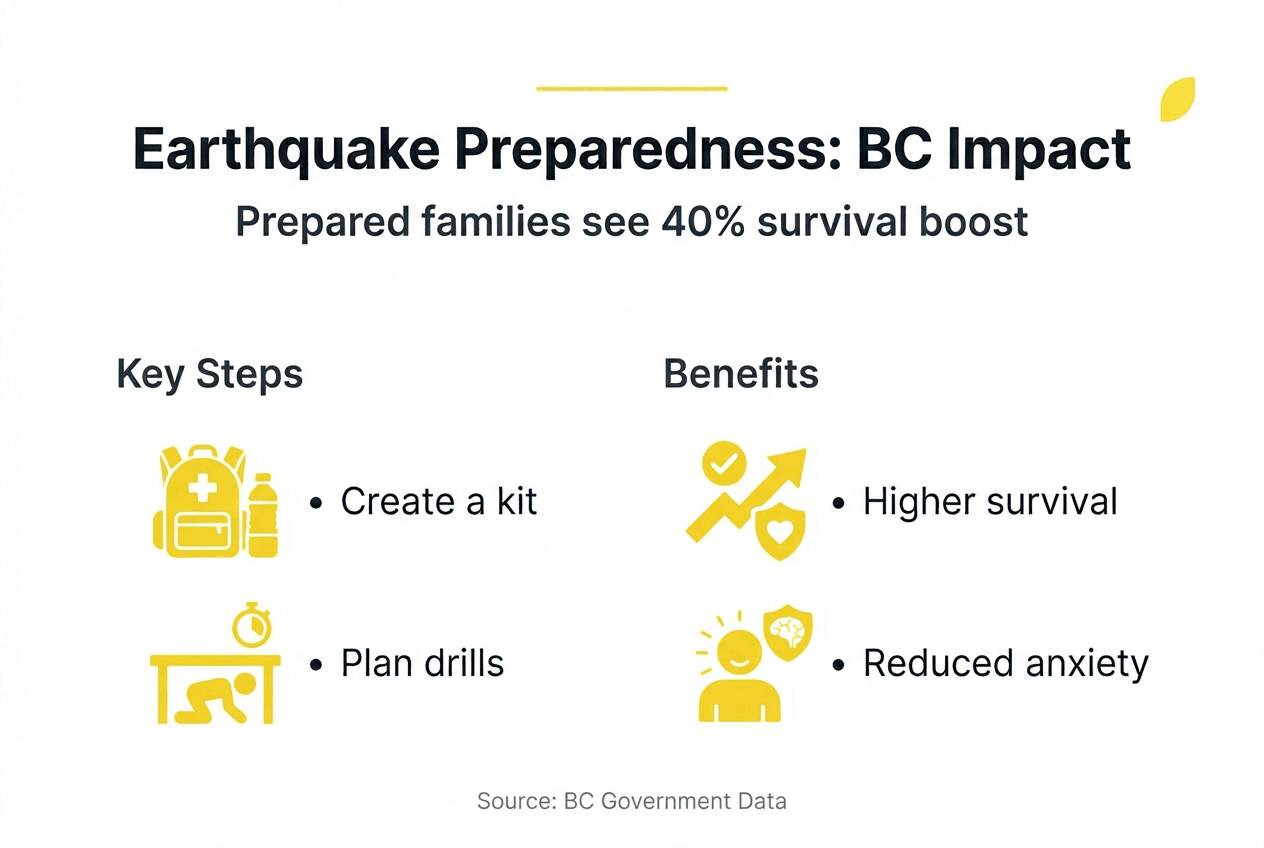
The critical first 72 hours determine survival outcomes. Families with emergency kits access clean water, preventing dehydration that becomes life-threatening within three days. First aid supplies enable immediate wound care, reducing infection risk before medical help arrives. Having food, warmth, and light prevents exposure injuries and maintains energy for evacuation or rescue efforts.
Preparedness creates psychological advantages that save lives:
- Panic causes poor decisions like running during shaking or entering damaged buildings
- Prepared families maintain composure, following rehearsed safety protocols instinctively
- Children with earthquake drills experience less trauma and follow instructions effectively
- Clear family communication plans prevent dangerous separation and search attempts
“The difference between prepared and unprepared families isn’t just physical supplies, it’s the mental clarity to act decisively when seconds count.”
Family cohesion strengthens through preparedness planning. Parents who discuss earthquake scenarios reduce children’s fear while building practical skills. Regular drills transform abstract threats into manageable situations, replacing anxiety with confidence. This emotional foundation prevents the paralysis that turns survivable events into tragedies.
For more guidance on creating comprehensive family strategies, explore family emergency plans for BC earthquakes.
Common misconceptions about earthquake preparedness
Many BC residents dismiss earthquake preparedness with dangerous assumptions. The “it won’t happen to me” mentality pervades despite clear scientific evidence of imminent risk. Some families believe earthquakes strike so unpredictably that preparation offers little value, yet the 37% probability of major seismic events within 50 years demands action.
Generic emergency kits from big-box retailers often fail BC-specific needs:
- Standard kits lack sufficient warm clothing for coastal winter temperatures
- Water supplies frequently omit purification methods for extended outages
- Food selections ignore high-calorie requirements for cold weather survival
- Lighting solutions overlook BC’s short winter days requiring extended battery life
Another myth suggests preparedness means stockpiling massive quantities of supplies. Effective preparation requires strategic selection, not hoarding. A well-organised 72-hour kit tailored to family size and regional climate outperforms random accumulation of goods.
Pro Tip: Many families overlook emotional preparedness, focusing solely on physical supplies. Include comfort items like favourite books, games, or photos to maintain children’s emotional stability during stressful post-quake periods.
The misconception that earthquake preparedness is expensive prevents action. Basic kits cost less than monthly streaming subscriptions yet provide exponentially greater value. Investing $200 to $400 in comprehensive supplies protects thousands of dollars in property and, more importantly, preserves irreplaceable lives.
Some residents believe living outside major cities reduces earthquake risk. Rural and suburban areas face identical seismic threats with added challenges like longer emergency response times and limited nearby resources. Every BC location requires choosing the right earthquake kit matched to specific circumstances.
Building an effective earthquake preparedness kit for BC families
Creating a functional earthquake kit requires strategic selection of supplies that address BC’s unique climate and infrastructure vulnerabilities. Start with the 72-hour foundation covering basic survival needs, then customise for family composition and regional conditions.
| Category | Essential Items | BC-Specific Considerations |
|---|---|---|
| Water | 12 litres per person (4L daily) | Include purification tablets for extended outages |
| Food | Non-perishable, high-calorie items | Pack extra calories for cold weather energy needs |
| Warmth | Thermal blankets, extra clothing | Waterproof layers essential for coastal dampness |
| First Aid | Bandages, medications, antiseptics | Include prescription medications and child-specific supplies |
| Tools | Flashlight, radio, multi-tool | Battery or hand-crank models for power outage resilience |
| Sanitation | Toilet paper, garbage bags, hand sanitiser | Critical when municipal systems fail |
Kit placement dramatically impacts accessibility during emergencies. Placing emergency kits at home, work, and car improves chances of timely use by 35%, reducing injury risk. Store home kits in easily accessible locations, not buried in basement storage where structural damage may block access.
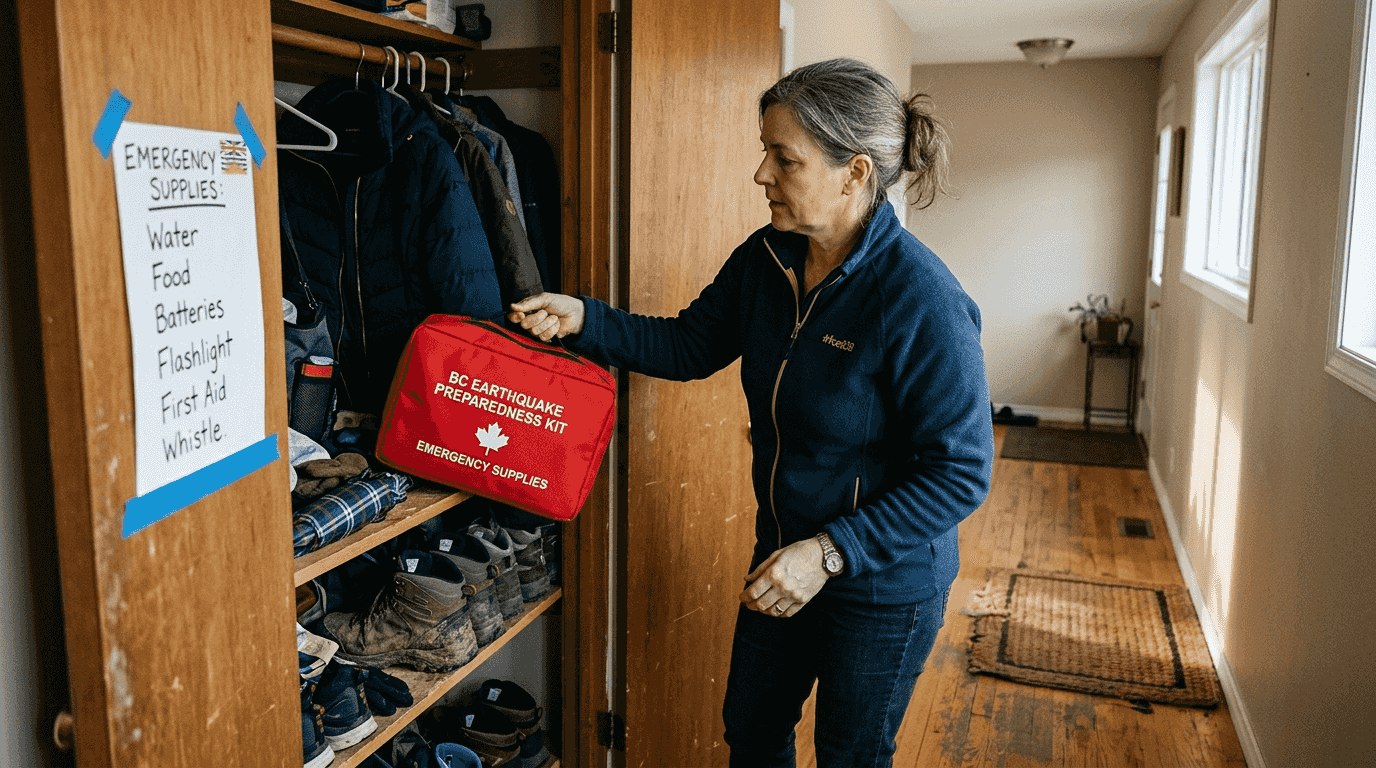
Workplace kits should remain in personal lockers or desk drawers, not centralised storage that becomes inaccessible during evacuations. Vehicle kits belong in the boot or under seats, protected from extreme temperature fluctuations that degrade supplies.
Pro Tip: Rotate food and water supplies every six months, using and replacing items to ensure freshness. Set phone reminders for spring and autumn to make kit maintenance a regular habit.
BC families should tailor kits to specific needs:
- Infant supplies including formula, nappies, and specialised foods
- Elderly care items like mobility aids and extra medications
- Pet provisions with food, water, and comfort items
- Important documents in waterproof containers (insurance, identification, medical records)
- Cash in small denominations for transactions when electronic systems fail
Explore comprehensive options with the Government of BC earthquake kit designed to provincial standards. For medical readiness, review first aid kits for earthquake preparedness tailored to BC families.
Psychological and practical benefits of preparing in advance
Earthquake preparedness delivers profound psychological advantages beyond physical safety. Prepared families report 50% less anxiety during seismic events, maintaining the clear thinking necessary for effective response. This emotional stability enables parents to guide children calmly and make sound decisions under pressure.
The confidence from preparedness creates measurable recovery benefits:
- Families recover 30-40% faster after earthquakes when pre-positioned supplies enable immediate action
- Pre-established communication plans reduce the emotional trauma of family separation
- Rehearsed evacuation routes eliminate confusion that causes injuries and delays
- Financial preparedness through insurance and emergency funds reduces long-term stress
Children particularly benefit from preparedness activities. Involving kids in kit assembly and earthquake drills transforms frightening scenarios into manageable challenges. They develop problem-solving skills and resilience that extend beyond earthquake contexts into general life competencies.
“Preparedness isn’t about fear, it’s about empowerment. Families who prepare together build bonds of trust and capability that strengthen their entire relationship.”
The psychological burden of unpreparedness manifests as chronic low-level anxiety. Parents aware of earthquake risks but lacking plans experience persistent worry that affects sleep, work performance, and family dynamics. Taking concrete preparedness actions resolves this tension, replacing vague dread with practical confidence.
Community preparedness amplifies individual benefits. Neighbourhoods with high preparedness rates support each other post-disaster, sharing supplies and coordinating response efforts. This social resilience reduces isolation and speeds collective recovery. For comprehensive provincial resources, visit BC preparedness guidance.
Official British Columbia and Canadian government guidelines
The Province of BC through PreparedBC establishes clear emergency preparedness standards for all residents. These guidelines specifically address Cascadia megathrust earthquake risks and outline minimum survival requirements.
Government recommendations include:
- 72-hour emergency kits containing water, food, first aid, warmth, and communication tools
- Family emergency plans with evacuation routes, meeting points, and out-of-province contacts
- Earthquake insurance coverage to protect property and enable rebuilding
- Regular practice drills to maintain readiness and reduce panic during actual events
- Community engagement through neighbourhood preparedness programmes
The Government of BC earthquake kit meets these provincial standards, providing a baseline for family preparedness. BC’s guidelines emphasise regional considerations like coastal tsunami risks, urban density challenges, and rural isolation factors.
Federal emergency management through Public Safety Canada supplements provincial guidance with national coordination frameworks. These standards ensure consistent preparedness approaches across jurisdictions and enable effective disaster response coordination.
Official guidelines stress the importance of self-sufficiency during the critical first 72 hours. Government resources become stretched thin across large disaster zones, making personal preparedness essential for survival. Families meeting official standards significantly reduce their burden on emergency services, allowing first responders to focus on critical life-threatening situations.
For detailed official recommendations, consult PreparedBC government guidelines directly from provincial sources.
Conclusion: taking action to prepare your family now
BC’s seismic reality demands immediate action. The 37% probability of major earthquakes within 50 years means preparedness cannot wait for warning signs that never come. Every family has the power to dramatically improve survival outcomes through strategic preparation today.
Take these concrete first steps:
- Assess your family’s specific needs based on size, ages, medical requirements, and pets
- Build or purchase comprehensive 72-hour emergency kits for home, workplace, and vehicles
- Create a detailed family communication plan with evacuation routes and meeting points
- Store kits in accessible locations and teach all family members their locations
- Schedule quarterly practice drills to maintain readiness and reduce anxiety
- Review and update kits every six months, replacing expired items and adjusting for family changes
- Connect with neighbours to build community preparedness networks
Pro Tip: Schedule family earthquake drills during regular Sunday dinners or monthly gatherings. Consistent practice transforms preparedness from chore into natural routine, ensuring skills remain sharp when seconds count.
Preparedness creates ripple effects throughout families and communities. Children who grow up with earthquake readiness carry these habits into adulthood, multiplying societal resilience. The investment of time and resources today pays dividends in lives saved, injuries prevented, and faster recovery when the inevitable strikes.
For detailed organisation strategies, explore the earthquake kit organisation guide for BC families. Parents seeking structured approaches should review family earthquake plan steps. Comprehensive provincial resources await at BC preparedness.
The “Big One” will test every BC family. Those who prepare now transform catastrophic potential into manageable challenge, protecting loved ones through knowledge, supplies, and practice. Your family’s earthquake readiness journey begins today.
Earthquake preparedness solutions for BC families
Preparing for BC’s seismic threats becomes straightforward with professionally assembled emergency kits designed specifically for Cascadia earthquake risks. EarthquakeKit.ca offers comprehensive solutions that eliminate guesswork whilst ensuring compliance with provincial standards.
Ready-made options save valuable preparation time and guarantee complete coverage. Basic earthquake kits provide essential 72-hour supplies for families starting their preparedness journey. For those seeking government-aligned solutions, Government of BC earthquake kits meet all provincial requirements with BC-specific adaptations.
Workplaces and community organisations benefit from group earthquake kits scaled for multiple people. These solutions ensure businesses meet duty-of-care obligations whilst protecting employees during working hours.
Pro Tip: Pre-assembled kits from trusted suppliers ensure you haven’t overlooked critical items whilst meeting official guidelines. This professional approach provides peace of mind that DIY assembly sometimes misses.
Frequently asked questions
How often should I update my earthquake preparedness kit?
Inspect kits every six months, checking expiry dates on food, water, and medications whilst replacing any used items. Review contents after major life changes like new family members, relocations, or medical condition developments. Seasonal transitions in spring and autumn provide natural reminders for kit maintenance. For comprehensive organisation strategies, consult the earthquake kit organisation guide for BC families.
What items are essential in a BC-specific earthquake kit?
Minimum requirements include 12 litres of water per person, non-perishable high-calorie food for 72 hours, warm waterproof clothing, comprehensive first aid supplies, battery-powered flashlight and radio, and water purification tablets. BC’s climate demands extra thermal blankets, whilst families need child-specific supplies, prescription medications, cash in small denominations, and copies of important documents in waterproof containers. Learn more about choosing the right earthquake kit for BC families.
How can families practise earthquake preparedness together?
Conduct quarterly earthquake drills simulating the drop, cover, and hold-on response followed by kit access and evacuation procedures. Establish clear communication plans including out-of-province emergency contacts and designated meeting points. Involve children in kit assembly and maintenance to build familiarity and reduce fear. Regular practice transforms abstract plans into instinctive responses during actual emergencies. Explore detailed family earthquake plan steps for BC parents.
What if I am at work or in the car during an earthquake?
Maintain accessible emergency kits in your workplace locker or desk drawer and in your vehicle’s boot with supplies appropriate for each location. Learn evacuation routes and safe shelter spots at work, and identify pull-over locations along regular driving routes. Establish a family communication plan with designated out-of-province contacts who can relay messages when local networks fail. Workplace preparedness becomes easier with group earthquake kits designed for professional environments.