

What are surge kits: earthquake preparedness for BC families
Posted by Karl Lundgren on
Coastal British Columbia faces a 37% chance of a major earthquake within the next 50 years, yet many families remain uncertain about what truly belongs in an emergency kit. The confusion intensifies when preparing for young children, whose needs extend far beyond standard supplies. This guide clarifies surge kits and shows you how to assemble one that keeps your family safe during the critical first 72 hours after a seismic event.
Table of Contents
- Understanding Surge Kits: Definition And Purpose
- Why Surge Kits Matter For British Columbia Residents
- Essential Items For Families With Young Children In Surge Kits
- Common Misconceptions About Surge Kits
- Comparison Of Surge Kits Vs Full Emergency Kits
- Practical Assembly Tips For A Family Earthquake Surge Kit
- Storage And Accessibility Best Practices
- Explore Earthquake Kits Tailored For Bc Families
Key takeaways
| Point | Details |
|---|---|
| Surge kits focus on immediate survival | These compact kits contain vital supplies for the first 72 hours post-earthquake, emphasising portability and quick access. |
| Water and food needs increase for children | Plan for 4 litres per person daily and add extra for infants requiring formula preparation. |
| Personalisation matters more than packaging | Pre-packaged kits often lack child-specific items like nappies, medications, and comfort objects essential for young families. |
| Surge kits differ from full emergency kits | Surge kits cover 72 hours with essentials only, whilst full kits provide supplies for up to two weeks of recovery. |
| Strategic storage ensures accessibility | Keep kits near exits and in vehicles, avoiding areas where debris might block access during emergencies. |
Understanding surge kits: definition and purpose
Surge kits serve as your family’s lifeline during the chaotic hours immediately following an earthquake. These compact emergency collections contain only what you absolutely need to survive when infrastructure fails and help cannot reach you.
The fundamental difference lies in scope and timeline. Surge kits provide essential supplies for approximately 72 hours, covering the critical window when emergency services struggle to respond. They prioritise immediate needs over long-term comfort.
Core components include:
- Water for drinking and basic hygiene
- Ready-to-eat food requiring no preparation
- First aid supplies for treating injuries
- Basic tools like torches and whistles
- Emergency blankets and shelter materials
Portability defines surge kits. You must be able to grab yours and move quickly if your home becomes unsafe. Weight and size matter when you might need to carry supplies whilst managing frightened children through debris-filled streets.
These kits intentionally exclude items needed for extended recovery. You will not find extensive cooking equipment, large water filtration systems, or weeks’ worth of clothing. That is what full emergency kits address, and trying to combine both purposes creates unwieldy collections that fail at both objectives.
Why surge kits matter for British Columbia residents
The Cascadia fault line sits just offshore from Vancouver Island, capable of producing magnitude 9.0 earthquakes that would devastate coastal communities. When the Big One strikes, you cannot count on immediate rescue.
Emergency responders face their own challenges after major seismic events. Collapsed bridges block access routes. Damaged communication systems prevent coordination. First responders must assess widespread destruction before reaching individual households. Your family might wait three days or longer for outside help.
Pro Tip: Emergency services prioritise the most critical situations first, meaning families with adequate supplies receive help after those facing immediate life-threatening conditions.
This reality makes household self-sufficiency non-negotiable during those initial 72 hours. Your surge kit becomes the difference between managing a crisis and experiencing a tragedy. Children need consistent care even when systems fail, and proper preparation ensures you can provide it.
British Columbia’s unique geography compounds these challenges. Island communities face additional isolation when ferry services shut down. Mountain passes close after landslides. Coastal areas risk tsunamis following offshore quakes. Your earthquake preparedness checklist must account for regional factors that extend response times.
“Self-reliance during the first 72 hours after a major earthquake is not optional for BC families. It is the fundamental requirement for protecting your children when every system you normally depend on has failed.”
The statistics speak clearly about risk. Government data shows a 37% probability of major seismic activity hitting our coast within 50 years. That is not some distant possibility; it represents a real threat requiring immediate preparation.
Essential items for families with young children in surge kits
Young children transform standard emergency planning into a more complex challenge requiring specialised supplies and careful quantity calculations. Start with water, the most critical resource.
Plan for 4 litres per person daily as your baseline. Infants consuming formula need additional water for preparation. Toddlers playing or crying require extra hydration. Store at least 12 litres per child for the 72-hour period, adding more if space permits.
Food selection requires thought beyond simple calories. Choose items your children actually eat, as stress already diminishes appetite. Familiar foods provide comfort alongside nutrition.
Recommended food options include:
- Pouches of pureed fruits and vegetables
- Crackers and nut-free spreads
- Granola bars cut into small pieces
- Dried fruit and cereal
- Canned goods your children recognise
Child-specific necessities extend far beyond food and water. Nappies become critically important when plumbing fails. Pack at least 20 nappies per child, more for younger infants. Include wipes, nappy rash cream, and disposal bags.
Infant formula requires special attention. Store at least nine bottles’ worth of powdered formula in sealed containers. Pack extra bottles, teats, and a manual cleaning method since sterilisers require electricity you will not have.
Medications cannot be overlooked. Include any prescription medicines your child takes, plus fever reducers, antihistamines for allergic reactions, and basic pain relief suitable for children. Check expiration dates every six months.
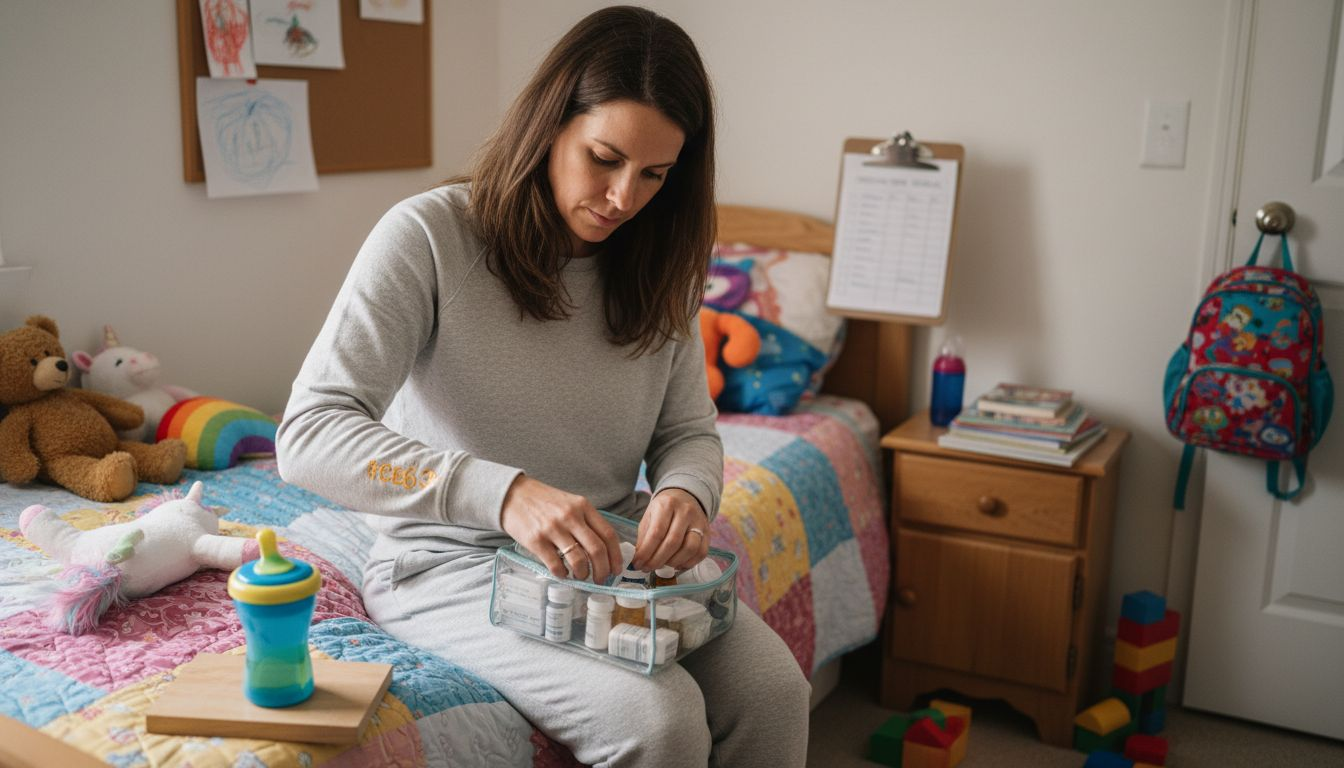
Psychological comfort matters as much as physical survival for young children. Pack a favourite stuffed toy, a small book, or another cherished item that provides emotional security. Include extra clothing layers since frightened children often refuse to wear unfamiliar items.
Pro Tip: Rotate comfort items every few months so the toy or book in your kit remains novel and interesting, providing better distraction during an actual emergency.
Common misconceptions about surge kits
Many families prepare inadequately because they misunderstand what surge kits should accomplish. The most damaging misconception treats surge kits and full emergency kits as interchangeable terms.
Surge kits focus exclusively on immediate survival essentials. Full emergency kits prepare for extended recovery. Conflating these purposes creates either bloated surge kits too heavy to move or insufficient supplies that run out too quickly. Understanding the difference between earthquake kit types prevents this error.
Pre-packaged kits create a false sense of security. Commercial surge kits optimise for easy assembly and broad appeal, not for your specific family needs. They rarely include sufficient nappies, never contain prescription medications, and ignore your child’s dietary restrictions or preferences.
Water and food quantities pose another common error. Families consistently underestimate how much children actually consume under stress. Crying, fear, and physical activity from navigating damaged buildings all increase hydration needs beyond normal daily amounts.
Storage location matters more than most families realise. Placing your carefully assembled kit in a basement storage room becomes useless when the stairs collapse. Keep kits accessible from multiple paths through your home.
Misunderstanding psychological needs represents the final critical error. Parents pack every physical necessity whilst ignoring comfort items that prevent emotional collapse. A traumatised, inconsolable child requires significantly more resources to manage than a frightened but comforted one.
“The best surge kit for your family is not the one that looks most complete on a checklist. It is the one assembled specifically for your children’s unique needs, stored where you can actually reach it, and maintained regularly enough to remain useful when crisis strikes.”
Comparison of surge kits vs full emergency kits
Understanding when to use each kit type prevents both under-preparation and wasteful over-packing. Surge kits prioritise 72-hour survival and portability, whilst full emergency kits prepare for up to two weeks of self-sufficiency.
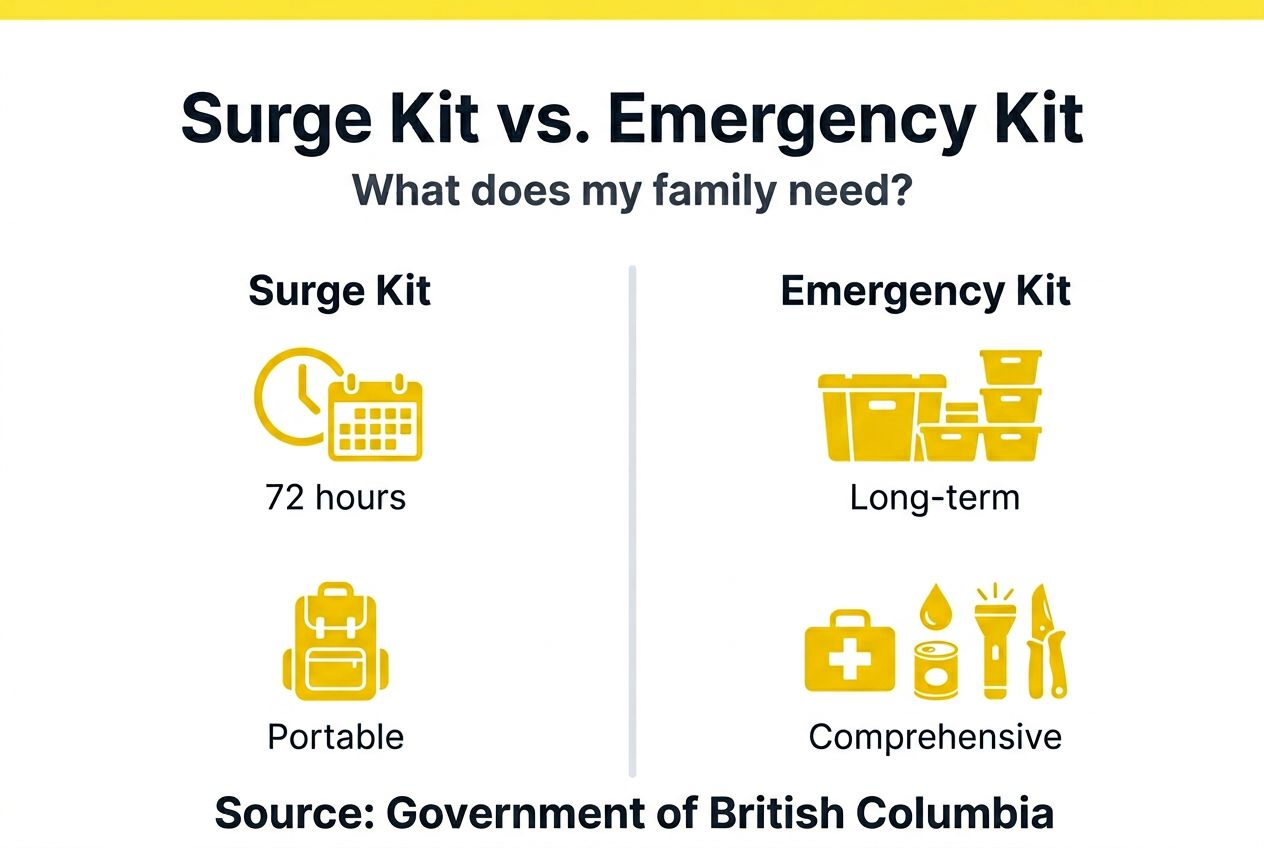
| Feature | Surge Kit | Full Emergency Kit |
|---|---|---|
| Duration | 72 hours | Up to 14 days |
| Weight | 5 to 10 kilograms | 15 to 30 kilograms |
| Portability | Easily carried by one person | Requires vehicle or multiple trips |
| Water supply | 12 litres per person | 56 litres per person |
| Food variety | Ready-to-eat only | Includes items requiring preparation |
| Shelter | Emergency blankets | Tent or tarp with stakes |
| Tools | Basic torch and whistle | Comprehensive tool set with repair items |
| Medical supplies | First aid basics | Extended medical kit with prescription refills |
| Primary use | Immediate evacuation and survival | Extended home-based recovery |
Surge kits excel when you must leave quickly or when space is limited. Keep them in vehicles, at workplaces, or near home exits. Their compact size means you can maintain multiple kits without significant storage challenges.
Full emergency kits serve different scenarios. They support families sheltering at home after damage makes leaving unnecessary but cuts off utilities and supply chains. These kits include cooking equipment, water purification systems, and extensive hygiene supplies.
Most BC families benefit from having both. Your surge kit handles the immediate crisis and potential evacuation. Your full kit supports longer-term recovery once the acute danger passes. Understanding this distinction between kit types guides smarter preparation choices.
Practical assembly tips for a family earthquake surge kit
Building an effective surge kit requires methodical planning rather than last-minute shopping trips. Follow these steps to create a kit that actually protects your family.
-
Assess every household member’s specific requirements, paying special attention to children’s ages, dietary needs, and medical conditions. List allergies, prescription medications, and comfort preferences for each child.
-
Gather baseline essentials according to the 72-hour standard. Calculate water needs, select appropriate food quantities, and collect basic first aid supplies suitable for treating children’s injuries.
-
Add child-specific supplies beyond the baseline. Include adequate nappies, formula, and medications based on your earlier assessment. Pack backup clothing sized appropriately for each child.
-
Choose multi-use tools to keep your kit manageable. A single torch with extra batteries serves better than multiple single-use lights. A sturdy blanket provides warmth, ground cover, and shade.
-
Store assembled kits in accessible locations throughout your property. Keep one near your main entrance, another in your vehicle, and consider a third at your workplace if you have young children in care.
Pro Tip: Organise your kit using clear, labelled bags for different categories so you can quickly locate specific items in darkness or chaos without unpacking everything.
Weight distribution affects usability. Pack heavier items like water at the bottom of your container. Place frequently needed items like torches and first aid supplies at the top for easy access.
Test your kit annually. Actually try eating the stored food with your children to verify it remains palatable. Check that clothing still fits growing kids. Replace expired medications and rotate water supplies.
Practise retrieval during family drills. Time how quickly you can locate and grab your kit. Identify obstacles that might block access during an actual earthquake. Adjust storage locations based on what you learn.
Storage and accessibility best practices
Even perfectly assembled surge kits become useless if you cannot reach them when an earthquake strikes. Strategic placement determines whether your preparation succeeds or fails.
Store your primary surge kit near your home’s main exit in a spot protected from falling objects. Avoid placing it directly under heavy furniture or shelving units that might collapse. Choose locations that remain accessible even if interior doors jam or hallways fill with debris.
Consider these optimal storage locations:
- Hallway closets near exterior doors
- Garage areas away from heavy tools or chemicals
- Mudrooms or entry areas with structural support
- Under staircases if structurally sound and accessible from multiple angles
Vehicle kits provide critical backup if your home becomes completely inaccessible. Keep a basic earthquake kit in your car’s boot or rear storage area. Refresh water supplies more frequently in vehicles due to temperature fluctuations.
Avoid locations prone to specific hazards. Basements flood after earthquakes rupture water lines. Upper floors become unreachable if staircases collapse. External sheds might be destroyed by falling trees or separated from your property by ground cracks.
Accessibility extends beyond physical location. Your storage container matters. Choose durable, waterproof containers with comfortable handles. Backpack-style containers work best for families who might need to carry supplies whilst managing children.
Pro Tip: Label your surge kit container with bright, reflective tape or paint so you can locate it quickly with a torch beam in darkness or smoky conditions.
Check accessibility quarterly. Ensure new furniture purchases have not blocked your path to the kit. Verify that household items have not been stacked against or in front of storage locations. Walk through retrieval scenarios mentally whilst checking.
Include a simple instruction sheet inside your kit listing contents and basic usage. During a crisis, stress impairs memory and decision-making. Clear instructions help any family member use supplies correctly, even without your guidance.
Explore earthquake kits tailored for BC families
Moving from knowledge to action protects your family when the Big One strikes. EarthquakeKit.ca offers surge kits specifically designed for British Columbia households facing our unique seismic risks.
Their personal supplies collections recognise that families with young children need more than generic emergency items. Find kits assembled with child-appropriate food, adequate water quantities, and space for adding your own personalised supplies.
Government-approved options meet official BC emergency preparedness standards whilst remaining compact enough for home and vehicle storage. These locally sourced kits understand coastal earthquake conditions and include items suited to our climate and infrastructure.
Visit their collections to compare options and select surge kits matching your family’s specific size and needs. Preparation today means survival tomorrow.
FAQ
What are surge kits and why are they important for families in BC?
Surge kits contain essential supplies for immediate survival during the first 72 hours following an earthquake. They are critically important in British Columbia because emergency responders might take days to reach families after major seismic events due to infrastructure damage and widespread destruction. Self-sufficiency during this window often determines survival outcomes for families with young children.
How much water should I include in a surge kit for my family?
Plan for a minimum of 4 litres of water per person per day for at least 72 hours. Families with infants need additional water for formula preparation, and young children require extra hydration when stressed or crying. Store at least 12 litres per child, adding more if storage space permits.
Can I rely on pre-packaged surge kits for my young children’s needs?
Pre-packaged surge kits rarely contain adequate child-specific supplies like nappies, infant formula, prescription medications, or comfort items. Whilst they provide a convenient starting point, families must personalise these kits by adding items tailored to their children’s unique dietary restrictions, medical needs, and psychological comfort requirements. Generic kits optimise for broad appeal rather than your specific family situation.
Where is the best place to store a surge kit at home?
Store your primary surge kit near main exits or in high-traffic areas where you can access it quickly regardless of which part of your home remains safe. Hallway closets near exterior doors work well, as do garage areas away from heavy objects. Avoid basements prone to flooding, upper floors that might become unreachable, and locations where falling furniture or debris could block access.
How often should I update the contents of my family’s surge kit?
Check your surge kit every six months to replace expired food, medications, and water supplies. Annually test the kit by having your family actually consume some stored food items to verify palatability. Update clothing sizes as children grow, rotate comfort items to keep them novel, and practise retrieval drills to ensure storage locations remain accessible. Regular maintenance transforms a static collection into a reliable survival resource.
Recommended
Share this post
- 0 comment
- Tags: en, what are surge kits