

Earthquake preparedness checklist for BC residents 2026
Posted by Karl Lundgren on
Nearly 60% of British Columbia residents lack emergency kits in their vehicles, despite experts warning that the Cascadia megathrust earthquake could strand commuters for days. Living on one of North America’s most active seismic zones demands more than good intentions. This comprehensive checklist ensures your home, vehicle, and workplace contain the essentials to survive 72 hours or longer after the Big One strikes.
Table of Contents
- Understanding Earthquake Preparedness Essentials In British Columbia
- Creating Your Earthquake Emergency Kit: What To Include
- Common Misconceptions And Pitfalls In Earthquake Preparedness
- Safety Measures Beyond Emergency Kits
- Maintaining And Updating Your Earthquake Kit
- Comparison Of Diy Vs. Pre-Packaged Earthquake Kits
- Putting It All Together: Your Step-By-Step Earthquake Preparedness Checklist
- Prepare With Trusted Earthquake Kits From EarthquakeKit.ca
- Frequently Asked Questions
Key takeaways
| Point | Details |
|---|---|
| BC faces significant seismic risk | The Cascadia fault zone creates high probability of major earthquakes requiring 72-hour self-sufficiency. |
| Water and food dominate kit priorities | 4 litres per person daily plus 72-hour non-perishable food supply form the foundation. |
| Vehicle and workplace kits prevent isolation | Separate kits in all key locations ensure survival regardless of where disaster strikes. |
| Regular updates maintain readiness | Inspect kits every 6 to 12 months to replace expired supplies and medications. |
| Pre-packaged kits offer speed and completeness | Ready-made options save 60% preparation time compared to DIY assembly. |
Understanding earthquake preparedness essentials in British Columbia
British Columbia sits directly above the Cascadia megathrust fault, a 1,000-kilometre rupture zone capable of producing magnitude 9.0 earthquakes. Scientists project a 37% probability of such an event within the next 50 years. When it happens, coastal communities may face tsunami waves within 15 minutes whilst inland areas experience prolonged infrastructure collapse.
The Government of Canada recommends every household maintain emergency supplies for at least 72 hours. This timeline reflects realistic expectations for rescue services overwhelmed by simultaneous regional disasters. Roads buckle, bridges collapse, and supply chains halt completely.
Understanding why BC residents must prepare begins with recognising that emergency responders cannot reach everyone immediately. Your survival depends on the preparations you make today.
Essential preparation steps include:
- Assembling water (4 litres per person daily), non-perishable food, first aid supplies, flashlight, battery-powered radio, and essential medications
- Securing heavy furniture to walls using brackets and anchors
- Creating family communication plans with out-of-province contacts
- Storing kits in accessible locations at home, in vehicles, and at workplaces
- Practising earthquake drills regularly with all household members
Pro Tip: Store a laminated copy of your emergency contacts and meeting locations inside each kit. Mobile networks fail first during major disasters, making pre-written information invaluable.
Creating your earthquake emergency kit: what to include
An effective earthquake kit balances essentials with space constraints. Start with water as your top priority. The human body survives only three days without hydration, and BC’s infrastructure may take weeks to restore after a megathrust event.
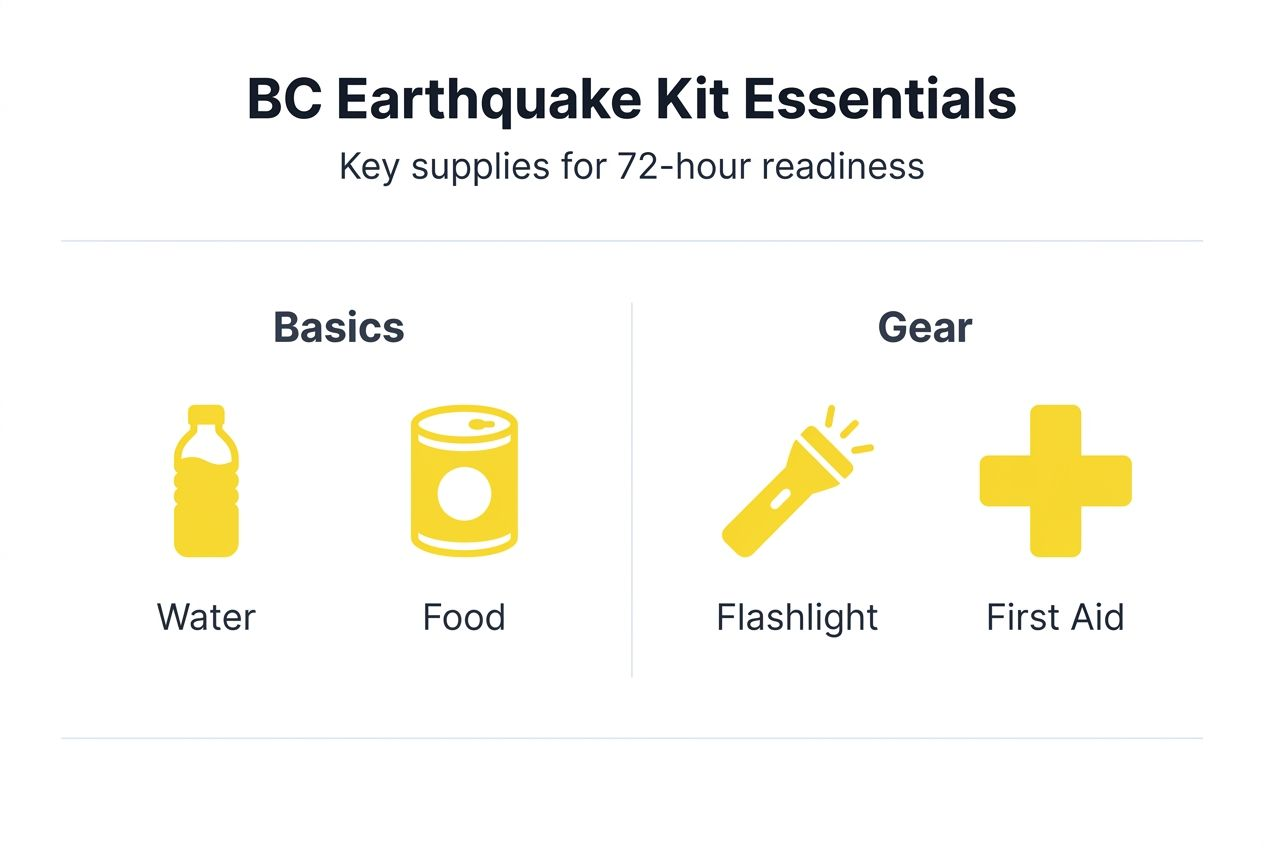
Core supplies follow evidence-based government emergency kit guidelines designed for 72-hour self-sufficiency:
- Water: 4 litres per person per day for three days minimum
- Food: Ready-to-eat canned goods, granola bars, dried fruit, nuts requiring no refrigeration
- First aid: Bandages, antiseptic, pain relievers, prescription medications, medical alert information
- Light and communication: LED flashlight, spare batteries, hand-crank or battery radio, whistle
- Personal items: Toilet paper, feminine hygiene products, soap, towels
- Special needs: Infant formula, diapers, pet food, mobility aids
| Category | Quantity per person | Storage notes |
|---|---|---|
| Water | 12 litres minimum | Replace every 6 months |
| Food | 9 meals ready-to-eat | Check expiry dates quarterly |
| Batteries | 24 AA/AAA mixed | Store separately from devices |
| Medications | 7-day supply | Rotate with prescriptions monthly |
| Cash | $200 small bills | ATMs fail without power |
Families with young children need additional considerations. Include comfort items like favourite toys to reduce stress during displacement. Pack extra clothing layers suitable for BC’s variable climate, as heating systems may fail for extended periods.
The Government of BC earthquake kit provides a starting point designed specifically for provincial regulations and climate conditions. These pre-assembled options ensure nothing critical gets overlooked during your preparation process.
Pro Tip: Use clear plastic bins with tight-sealing lids rather than cardboard boxes. Water damage from burst pipes often accompanies earthquakes, and waterproof containers protect your supplies when you need them most.
Common misconceptions and pitfalls in earthquake preparedness
Many BC residents assume bottled water alone suffices for emergency hydration. Reality proves more complex. 4 litres per person per day requirements quickly exhaust stored bottles, especially for families. Include water purification tablets or filtration systems to extend your supply when municipal treatment plants fail.
Vehicle emergency kits represent the most neglected preparation category. Commuters spend hours weekly in transit, yet fewer than half maintain car kits. Highway closures and bridge damage may strand you far from home for days. Your vehicle kit needs the same water, food, and first aid essentials as your home supplies.
Frequent pitfalls that compromise preparedness:
- Storing kits in inaccessible locations like high shelves or locked rooms
- Forgetting to rotate perishable items before expiration dates pass
- Assuming neighbours will share supplies during prolonged emergencies
- Overlooking prescription medication reserves beyond daily doses
- Failing to communicate emergency plans with all family members
Choosing appropriate earthquake kits for BC families requires honest assessment of your household’s unique needs. A family with elderly members needs different supplies than young professionals living alone.
Pro Tip: Schedule kit inspections on daylight saving time changes twice yearly. This regular rhythm ensures you never go more than six months without verifying your emergency readiness.
Safety measures beyond emergency kits
Supplies alone cannot prevent earthquake injuries. Physical home modifications reduce casualties by securing hazards before shaking begins. Heavy furniture, water heaters, and appliances become projectiles during intense tremors.
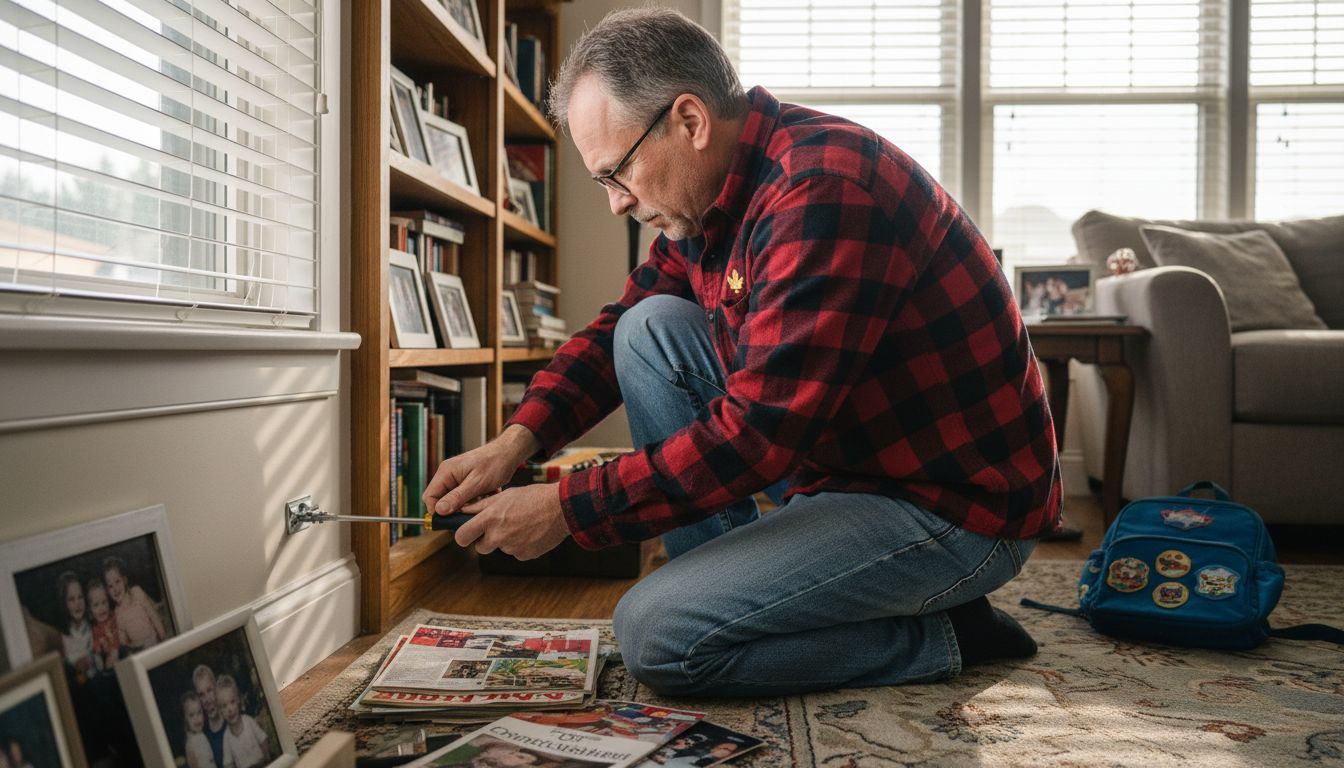
Securing these items reduces injury risk by up to 60% according to structural engineers. Use L-brackets to anchor bookcases to wall studs. Strap water heaters at the top and bottom. Install safety latches on cabinet doors to prevent contents from spilling.
Communication plans prove equally vital:
- Designate an out-of-province emergency contact all family members can reach
- Establish two meeting locations: one near your home, another outside your neighbourhood
- Teach children how to send text messages, which often work when voice calls fail
- Store contact information in writing inside each emergency kit
- Practise your communication plan quarterly so everyone remembers procedures under stress
Workplace preparedness often receives insufficient attention. You spend one-third of your life at work, yet many employers lack comprehensive emergency protocols. Advocate for workplace kits and regular evacuation drills. Know multiple exit routes from your building and identify safe zones for drop-cover-hold responses.
BC’s seismic reality demands multi-location readiness. Your family earthquake plan must account for scenarios where members are separated during the initial event and cannot reunite for days.
Maintaining and updating your earthquake kit
Emergency preparedness is not a one-time project. Supplies degrade, medications expire, and family needs evolve. A kit assembled in 2024 may prove useless in 2026 without proper maintenance.
Establish a systematic inspection schedule:
- Check all expiration dates on food, water, and medications every six months
- Test flashlights and radios to verify batteries maintain charge
- Replace any damaged packaging or compromised supplies immediately
- Update clothing sizes for growing children seasonally
- Rotate prescription medications as you refill prescriptions monthly
- Verify contact information remains current after moves or phone changes
- Replenish any items used during practice drills or minor emergencies
Keep a maintenance log inside each kit documenting the last inspection date and items replaced. This record prevents confusion about whether supplies are current. Many families discover expired provisions only after disaster strikes, when replacements are impossible to obtain.
Proper earthquake kit organisation extends beyond initial assembly. Store kits in cool, dry locations away from direct sunlight. Basements work well if flooding risk is low. Avoid garages where temperature extremes accelerate food spoilage.
Consider seasonal adjustments for BC’s climate. Winter kits need extra blankets and hand warmers. Summer preparations should include sun protection and additional water for higher temperatures. Coastal residents require different supplies than interior populations facing distinct weather patterns.
Regular maintenance transforms emergency preparedness from theoretical planning into practical survival capability. The 15 minutes spent quarterly on kit inspections could save your life when seconds count.
Comparison of diy vs. pre-packaged earthquake kits
BC residents face a fundamental choice when preparing: assemble supplies individually or purchase complete pre-packaged solutions. Each approach offers distinct advantages depending on your circumstances.
Pre-packaged kits eliminate guesswork by including government-recommended items in proper quantities. You receive immediate readiness without researching requirements or shopping across multiple retailers. For busy families or preparation beginners, this convenience proves invaluable.
DIY assembly allows customization for unique dietary restrictions, medical needs, or personal preferences. You control quality and can substitute premium items where budget permits. However, this flexibility demands significant time investment and risks overlooking critical components.
| Factor | Pre-packaged kits | DIY assembly |
|---|---|---|
| Preparation time | 0-2 hours | 6-10 hours |
| Completeness confidence | Very high | Moderate to high |
| Customisation flexibility | Limited | Extensive |
| Cost efficiency | Moderate | Variable |
| Expertise required | None | Significant |
| BC compliance assurance | Guaranteed | Depends on research |
Choosing the right earthquake emergency kits for BC families often involves hybrid approaches. Start with a pre-packaged foundation meeting core requirements, then add personal items addressing specific household needs.
Commuters benefit most from compact vehicle kits designed for space-limited storage. Workplace preparedness favours standardised solutions ensuring consistent readiness across employee populations. Home kits accommodate larger, more comprehensive supplies for extended displacement scenarios.
Your situation determines optimal strategy. New homeowners establishing first kits gain speed from pre-packaged solutions. Experienced preppers refining existing supplies may prefer targeted DIY additions. Budget-conscious households can phase assembly over several months whilst maintaining baseline readiness.
Putting it all together: your step-by-step earthquake preparedness checklist
Transform knowledge into action with this comprehensive implementation plan. Follow these steps sequentially to achieve complete earthquake readiness across all critical locations.
- Assess your household composition including ages, medical conditions, dietary restrictions, and pet requirements
- Calculate water needs at 4 litres per person per day for three days minimum
- Purchase or assemble food supplies providing 9 meals per person without refrigeration or cooking
- Gather first aid essentials plus 7-day prescription medication reserves for all family members
- Acquire flashlights, batteries, hand-crank radio, and whistles for each kit location
- Add personal hygiene items, cash, and copies of important documents in waterproof packaging
- Secure heavy furniture and appliances to prevent tip-over injuries during shaking
- Create written communication plans with out-of-province contacts and meeting locations
- Assemble separate kits for home, each vehicle, and workplace following identical supply principles
- Store kits in accessible locations everyone knows and can reach quickly
- Conduct family practice drills every three months to reinforce emergency procedures
- Schedule biannual inspections on your calendar to maintain supply freshness
Verify your preparations against BC government emergency recommendations to ensure regulatory compliance. Provincial guidelines evolve as seismic science advances, so periodic reviews keep your preparedness current with best practices.
Your family earthquake plan becomes more sophisticated with each drill. Children learn drop-cover-hold responses instinctively. Adults identify gaps in supplies or procedures requiring attention. This ongoing refinement transforms basic readiness into comprehensive survival capability.
Remember that perfect preparation is the enemy of good preparation. Start with baseline essentials today rather than delaying until you can afford premium options. A basic kit assembled this week protects your family better than an ideal kit perpetually planned for tomorrow.
Prepare with trusted earthquake kits from EarthquakeKit.ca
Ready to move from planning to protection? EarthquakeKit.ca simplifies earthquake preparedness with professionally assembled kits meeting all BC provincial standards. Every product is designed specifically for Cascadia fault zone challenges facing coastal and interior residents.
Browse Government of BC approved earthquake kits featuring complete 72-hour supplies for households of all sizes. Our basic earthquake kit options provide entry-level readiness at accessible prices, whilst comprehensive packages address complex family requirements.
Vehicle and workplace solutions ensure consistent preparedness wherever BC residents spend time. Personal earthquake kit supplies allow customization of existing kits with additional items for unique needs. Every purchase supports your commitment to protecting loved ones when the Big One inevitably strikes.
Frequently asked questions
What should an earthquake emergency kit for British Columbia include?
Your BC earthquake kit must contain 4 litres of water per person daily for three days, non-perishable food for 9 meals per person, comprehensive first aid supplies, flashlight with spare batteries, hand-crank radio, essential medications, and personal hygiene items. Include cash, copies of important documents, and items for children or pets as needed.
How often should I update my earthquake preparedness kit?
Inspect your earthquake kit every 6 to 12 months to replace expired food, medications, and batteries. Seasonal adjustments for BC’s climate ensure supplies remain appropriate for current weather conditions. Regular maintenance prevents discovering unusable provisions during actual emergencies.
Why is it important to have separate emergency kits for home, vehicle, and workplace?
Earthquakes strike without warning, potentially separating you from home for days due to bridge closures, highway damage, or building evacuations. Separate kits at each location guarantee access to survival essentials regardless of where disaster catches you. BC’s infrastructure vulnerabilities make multi-location preparedness essential for realistic survival planning.
Are pre-packaged earthquake kits better than DIY kits?
Pre-packaged kits save significant preparation time whilst ensuring completeness through professional assembly. DIY kits offer customization for dietary restrictions or special medical needs but require extensive research and shopping. Choose based on your available time, budget, and confidence in selecting appropriate supplies for BC’s unique seismic challenges.