

Master the difference between earthquake kit types in BC
Posted by Karl Lundgren on
British Columbia experiences over 3,000 earthquakes each year, making preparedness essential for every family. Yet many residents believe one emergency kit covers all scenarios, leaving critical gaps in their readiness. Understanding the distinct purposes of home kits, grab-and-go bags, and vehicle kits transforms confusion into effective protection when the Big One strikes.
Table of Contents
- Introduction To Earthquake Preparedness In British Columbia
- Understanding Kit Types And Duration Recommendations
- Comparing Kit Types By Content And Household Size
- The Role Of Multiple Kit Types In Full Preparedness
- Common Misconceptions About Earthquake Kit Types
- Practical Considerations For Kit Use And Safety
- Vehicle Versus Home And Grab-And-Go Kit Types
- Prepare Your Family With Tailored Earthquake Kits From EarthquakeKit.ca
Key takeaways
| Point | Details |
|---|---|
| Kit types serve distinct needs | Home, grab-and-go, and vehicle kits address different emergency scenarios and mobility requirements. |
| Duration varies by kit | Home kits provide 7 days of supplies, grab-and-go bags cover 72 hours, vehicle kits support stranded situations. |
| Scale to household size | Kits must adjust for family members, ages, pets, and special medical or dietary needs. |
| Multiple kits ensure readiness | Coordinated home, vehicle, and portable kits provide comprehensive earthquake preparedness. |
| Misconceptions risk safety | Common misunderstandings about single-kit sufficiency can leave families dangerously unprepared. |
Introduction to earthquake preparedness in British Columbia
British Columbia sits atop the Cascadia megathrust fault, creating one of North America’s highest seismic risk zones. This geological reality means families face not just the possibility but the probability of experiencing significant earthquakes during their lifetimes. The province’s emergency management authorities recognise this threat and have developed specific guidelines to help residents prepare effectively.
The Province of BC mandates that emergency kits must include supplies for 72 hours minimum and ideally up to one week. This recommendation reflects the realistic timeframe before external help reaches affected communities after a major earthquake. Yet supply duration represents only one dimension of proper preparedness.
Effective earthquake readiness requires understanding three distinct kit types:
- Home kits designed for sheltering in place with extended supplies
- Grab-and-go bags built for rapid evacuation with portable essentials
- Vehicle kits containing specialised tools for transportation isolation
Each kit type addresses specific emergency scenarios you might face during or after an earthquake. Having multiple coordinated kits dramatically increases your family’s survival chances and comfort level during extended disruptions. The government of BC earthquake kits programme reinforces this multi-kit approach through public education campaigns.
Routine provincial initiatives like the Great BC ShakeOut remind residents that comprehensive preparedness means more than stockpiling random supplies. Strategic planning around different kit types aligns your resources with actual emergency needs. Families who grasp these distinctions can choose the right earthquake kits for BC families based on household composition and realistic risk scenarios.
The Province of BC emergency kit recommendations provide detailed guidance on building each kit type from scratch or selecting pre-assembled options. These resources help families navigate the complexity of preparedness planning with clarity and confidence.
Understanding kit types and duration recommendations
Each emergency kit type serves a fundamentally different purpose tied to specific survival scenarios. Home kits function as your primary survival cache, containing enough supplies to sustain your household for up to seven days without external assistance. These kits assume you remain in or near your residence, allowing for bulkier items that prioritise comfort and comprehensive needs.
Grab-and-go bags provide 72-hour supplies in lightweight, portable containers you can carry during rapid evacuations. Weight and mobility drive every item selection for these bags. You sacrifice some comfort and variety for the critical ability to move quickly when staying put becomes dangerous.
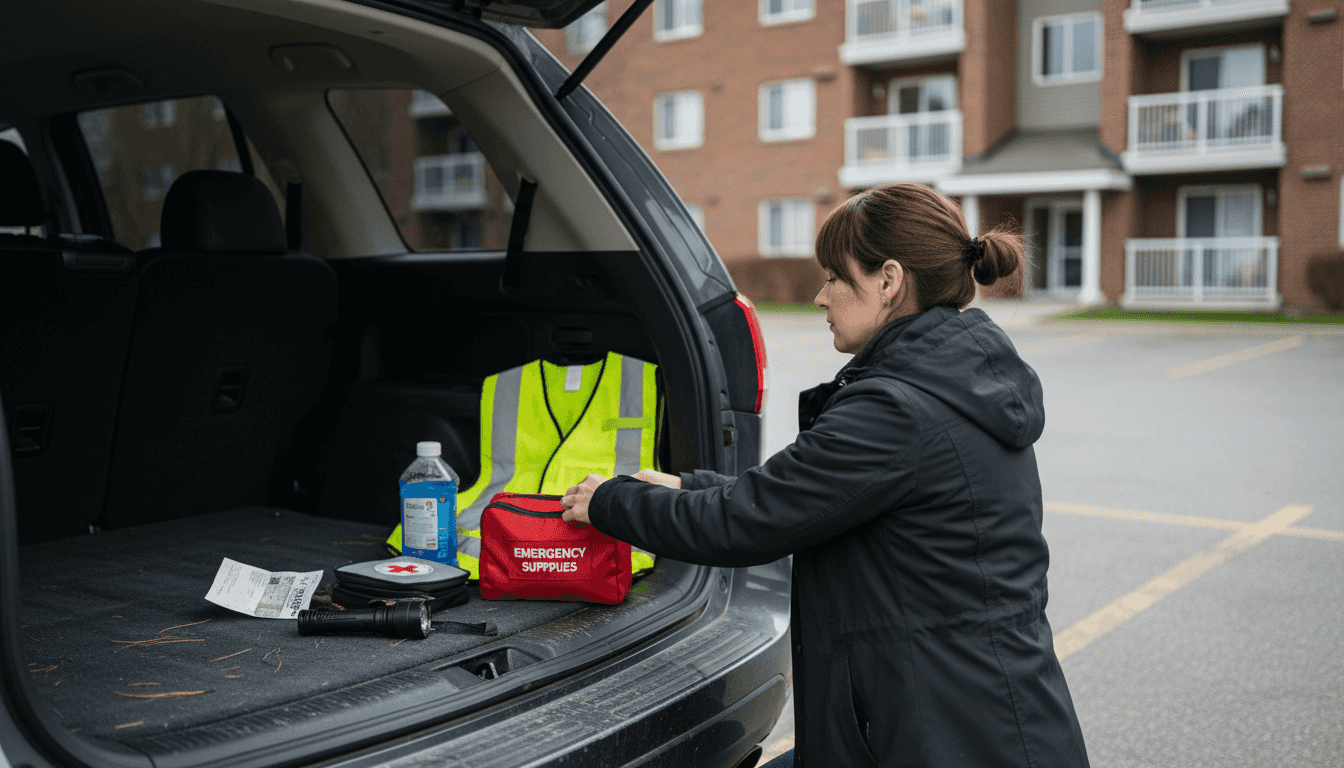
Vehicle kits address the distinct challenge of being stranded in your car during or after an earthquake. These kits emphasise automotive tools, visibility items, and supplies suited to the confined space and temperature extremes of vehicle environments. They assume you cannot access home resources and may face extended isolation on damaged roadways.
The duration recommendations reflect realistic emergency response timelines in BC’s diverse geography. Urban areas might see help within 72 hours, whilst remote communities could wait a full week or longer. The government of BC earthquake kit standards balance these variables with practical storage and budget constraints.
Aligning each kit type with its intended scenario prevents dangerous gaps in coverage:
- Home kits support extended sheltering when structures remain safe
- Grab-and-go bags enable quick departure when buildings become hazardous
- Vehicle kits sustain you during transportation disruptions
Understanding these distinctions helps you allocate resources effectively rather than creating redundant or inadequate supplies. The BC emergency kit duration guidelines emphasise that proper preparedness means matching kit contents and portability to likely use scenarios.
Many families mistakenly assume one comprehensive kit covers all situations. This approach fails because earthquake emergencies demand different responses depending on structural damage, fire risk, tsunami warnings, and infrastructure collapse. Strategic kit placement and content curation address these variables systematically.
Comparing kit types by content and household size
Home kit contents prioritise comprehensive comfort and nutrition for extended stays. You will find sleeping bags, camp stoves, extensive first aid supplies, books or games for children, and bulk quantities of food and water. These items assume you have space to store and access larger, heavier supplies that would prove impractical during evacuation.
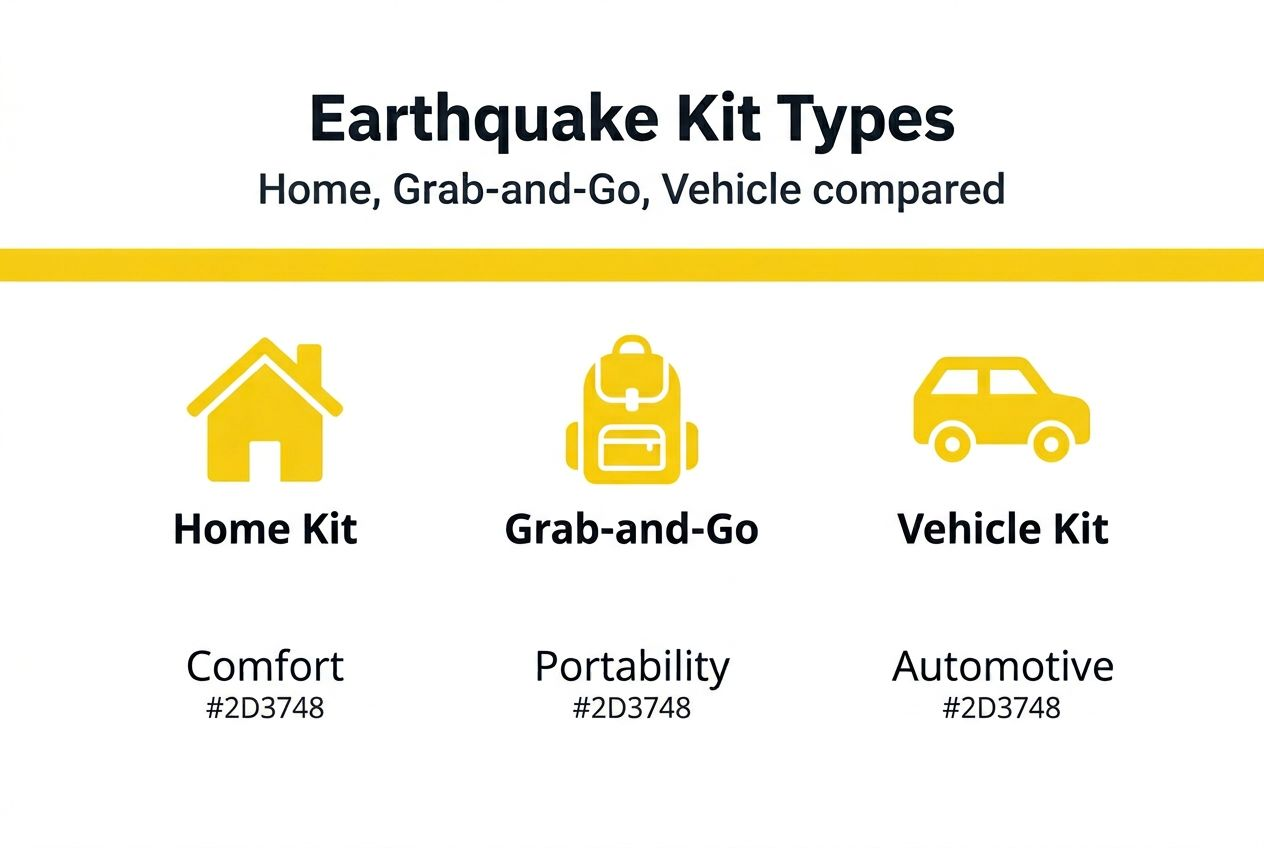
Grab-and-go bags strip supplies down to absolute essentials whilst maintaining complete functionality. Expect high-calorie food bars instead of varied meals, compact emergency blankets rather than full sleeping bags, and minimal clothing changes focused on weather protection. Every gram matters when you must carry supplies on foot through debris.
Vehicle kits emphasise automotive utility and environmental adaptation. Contents typically include jumper cables, road flares, ice scrapers, reflective triangles, and supplies resistant to temperature extremes. These kits assume limited storage space and the potential for both summer heat and winter cold exposure.
| Kit type | Primary contents | Typical weight | Duration |
|---|---|---|---|
| Home | Bulk food/water, sleeping bags, stove, comprehensive first aid | 15-25 kg | 7 days |
| Grab-and-go | Food bars, water pouches, emergency blanket, basic first aid | 3-5 kg | 72 hours |
| Vehicle | Jumper cables, flares, blanket, non-perishable snacks | 5-8 kg | 72 hours |
Household size dramatically affects kit scaling requirements. A family of four needs four times the water and food of a single person, but certain items like tools and first aid supplies scale less directly. The BC family kit sizing guidelines recommend calculating needs per person then adding shared resources.
Special considerations reshape kit contents significantly:
- Infants require formula, nappies, and specialised foods
- Elderly family members may need extra medications and mobility aids
- Pets need food, water, and comfort items scaled to their size
- Dietary restrictions demand careful food selection
Pro Tip: Create a spreadsheet listing each family member with their specific daily needs, then multiply by the kit duration to calculate exact quantities before purchasing or assembling supplies.
Multiple kits scaled to family size and special needs prevent dangerous shortfalls during extended emergencies. Generic one-size-fits-all kits rarely address household-specific requirements adequately. Taking time to customise contents based on actual family composition transforms theoretical preparedness into practical survival capability.
The earthquake kit organisation guide helps families inventory and arrange supplies systematically across multiple kit types whilst accounting for individual household needs.
The role of multiple kit types in full preparedness
Comprehensive earthquake preparedness requires thinking through diverse emergency scenarios your family might face. Home kits support the shelter-in-place strategy when your residence remains structurally sound but utilities fail. You access bulk supplies, maintain relative comfort, and wait for restoration of services or organised evacuation.
Grab-and-go bags become critical when staying home poses immediate danger from structural damage, fire, or tsunami risk. These bags sit ready near exits, allowing you to leave within minutes carrying essential 72-hour supplies. The portability trades comprehensive comfort for life-saving mobility when every second counts.
Vehicle kits address the overlooked scenario of being caught away from home when disaster strikes. BC residents commute significant distances for work, school, and errands, meaning earthquakes could trap you on roadways far from either home supplies or evacuation centres. Vehicle kits provide independence whilst waiting for road clearing or alternative transport.
Different situations demand quick adaptation between kit types:
- Moderate shaking with intact home: use home kit for comfort whilst monitoring aftershocks
- Severe damage with evacuation order: grab go-bag and head to designated assembly point
- Caught commuting during earthquake: rely on vehicle kit until routes open
The Great BC ShakeOut promotes multiple kit use through annual drills that help families practise switching between scenarios. These exercises reveal gaps in planning and build muscle memory for accessing the right kit type under stress.
Public education campaigns emphasise that no single kit type provides adequate coverage for all earthquake contingencies. Coastal communities face tsunami threats requiring rapid elevation or inland movement. Interior regions deal with different infrastructure vulnerabilities and response timelines. Your earthquake kit choices for BC families must reflect local risk profiles.
Coordinating kit types creates layered protection matching your family’s daily patterns and residential geography. This strategic redundancy means you always have appropriate supplies regardless of where the earthquake catches you or what actions the emergency demands.
Common misconceptions about earthquake kit types
Many BC residents believe assembling one comprehensive emergency kit satisfies their preparedness obligations. This misconception leaves families vulnerable because different emergency scenarios require fundamentally incompatible supply configurations. You cannot create a single kit that simultaneously provides week-long home sheltering supplies whilst remaining light enough for rapid evacuation.
One emergency kit proves insufficient because earthquake emergencies unfold unpredictably across diverse timelines and locations. Context-appropriate kits positioned strategically throughout your daily environment provide adaptive capability that single-kit approaches cannot match.
Another persistent myth suggests that 72-hour supply recommendations work uniformly for all household sizes. Families mistakenly purchase a single three-day kit expecting it to sustain multiple people. Reality hits hard when they discover supplies run out in hours rather than days because per-person calculations were ignored.
Kit sizing must scale mathematically with household composition:
- Water needs multiply by each family member at 2 litres daily minimum
- Food requirements increase proportionally though shared cooking reduces per-person amounts slightly
- Medications and personal items cannot be shared and must be individualised
Vehicle kits face particular dismissal as optional or low-priority compared to home supplies. This dangerous assumption ignores how earthquakes strike without warning during daily routines. BC residents spend significant time commuting and running errands, creating substantial exposure to being stranded away from home.
Pro Tip: Store a vehicle kit in every car your family regularly uses, not just one vehicle, because you cannot predict which car will be in use when an earthquake strikes.
The vehicle kit misconception proves especially risky in rural and remote BC communities where road damage can isolate travellers for days. Having appropriate earthquake kits for BC families means recognising that vehicle isolation represents a distinct survival scenario requiring specialised tools and supplies.
Some families believe emergency kits require constant hands-on maintenance and rotation, leading to preparedness paralysis. Whilst periodic inspection matters, modern emergency supplies feature extended shelf lives making kit maintenance straightforward. The BC earthquake kit misconceptions resource clarifies realistic upkeep requirements.
Practical considerations for kit use and safety
Protective gear transforms emergency kits from supply caches into functional survival tools. Sturdy work gloves protect hands whilst clearing debris or performing repairs. N95 masks filter dust and particulates that become airborne after structural collapse. Safety goggles prevent eye injuries during cleanup activities.
Protective gear enhances safety by addressing hazards created by the earthquake itself rather than just sustaining basic needs afterwards. Include these items across all kit types, adjusting quantities and specifications to each kit’s purpose and portability constraints.
Storage location directly impacts kit accessibility during actual emergencies. Home kits belong in ground-floor areas near exits, not in basements that might flood or upper floors requiring navigation through damaged staircases. Grab-and-go bags need positions near primary and secondary escape routes where you can reach them in darkness or chaos.
Vehicle kits must remain in cars rather than garages because you need supplies where the vehicle actually gets used. Store items in the boot or under seats in weatherproof containers that withstand temperature extremes. Ensure all family members know exact locations across vehicles they use.
Regular inspection prevents supply degradation:
- Check expiration dates on food, water, and medications every six months
- Replace batteries annually even if unused
- Update clothing sizes as children grow
- Refresh printed emergency contacts when information changes
Clear labelling eliminates confusion during high-stress emergencies when cognitive function declines. Mark each kit type conspicuously with its purpose and intended location. Use colour coding across multiple kits to speed identification. List contents on exterior labels so family members know capabilities without opening containers.
Practice drills familiarise everyone with kit locations and contents before stress impairs memory and judgement. The earthquake kit organisation approach recommends quarterly family exercises that simulate grabbing appropriate kits for different scenarios.
Children need age-appropriate instruction on kit purposes and locations. Make this education engaging through games rather than frightening. Young family members gain confidence and capability when they understand how supplies support family safety.
The kit storage and maintenance guidelines provide detailed protocols for keeping supplies fresh and accessible across years. Systematic maintenance transforms preparedness from theoretical to practical, ensuring kits function as intended when needed most.
Vehicle versus home and grab-and-go kit types
Vehicle kits address transportation isolation scenarios fundamentally different from home or evacuation situations. When earthquakes strike during commutes or errands, you face stranding without access to residential supplies or designated evacuation centres. Vehicle kits provide independence whilst waiting for road clearing, rescue, or the ability to reach other resources.
Vehicle kits contain specialised tools like jumper cables for starting vehicles after electrical disruptions, road flares for visibility on damaged highways, and ice scrapers for winter conditions. These automotive-specific items prove useless in home or evacuation contexts but become critical in vehicle isolation scenarios.
Home kits prioritise comfort and comprehensive needs for extended stationary stays. You find full sleeping bags rather than emergency blankets, cooking equipment instead of ready-to-eat bars, and entertainment items that maintain mental health during long waits. Weight and bulk matter far less because you access supplies without carrying them.
Grab-and-go bags sacrifice everything for portability and speed. Contents assume you evacuate on foot through damaged areas where every kilogram slows progress and increases physical strain. These bags contain no tools or comfort items that do not directly support 72-hour mobile survival.
| Feature | Home kit | Grab-and-go | Vehicle kit |
|---|---|---|---|
| Portability | Stationary | Highly portable | Vehicle-bound |
| Duration | 7 days | 72 hours | 72 hours |
| Weight priority | Low | Critical | Moderate |
| Tool focus | Comfort/cooking | Mobility | Automotive |
| Storage location | Ground floor | Near exits | In vehicles |
BC’s earthquake-prone regions feature diverse terrain where road damage commonly isolates travellers. Coastal highways face landslide risks, interior routes cross avalanche zones, and urban areas deal with infrastructure collapse. Vehicle kits acknowledge these transportation vulnerabilities that home-based planning overlooks.
Content priorities diverge dramatically across kit types:
- Home: bulk food, sleeping comfort, entertainment, comprehensive first aid
- Grab-and-go: calorie density, weather protection, minimal weight, quick access
- Vehicle: automotive tools, visibility items, extreme temperature resistance, compact storage
Understanding these distinctions prevents resource waste on inappropriate supplies. The earthquake kit personal supplies selection helps families customise contents matching specific kit purposes rather than creating generic inadequate kits.
Vehicle kit importance grows for families with long commutes or frequent rural travel. Spending hours daily in vehicles creates substantial exposure to being caught away from home during earthquakes. The vehicle kit essentials for BC reflect this risk with guidance on contents and maintenance specific to automotive contexts.
Prepare your family with tailored earthquake kits from EarthquakeKit.ca
Now that you understand how different kit types address distinct emergency scenarios, take action to close preparedness gaps in your household. Starting with a foundation matters more than achieving perfection immediately.
Explore basic earthquake kits designed for individuals or couples beginning their preparedness journey. These starter kits provide essential 72-hour supplies at accessible price points, letting you establish baseline readiness quickly. Scale up to group earthquake kits as your confidence and budget grow, ensuring adequate supplies for larger families or extended durations.
Customise your preparedness with earthquake kit personal supplies that address specific household needs like infant care, pet requirements, or medical conditions. Pre-assembled kits provide convenience, whilst individual components let you tailor contents precisely to your family composition and local risks.
EarthquakeKit.ca specialises in solutions aligned with BC government recommendations, ensuring your investment meets provincial preparedness standards for 2026 and beyond. Take the guesswork out of kit selection by choosing options designed specifically for families facing Cascadia subduction zone risks.
FAQ
What is the main difference between a home kit and a grab-and-go bag?
Home kits include bulk supplies like sleeping bags and cooking equipment for sheltering in place up to seven days. Grab-and-go bags focus on lightweight essentials you can carry during rapid evacuation, covering 72 hours of mobile survival. Portability drives every design choice in grab-and-go bags whilst home kits prioritise comprehensive comfort.
How do I determine the right kit size for my family in British Columbia?
Calculate water needs at 2 litres per person daily, then multiply by kit duration and household size. Add food, medications, and personal items for each family member, scaling children’s supplies to their ages and sizes. Account for pets, elderly relatives needing mobility aids, and anyone with dietary restrictions requiring specialised foods.
Why are vehicle emergency kits important in BC earthquake preparedness?
Vehicle kits provide supplies if earthquakes strand you during commutes or errands away from home. BC’s diverse terrain means road damage commonly isolates travellers for extended periods after major seismic events. These kits contain automotive tools and supplies unsuited to home or evacuation contexts but critical for transportation isolation scenarios.
How often should I inspect and update my earthquake kits?
Check expiration dates on food, water, and medications every six months, replacing items as needed. Replace batteries annually and update clothing sizes as children grow. Refresh emergency contact information whenever phone numbers or addresses change, ensuring all printed documents remain current and accurate.
Can one comprehensive kit replace having multiple kit types?
No single kit adequately addresses all earthquake emergency scenarios because different situations demand incompatible supply configurations. Home sheltering requires bulk supplies too heavy for evacuation, whilst rapid departure needs lightweight portability sacrificing comfort. Vehicle isolation demands automotive tools useless in other contexts, making multiple coordinated kits essential for comprehensive preparedness.