

What is a survival kit? Essential earthquake prep for BC 2026
Posted by Karl Lundgren on
Many British Columbia residents believe they’re ready for an earthquake because they have a flashlight and some canned goods tucked away. Yet when disaster strikes, these scattered supplies often prove woefully inadequate. A proper survival kit is far more than a random collection of items. It’s a carefully assembled collection of essentials designed to keep your family safe, fed, and sheltered when emergency services are overwhelmed and infrastructure fails. Understanding what makes an effective survival kit and how to prepare one tailored to BC’s unique seismic risks can mean the difference between chaos and calm during the critical hours following a major quake.
Table of Contents
- What Is A Survival Kit And Why It Matters For BC Earthquakes
- Essential Items To Include In Your Earthquake Survival Kit
- Types Of Survival Kits: Basic, Deluxe, And Group Options
- How To Maintain And Store Your Survival Kit For Readiness
- Earthquake Preparedness Made Easy With Ready-To-Use Kits
- Frequently Asked Questions
Key takeaways
| Point | Details |
|---|---|
| Survival kits contain vital supplies | These collections provide water, food, shelter, first aid, and tools specifically for earthquake emergencies |
| Tailor kits to family needs | Kit size and contents should match your household size and address BC’s specific seismic risks |
| Multiple kit levels available | Basic, deluxe, and group options serve different preparedness levels and budgets |
| Regular maintenance is essential | Check and rotate supplies every six months to ensure everything remains functional and fresh |
| Both options work well | Pre-made kits and personal customisation each offer distinct advantages for BC families |
What is a survival kit and why it matters for BC earthquakes
A survival kit provides essential provisions and tools needed immediately after an earthquake strikes, helping families remain safe and self-sufficient when normal services collapse. These carefully curated collections go far beyond basic supplies. They include everything from water purification tablets to emergency blankets, from first aid equipment to communication devices. Each component serves a specific purpose in addressing the challenges you’ll face when power grids fail, water mains rupture, and roads become impassable.
British Columbia sits directly above the Cascadia Subduction Zone, where the Juan de Fuca plate slowly grinds beneath the North American plate. This geological reality makes earthquake preparedness not just sensible but essential for every BC household. The projected megathrust earthquake, commonly called the Big One, could strike without warning and leave communities isolated for days or weeks. Emergency services will be stretched impossibly thin, focusing on the most critical situations first. Your survival kit becomes your lifeline during this period.
Many people mistakenly believe that government assistance will arrive quickly after a major earthquake. This dangerous assumption ignores the reality of widespread infrastructure damage and the sheer scale of simultaneous emergencies across the region. Having a comprehensive survival kit reduces your dependency on overwhelmed emergency services and allows responders to focus on those without resources. It transforms you from a victim requiring rescue into a prepared household capable of weathering the crisis.
Pro Tip: Customise your kit based on family size and special needs like medications, infant supplies, or pet requirements for better effectiveness during extended isolation.
When assembling or choosing earthquake kits for BC families, consider these fundamental categories:
- Water and water purification methods for drinking and sanitation
- Non-perishable food requiring minimal or no preparation
- First aid supplies and essential medications
- Shelter components including blankets and emergency tarps
- Light sources, communication tools, and battery backups
- Sanitation and hygiene products for extended use
Essential items to include in your earthquake survival kit
A properly stocked survival kit contains food, water, medical supplies, tools, and other essentials for at least 72 hours of self-sufficiency. The core foundation starts with clean water, the single most critical survival resource. Plan for four litres per person per day, accounting for drinking, food preparation, and basic hygiene. Non-perishable food items should require no refrigeration and minimal cooking, since you may lack power or cooking fuel. Think energy bars, dried fruits, canned proteins, and ready-to-eat meals.
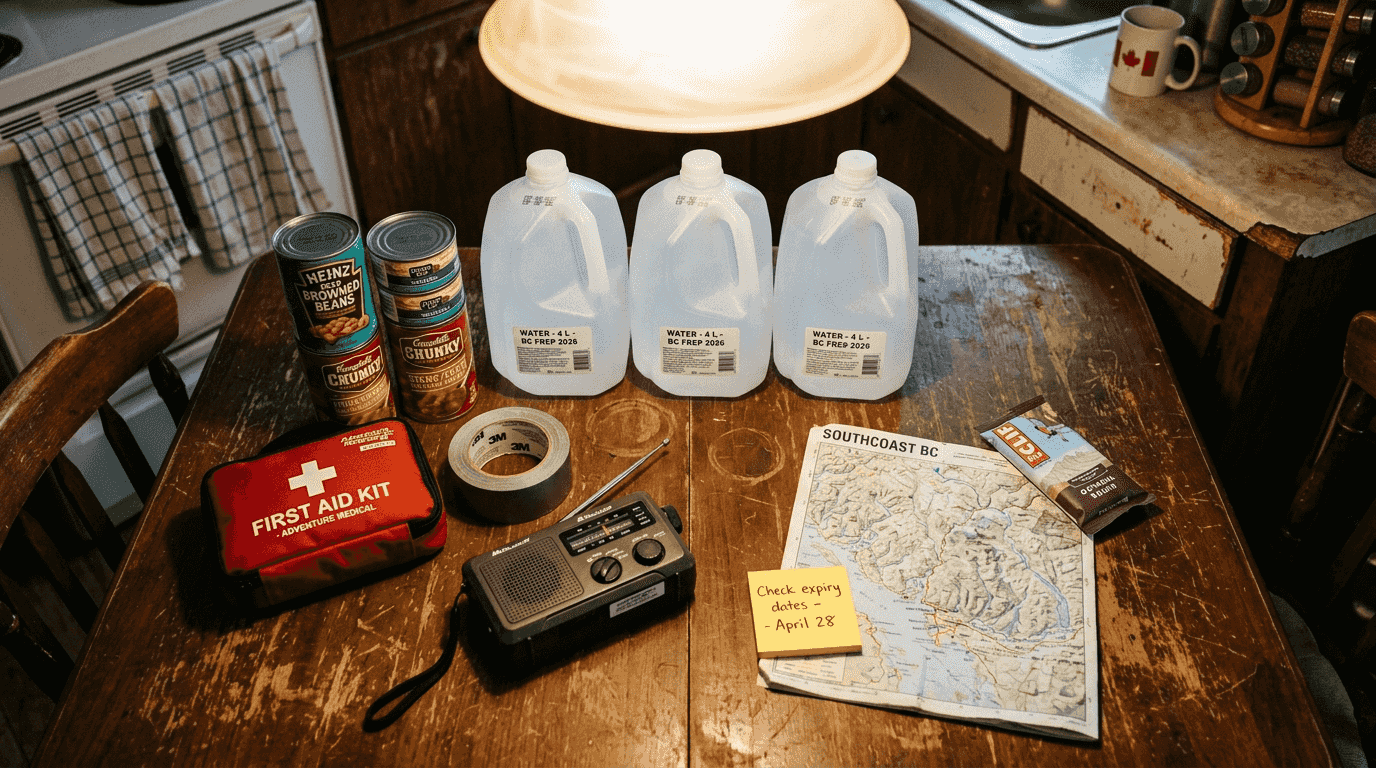
Your first aid kit deserves careful attention beyond basic bandages and antiseptic. Include prescription medications with at least a week’s supply, pain relievers, antihistamines, anti-diarrheal medication, and any specialised medical supplies your family requires. Add a comprehensive first aid manual, as you may need to treat injuries without professional medical help. Flashlights with extra batteries, a battery-powered or hand-crank radio, and a loud whistle for signalling rescuers round out the communication and visibility essentials.
Beyond these basics, thoughtful additions significantly improve comfort and capability during extended isolation. Battery backup power banks keep mobile phones functional for emergency communication. Thermal blankets retain body heat in damaged homes without heating. Hygiene products including toilet paper, feminine supplies, and biodegradable soap maintain health and morale. A multi-tool combines essential functions like cutting, opening cans, and minor repairs in one compact package. Local maps help navigate when GPS fails and familiar routes become impassable.
| Supply category | Basic kit quantity | Deluxe kit quantity | Duration | | — | — | — | | Water per person | 12 litres | 24 litres | 3-6 days | | Food servings | 9 meals | 18 meals | 3-6 days | | First aid items | 25 pieces | 50+ pieces | Extended use | | Light sources | 1 flashlight | 2 flashlights plus glow sticks | Multiple options | | Blankets | 1 per person | 2 per person | Extra warmth |
Follow these steps to organise and maintain your personal supplies for earthquake kits:
- Inventory current supplies and identify gaps against recommended lists
- Purchase missing items in appropriate quantities for your household size
- Pack supplies in waterproof containers or bags to prevent moisture damage
- Label containers clearly with contents and expiry dates for quick identification
- Store in an easily accessible location known to all family members
- Create a written inventory list and attach it to the main container
Pro Tip: Rotate water and food stocks at least twice yearly to maintain freshness, marking rotation dates on your calendar.
Exploring basic earthquake kits provides a solid foundation, but understanding exactly what you need helps you make informed decisions about coverage and investment.
Types of survival kits: basic, deluxe, and group options
Different kits are designed for household, personal, or group use with varying supply levels and components tailored to specific scenarios. Basic kits focus on immediate survival needs for individuals or small families during the critical first 72 hours. These streamlined collections include the absolute essentials: water, food, first aid, light, and basic shelter. They’re designed for quick grab-and-go situations and fit easily in closets or under beds. Basic kits work well for apartments with limited storage or as starter kits for those beginning their preparedness journey.
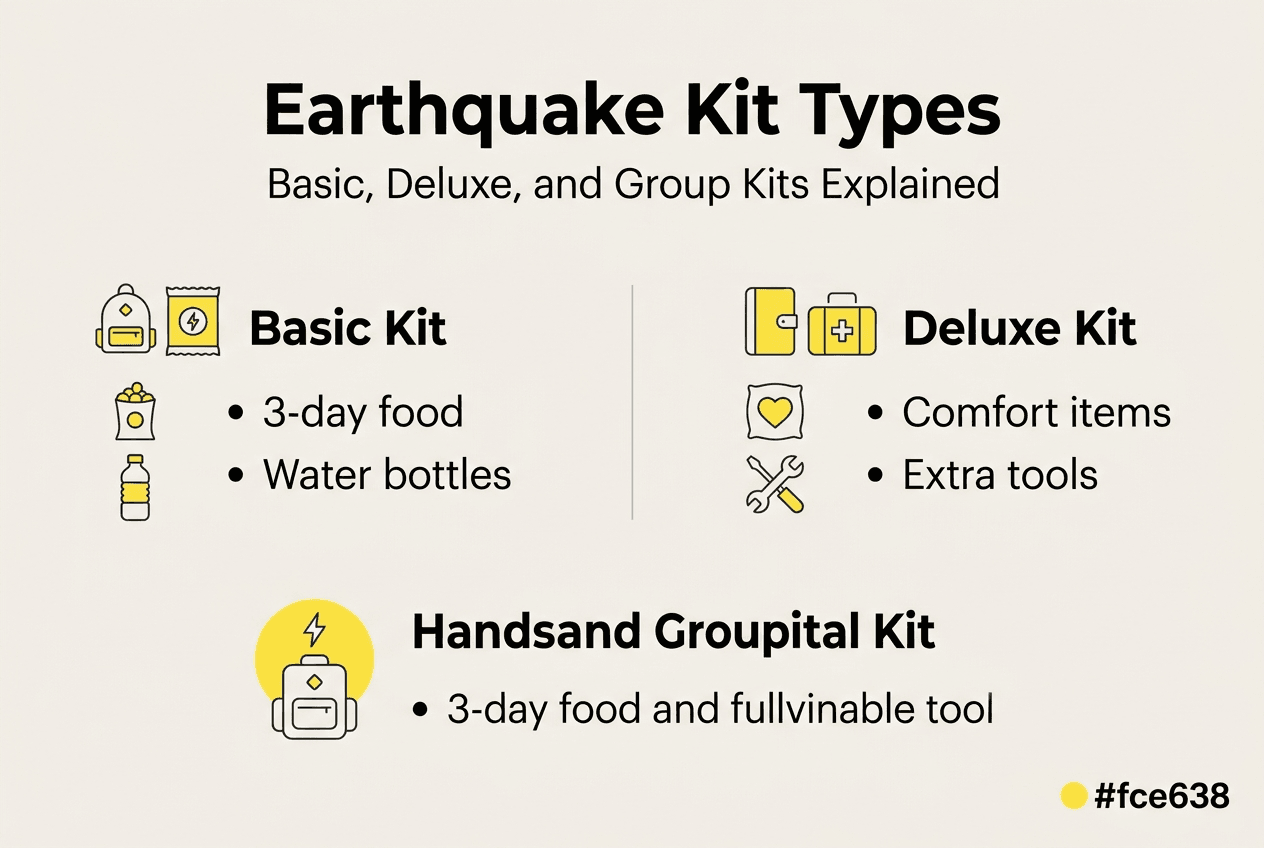
Deluxe kits expand significantly beyond basics to provide extended supplies and improved comfort during longer isolation periods. These comprehensive packages include everything in basic kits plus additional food variety, enhanced first aid supplies, better quality tools, and comfort items like playing cards or books. Deluxe options anticipate scenarios where help may not arrive for a week or more. They’re ideal for families with children, elderly members, or anyone wanting peace of mind through more thorough preparation. The extra investment pays dividends when facing extended disruption.
Group kits serve schools, offices, businesses, and community organisations needing to support multiple people simultaneously. These larger packages contain shared supplies scaled for ten, twenty, or more individuals. They include bulk water storage, communal cooking equipment, larger first aid stations, and sanitation facilities suitable for group use. Group kits often come in wheeled containers or organised crates for easier transport and distribution during emergencies. They’re essential for organisations with legal or ethical responsibilities to protect staff, students, or clients.
| Kit type | Capacity | Typical contents | Price range | Best for |
|---|---|---|---|---|
| Basic | 1-2 people | Water, food, first aid, flashlight, whistle | Lower cost | Individuals, small spaces |
| Deluxe | 2-4 people | Extended supplies, comfort items, better tools | Moderate cost | Families, longer preparedness |
| Group | 10+ people | Bulk supplies, shared equipment, organisation tools | Higher cost | Workplaces, schools, organisations |
Consider these advantages and limitations when selecting your kit type:
- Basic kits offer affordability and compact storage but may run short during extended emergencies
- Deluxe kits provide comprehensive coverage and peace of mind but require more storage space and investment
- Group kits efficiently serve multiple people and meet organisational obligations but need dedicated storage areas
- Pre-assembled kits save time and ensure nothing gets forgotten compared to building your own
- Custom-built kits allow precise tailoring to specific needs but require research and careful planning
Pro Tip: Consider your household’s unique needs and space available before choosing a kit, balancing thoroughness against practical constraints.
Exploring group earthquake kits makes sense for organisations, whilst deluxe earthquake kits suit families seeking comprehensive home protection.
How to maintain and store your survival kit for readiness
Regularly checking, rotating, and maintaining emergency kits ensures they are effective when needed during an earthquake. Storage location dramatically affects both accessibility during emergencies and the longevity of your supplies. Choose spots that all family members can reach quickly, even in darkness or chaos. Ground floor locations near exits work best, avoiding upper floors where structural damage might trap supplies. Never store kits in garages or sheds where temperature extremes degrade food and water, or in basements prone to flooding.
The ideal storage environment maintains moderate temperatures year-round and stays dry. Avoid placing kits under heavy furniture or in areas where falling objects could block access during shaking. Kitchen pantries, hallway cupboards, or dedicated emergency supply closets work well. If you live in a multi-storey home, consider keeping smaller kits on each level rather than one large kit in a single location. This redundancy ensures you’ll have supplies accessible regardless of which part of your home remains safe.
Establish a maintenance schedule and stick to it religiously. Every six months, conduct a thorough inspection of all kit contents. Check expiry dates on food, water, and medications, replacing anything approaching expiration. Test flashlights and radios to confirm batteries still hold charge. Examine first aid supplies for degradation or missing items. Update clothing sizes if you have growing children. Add or remove items based on changing family needs like new medications or resolved health conditions.
Your maintenance checklist should cover these essential tasks:
- Inspect all food and water for expiry dates and replace as needed
- Test batteries in all electronic devices and replace weak ones
- Review and update medications, ensuring adequate supply of prescriptions
- Check clothing and blankets for appropriate sizes and seasonal needs
- Verify first aid supplies remain sterile and complete
- Confirm all family members know kit locations and contents
- Update emergency contact information and local maps
- Rotate stock using older items in daily life and replacing with fresh supplies
Pro Tip: Keep a small emergency kit in your vehicle for added security when earthquakes strike whilst you’re away from home.
Document your maintenance activities in a simple log attached to your kit. Note inspection dates, items replaced, and any observations about supply condition. This record helps you spot patterns like supplies degrading faster than expected, suggesting storage improvements. It also provides accountability, making it harder to skip inspections when life gets busy. For detailed guidance on keeping your supplies current, review earthquake kit maintenance tips tailored specifically for BC conditions.
Earthquake preparedness made easy with ready-to-use kits
Building a comprehensive survival kit from scratch requires significant research, shopping across multiple stores, and careful organisation to ensure nothing gets forgotten. Pre-assembled kits eliminate this burden whilst providing professionally curated supplies that meet established emergency preparedness standards. These ready-to-use solutions cater to different family sizes and preparedness levels, from compact basic earthquake kits perfect for individuals to comprehensive deluxe earthquake kits designed for extended family protection.
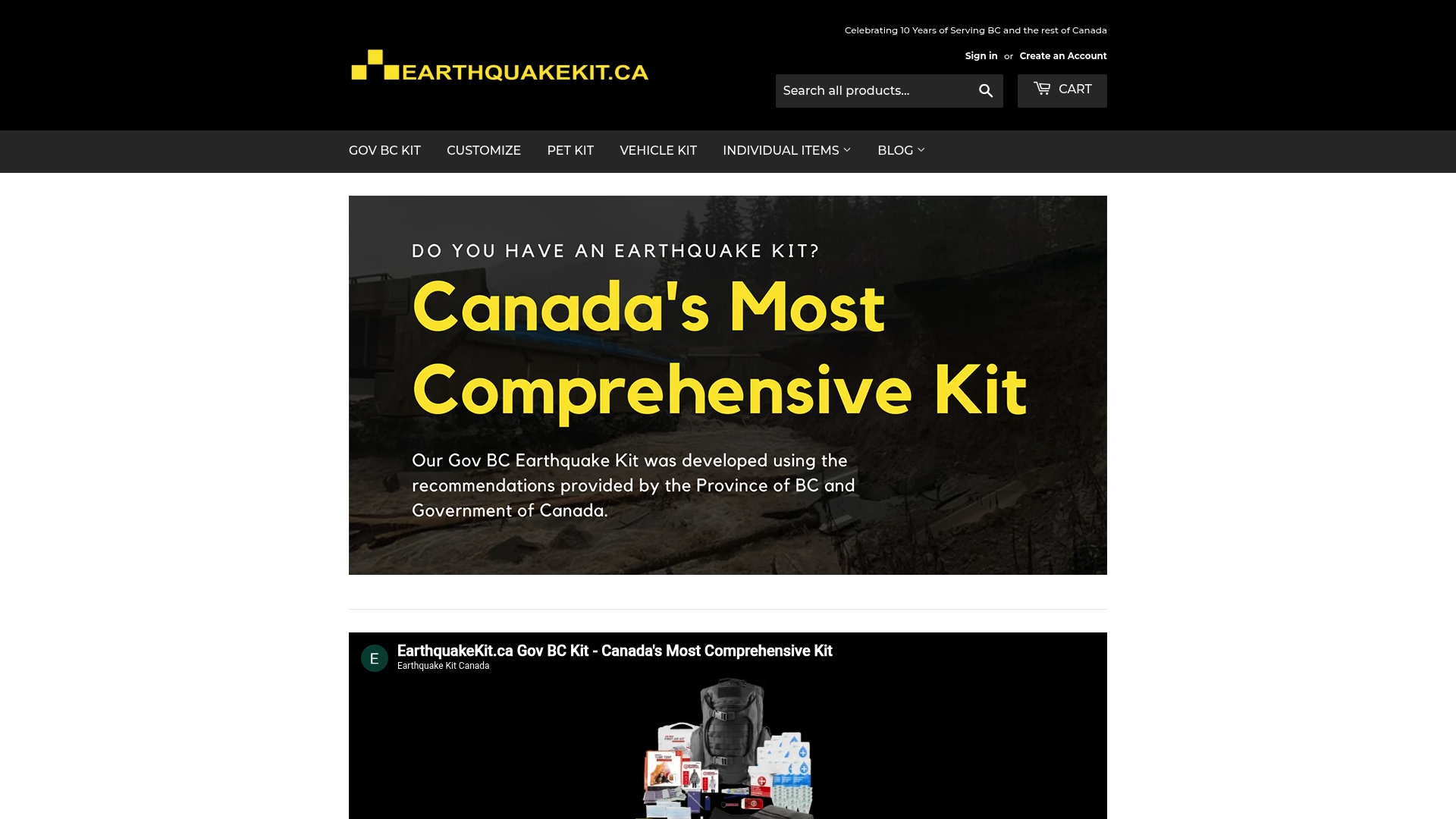
Each kit undergoes quality checking to ensure components meet BC’s specific earthquake preparedness needs, accounting for our climate, typical building construction, and regional emergency response capabilities. For organisations responsible for staff or student safety, group earthquake kits provide scalable solutions with bulk supplies and efficient organisation systems. The convenience of receiving everything in one shipment, already organised and ready to store, transforms preparedness from an overwhelming project into a simple decision.
Frequently asked questions
What basic supplies are in a survival kit for earthquakes?
A complete earthquake survival kit includes water at four litres per person daily, non-perishable food for at least 72 hours, a comprehensive first aid kit with medications, flashlights with extra batteries, an emergency radio, thermal blankets, and a whistle for signalling. Additional essentials cover sanitation supplies, basic tools, local maps, and emergency contact information. Quality kits also include items specific to BC’s climate like rain protection and warmth retention supplies.
How long will a typical survival kit sustain a family during an emergency?
Most basic survival kits provide supplies for 72 hours, the minimum recommended duration for earthquake preparedness in British Columbia. Deluxe kits extend this to five to seven days or longer, accounting for scenarios where infrastructure damage delays emergency response across wide areas. The actual duration depends on your family size, consumption rates, and whether you supplement kit supplies with household items that survive the earthquake. Larger families should calculate supplies carefully to ensure adequate coverage.
Can I customise a survival kit for my family’s special needs?
Absolutely, and you should. Add prescription medications, infant formula and nappies, pet food and supplies, or specialised medical equipment your family requires daily. Include comfort items for children like small toys or books to reduce stress during frightening situations. Consider dietary restrictions when selecting food items, choosing options everyone can safely consume. Both pre-made kits and custom-built collections can accommodate these personalised additions to ensure your unique household needs are met.
Where is the best place to store my survival kit?
Store your kit in an easily accessible ground floor location that all family members know and can reach quickly, even in darkness. Avoid garages with temperature extremes, basements prone to flooding, or upper floors where structural damage might block access. Choose spots away from heavy furniture that could fall and trap supplies during shaking. Kitchen pantries, hallway cupboards, or dedicated emergency closets work well, maintaining moderate temperatures and staying dry year-round.
How often should I check and replace items in the kit?
Inspect your survival kit thoroughly every six months, checking expiry dates on food, water, and medications. Replace any items approaching expiration and test all batteries and electronic devices to confirm they remain functional. Update clothing sizes, medications, and supplies based on changing family needs. Mark inspection dates on your calendar and treat them as non-negotiable appointments. This regular maintenance ensures your kit will perform exactly as needed when an earthquake strikes without warning.
Recommended
Share this post
- 0 comment
- Tags: en, what is a survival kit