

Choose the right earthquake kits for BC families
Posted by Karl Lundgren on
Choosing the right earthquake kit can feel overwhelming when you’re trying to protect your family from BC’s seismic risks. With dozens of options ranging from compact grab-and-go bags to comprehensive two-week home supplies, how do you know which kit truly fits your family’s size, lifestyle, and budget? This guide breaks down selection criteria, compares kit types, and provides situational recommendations to help you make an informed decision that ensures your family’s safety during the Big One.
Table of Contents
- Selection Criteria For Earthquake Kits
- Types Of Earthquake Kits
- Comparison Of Earthquake Kits
- Situational Recommendations For BC Families
- Maintaining And Updating Your Earthquake Kit
- Explore Comprehensive Earthquake Kits Tailored For BC Families
- Frequently Asked Questions
Key takeaways
| Point | Details |
|---|---|
| Selection criteria | Evaluate supply duration, family size, portability, regional risks, and budget to match kits to your needs. |
| Three main kit types | 72-hour grab-and-go kits, 1-week and 2-week home kits, plus vehicle-specific kits serve different scenarios. |
| Cost and weight vary | Prices range from CAD $200 for basic kits to $1,400 for comprehensive supplies; weight impacts portability. |
| Situational guides help | Tailor kit selection based on family size, commuting patterns, medical needs, and geographic location. |
| Regular maintenance matters | Review kits twice yearly to replace expired items and adapt to family changes. |
Selection criteria for earthquake kits
Before purchasing any earthquake kit, you need to evaluate several critical factors that determine whether supplies will actually serve your family during an emergency. The Government of British Columbia recommends emergency kits that provide at least a 72-hour supply of water at 4 litres per person per day and non-perishable food. This minimum standard forms the foundation, but your specific circumstances may require longer duration supplies.
Family size directly impacts how much water, food, and medical supplies you need to stockpile. A couple requires far less than a family of five with young children. Beyond headcount, consider individual medical conditions, dietary restrictions, and age-specific needs like infant formula or prescription medications.
Portability becomes crucial when deciding between home storage and evacuation scenarios. Home kits can be heavier and more comprehensive since they stay put, whilst vehicle kits must remain compact and lightweight for quick access. Coastal BC families face additional tsunami risks, requiring grab-and-go bags positioned near exits for rapid evacuation.
Budget constraints influence whether you purchase ready-made kits or assemble DIY versions. Ready-made options ensure compliance with government standards and save time, whilst DIY kits allow customization to specific needs. Remote areas with delayed emergency response times justify investing in longer-duration kits despite higher costs.
Pro Tip: Create a family needs assessment checklist listing each member’s medical conditions, dietary requirements, and daily essentials before shopping for kits. This prevents costly mistakes and ensures nothing critical gets overlooked. Following earthquake kit organisation tips can streamline this process.
Types of earthquake kits
BC families typically encounter four main earthquake kit categories, each designed for specific emergency scenarios and duration requirements. Understanding these types helps you match supplies to your household’s unique preparedness strategy.
72-Hour Grab-and-Go Kits
These compact emergency bags contain the bare essentials to sustain your family for three days during immediate evacuation. Typical contents include bottled water, energy bars, basic first aid supplies, flashlight, battery-powered radio, emergency blanket, and copies of important documents. They’re lightweight enough to carry quickly and fit easily in vehicle trunks or near home exits.
1-Week Home Kits
Designed for sheltering in place after moderate earthquakes, these kits expand on 72-hour supplies with additional food variety, cooking tools, sanitation supplies, and more comprehensive first aid. They provide enough resources to sustain your family whilst waiting for services to restore or emergency responders to reach your neighbourhood. The added supplies make these kits heavier and less portable.
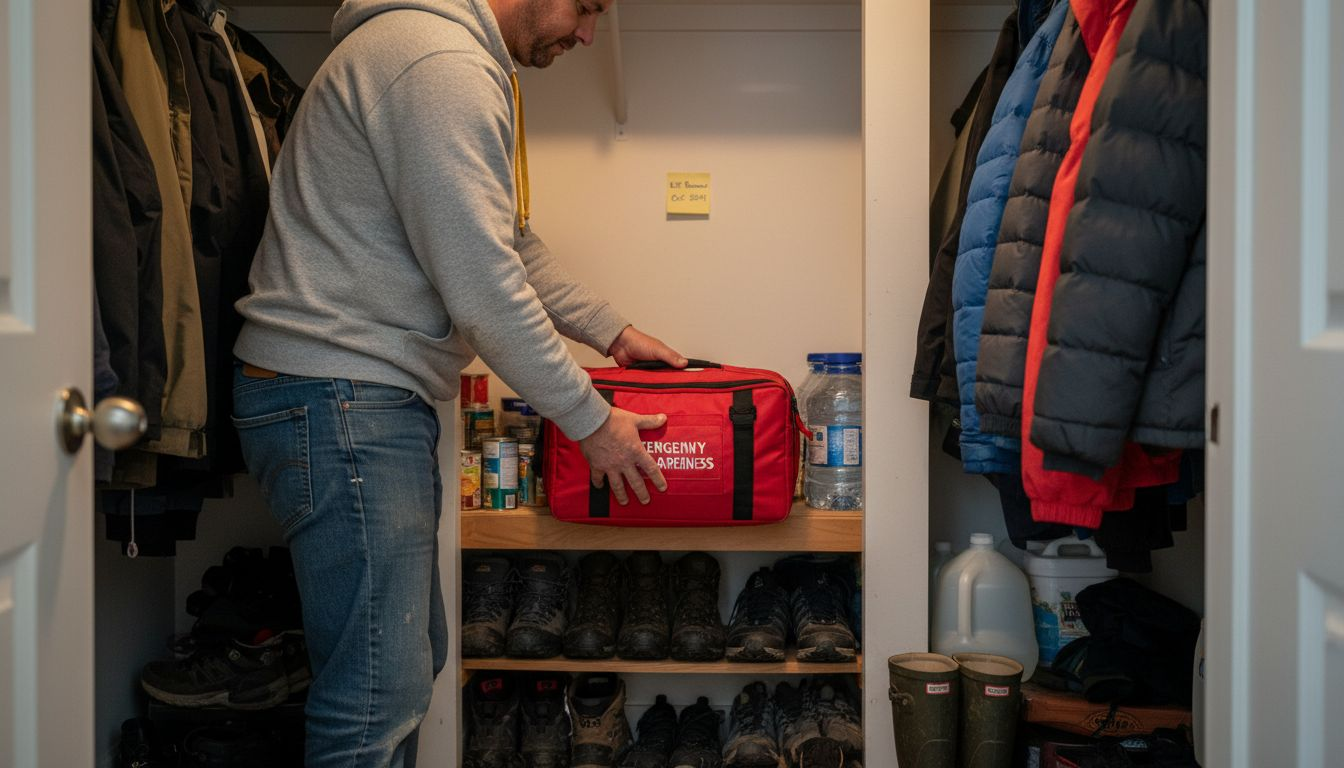
2-Week Home Kits
Comprehensive preparedness kits suitable for extended emergencies or families in remote BC locations where help may take longer to arrive. These include diverse freeze-dried meals, water purification tablets, extensive medical supplies, tools for minor repairs, and comfort items. Whilst expensive and bulky, they offer maximum self-sufficiency during prolonged disasters.
Vehicle Earthquake Kits
Vehicle earthquake kits should be compact, lightweight, and include essentials such as water, food bars, flashlight, radio, and a first-aid kit to sustain occupants during evacuation or being stranded. These specialized kits account for space constraints in cars and focus on immediate survival needs. The Government of Canada’s Earthquake Early Warning system alerts BC residents, emphasizing the need for grab-and-go bags alongside stationary home earthquake kits.
Each kit type serves distinct purposes in a comprehensive family preparedness plan. Most experts recommend maintaining multiple kit types positioned strategically at home, in vehicles, and potentially at workplaces for maximum coverage.
Comparison of earthquake kits
Choosing between earthquake kit types requires weighing cost, weight, storage needs, and suitability for your family’s specific circumstances. This comparison helps you evaluate trade-offs and identify the best fit.
| Kit Type | Approximate Cost | Weight | Best For | Key Advantages |
|---|---|---|---|---|
| 72-Hour Grab-and-Go | CAD $200-$300 | 15-20 kg | Small families, limited storage, quick evacuation | Portable, affordable, easy to grab |
| 1-Week Home Kit | CAD $675-$900 | 30-40 kg | Medium families, sheltering in place | Balanced duration and variety |
| 2-Week Home Kit | CAD $1,200-$1,400 | 50-70 kg | Large or remote families, extended emergencies | Maximum self-sufficiency |
| Vehicle Kit | CAD $100-$200 | 3-5 kg | Daily commuters, evacuation scenarios | Ultra-portable, compact |
The 72-hour kit offers the most economical entry point for families just starting their preparedness journey. Its manageable weight and size make it practical for apartments or homes with limited storage space. However, three days of supplies may prove insufficient if emergency services face widespread damage across BC.
One-week kits strike a middle ground, providing BC preparedness recommendations with enough supplies to weather most earthquake scenarios without breaking the bank. The additional cost buys peace of mind through diverse meal options, extra clothing, and more comprehensive medical supplies. These kits work well for average BC families with standard storage capacity.
Two-week kits represent the gold standard in home preparedness but require significant investment and storage space. Families in rural BC locations or those with special medical needs benefit most from this extensive coverage. The bulk makes these kits impractical for small apartments or frequent relocation.
Vehicle kits sacrifice duration for portability, focusing on immediate survival during evacuation or being stranded on damaged roads. Their compact design fits under seats or in trunks without consuming valuable cargo space. Every family member who commutes should maintain a personal vehicle kit.
Purchasing ready-made earthquake kits can save time and ensure adherence to government guidelines, but DIY kits offer customization to family-specific requirements and budget constraints. Ready-made options from government standard kits guarantee compliance with official recommendations without research hassle.
Pro Tip: Start with a 72-hour kit to establish baseline preparedness, then gradually expand to one-week or two-week supplies as budget allows. This phased approach avoids financial strain whilst building comprehensive coverage over time.
Situational recommendations for BC families
Your family’s unique circumstances dictate which earthquake kit configuration provides optimal protection. These scenario-based guidelines translate comparison data into actionable decisions.
Small Families or Couples
A single 72-hour home kit paired with individual vehicle kits covers most emergency scenarios for two people. This minimal approach balances essential protection with budget constraints. Consider upgrading to a one-week kit if you live in older buildings with higher collapse risk or areas prone to road closures.
Families With Children
Children’s needs evolve rapidly, requiring frequent kit updates for size changes, dietary preferences, and developmental stages. One-week home kits provide buffer time for parents to manage kids during stressful post-earthquake conditions. Include comfort items like favourite snacks, small toys, or books to reduce anxiety. Don’t forget infant-specific supplies like formula, diapers, and wipes if you have babies.
Households With Elderly or Medical Needs
Anyone requiring prescription medications, mobility aids, or special dietary needs should maintain one-week minimum supplies with customized additions. Store extra medication, medical equipment batteries, and detailed health information lists. Personal earthquake kit options allow tailoring for specific conditions.
Daily Commuters and Drivers
Emergency kits in vehicles should be accessible and contain items that support immediate survival needs, including water, food, radio, flashlight, and first aid, tailored to space constraints. Maintain separate vehicle kits for each family car to ensure protection regardless of which vehicle you’re using during an earthquake. Update seasonal items like blankets or sun protection based on BC’s climate variations.
Remote or Rural BC Residents
Families living outside major urban centres face potentially delayed emergency response times. Two-week home kits become essential rather than optional in these locations. Include additional tools for self-rescue, extra fuel for generators or heating, and expanded first aid supplies since medical help may take longer to arrive.
Budget-Conscious Families
Start with minimum 72-hour coverage from basic home earthquake kits, then systematically add supplies during sales or when budget allows. Prioritize water and food first, then build out medical and tool categories. DIY assembly can reduce costs by 30-40% compared to pre-packaged kits if you shop strategically.
Selection Decision Framework
- Calculate total household members including pets
- Assess special medical or dietary requirements
- Evaluate primary residence location and earthquake risk level
- Determine typical daily travel patterns and commute distances
- Review available storage space and budget constraints
- Select home kit duration meeting minimum 72-hour standard
- Add vehicle kits for each regularly used car
- Customize with family-specific additions
This systematic approach prevents impulse purchases whilst ensuring comprehensive coverage aligned with your actual needs and resources.
Maintaining and updating your earthquake kit
Purchasing earthquake kits represents only the first step in ongoing preparedness. Regular maintenance ensures supplies remain effective when disaster strikes, preventing potentially deadly failures from expired food, dead batteries, or outdated medications.
Schedule comprehensive kit reviews every six months, ideally during spring and autumn when BC weather transitions prompt other seasonal preparations. Check expiration dates on all food, water, medications, and batteries. Replace items approaching expiration even if they appear fine, since emergency situations demand absolute reliability.
Family changes require immediate kit updates rather than waiting for scheduled reviews. New babies, developing allergies, changed prescriptions, or household size adjustments all necessitate supply modifications. Document these changes in a kit inventory list to track what needs updating.
Storage location matters as much as contents. Keep home kits in easily accessible spots known to all family members, avoiding basements prone to flooding or upper floors difficult to reach after structural damage. Vehicle kits belong in trunks or rear storage areas where they won’t shift during normal driving but remain quickly grabbable.
Incorporate kit familiarity into regular family emergency drills. Practice locating kits quickly, opening packaging, and using tools like radios or water purification tablets. This hands-on experience reduces panic during actual emergencies when stress impairs decision making. Following earthquake kit maintenance tips streamlines this process.
Pro Tip: Set recurring calendar reminders or phone alerts for biannual kit checks on specific dates like March 1st and September 1st. Linking maintenance to consistent dates creates automatic habits that prevent neglect.
Rotate perishable supplies into regular household use as they approach expiration rather than wasting them. This rotation system reduces long-term costs whilst ensuring fresh supplies stay stocked. Replace consumed items immediately to maintain constant readiness.
Explore comprehensive earthquake kits tailored for BC families
Now that you understand selection criteria, kit types, and maintenance requirements, it’s time to secure supplies that protect your family. EarthquakeKit.ca offers curated collections designed specifically for BC’s seismic risks and provincial guidelines.
Our basic earthquake kits provide essential 72-hour coverage at accessible price points for families starting their preparedness journey. For those seeking official compliance, government recommended earthquake kits meet all provincial standards with verified contents. Specialized personal earthquake kit supplies allow customization for unique medical or dietary needs. Browse our full range to find configurations matching your family’s size, budget, and risk profile. Every kit ships within BC with expert guidance included to answer your preparedness questions.
Frequently asked questions
What items are essential in every type of earthquake kit?
Water at minimum 4 litres per person per day, non-perishable food, first aid kit, flashlight, battery-powered radio, and copies of important documents form the core essentials. These items support at least 72 hours of self-sufficiency across all kit types, whether grab-and-go bags or comprehensive home supplies.
How often should I check and update my earthquake kit supplies?
Review and refresh supplies at least every six months to replace expired food, water, medications, and batteries. Immediate updates are necessary when family circumstances change, such as new babies, medical conditions, or household size adjustments. Regular checks prevent supply degradation and maintain emergency readiness.
Can I rely on a single home earthquake kit for all emergency situations?
No, emergency preparedness experts recommend maintaining separate kits for home, vehicle, and workplace to ensure accessibility during varied scenarios. Government recommended earthquake kits positioned strategically across multiple locations improve overall family safety and response flexibility during the Big One.
What type of earthquake kit is best for families with young children or elderly members?
One-week kits with additional medical supplies, dietary accommodations, and comfort items best serve households with children, elderly members, or special requirements. Customizable government BC earthquake kits allow tailoring contents to specific age groups and health needs, ensuring safety and comfort during extended emergencies.
Recommended
Share this post
- 0 comment
- Tags: en, types of earthquake kits