

Emergency supplies for earthquake preparedness in BC 2026
Posted by Karl Lundgren on
British Columbia faces a 30 per cent chance of a major earthquake in the next 50 years, yet many residents remain unprepared for the critical hours and days following a seismic event. When infrastructure fails and emergency services are overwhelmed, your survival depends entirely on the supplies you’ve gathered beforehand. This comprehensive guide explains exactly what emergency supplies you need, how to maintain them effectively, and why proper preparation could mean the difference between thriving and merely surviving after the Big One strikes coastal British Columbia.
Table of Contents
- Why Emergency Supplies Matter For Earthquakes In British Columbia
- Key Emergency Supplies For Earthquake Preparedness
- Enhancing Safety With Early Warning Systems And Preparedness Practices
- Insurance And Long-Term Preparedness Considerations
- Explore Earthquake Kit Solutions For British Columbia Residents
- Frequently Asked Questions
Key takeaways
| Point | Details |
|---|---|
| Minimum supply duration | Store at least three days of food and water, though two weeks is strongly recommended for extended recovery periods |
| Grab and go weight limit | Keep emergency backpacks under one quarter of the carrier’s body weight and update contents every six months |
| Early warning advantage | Earthquake early warning systems provide crucial seconds to take protective actions before shaking begins |
| Insurance understanding | Review earthquake coverage carefully as most policies have significant exclusions and high deductibles |
| Practice saves lives | Regular safety drills and familiarity with supplies dramatically improve survival outcomes during actual emergencies |
Why emergency supplies matter for earthquakes in British Columbia
The seismic reality facing British Columbia is sobering. A magnitude 9 earthquake could cause $128 billion in losses and thousands of casualties across the province. The Cascadia Subduction Zone stretches from northern Vancouver Island to northern California, and when it ruptures, the resulting megathrust earthquake will devastate coastal communities. Currently, 92% of BC’s population and 90% of businesses face exposure to seismic risk, making this a universal concern rather than a remote possibility.
Vancouver Island and the lower mainland bear the highest risk, but interior regions also face significant seismic threats. When a major earthquake strikes, emergency services will be overwhelmed for days or weeks. Roads may become impassable, bridges could collapse, and water treatment facilities might fail. You cannot rely on government assistance arriving quickly. Your emergency supplies become your lifeline during this critical period.
“The first 72 hours after a major earthquake are the most critical for survival. Families with well-stocked emergency kits have significantly better outcomes than those who wait for external help.”
Understanding this risk motivates proper preparation. The economic impact extends beyond immediate damage, affecting employment, housing, and community stability for years. Personal emergency supplies ensure you can protect your family’s health and safety whilst infrastructure recovers. This preparation also reduces the burden on emergency services, allowing responders to focus on the most vulnerable populations.
| Risk Factor | Impact Level | Preparation Priority |
|---|---|---|
| Cascadia megathrust | Catastrophic | Highest |
| Infrastructure failure | Severe | Critical |
| Water contamination | High | Essential |
| Supply chain disruption | Extended | Important |
Key emergency supplies for earthquake preparedness
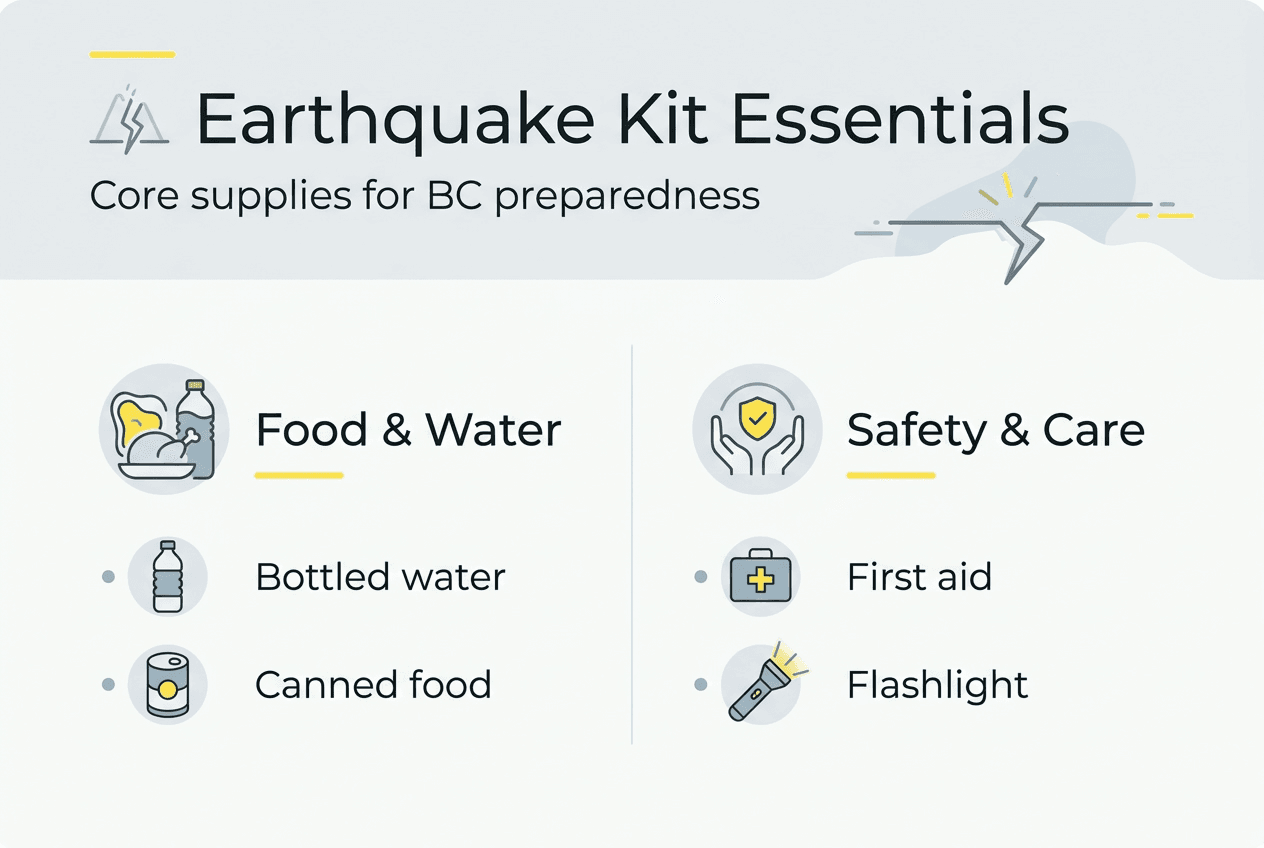
Building an effective earthquake kit requires understanding both minimum requirements and optimal provisions. The foundation of any emergency kit is water storage. You need four litres per person per day for drinking and hygiene, meaning a family of four requires 48 litres for a three day minimum supply. Commercially bottled water works well, but consider larger storage containers for extended preparedness. Rotate water supplies every six months to maintain freshness.
Food selection demands careful consideration. Choose non-perishable items that require minimal preparation and won’t increase thirst. Emergency food rations provide concentrated calories in compact packages, making them ideal for Grab and Go bags. Include familiar foods that your family actually enjoys eating, as comfort matters during stressful situations. Avoid heavily salted items that increase water requirements. Emergency food rations designed specifically for emergency situations offer balanced nutrition without refrigeration.
Your first aid supplies should address common earthquake injuries like cuts, bruises, and minor burns. Include bandages, antiseptic, pain relievers, prescription medications, and any medical devices family members require. Don’t forget hygiene items like toilet paper, feminine products, and hand sanitiser. Personal items such as glasses, contact lenses, and hearing aid batteries are easily overlooked but critically important.
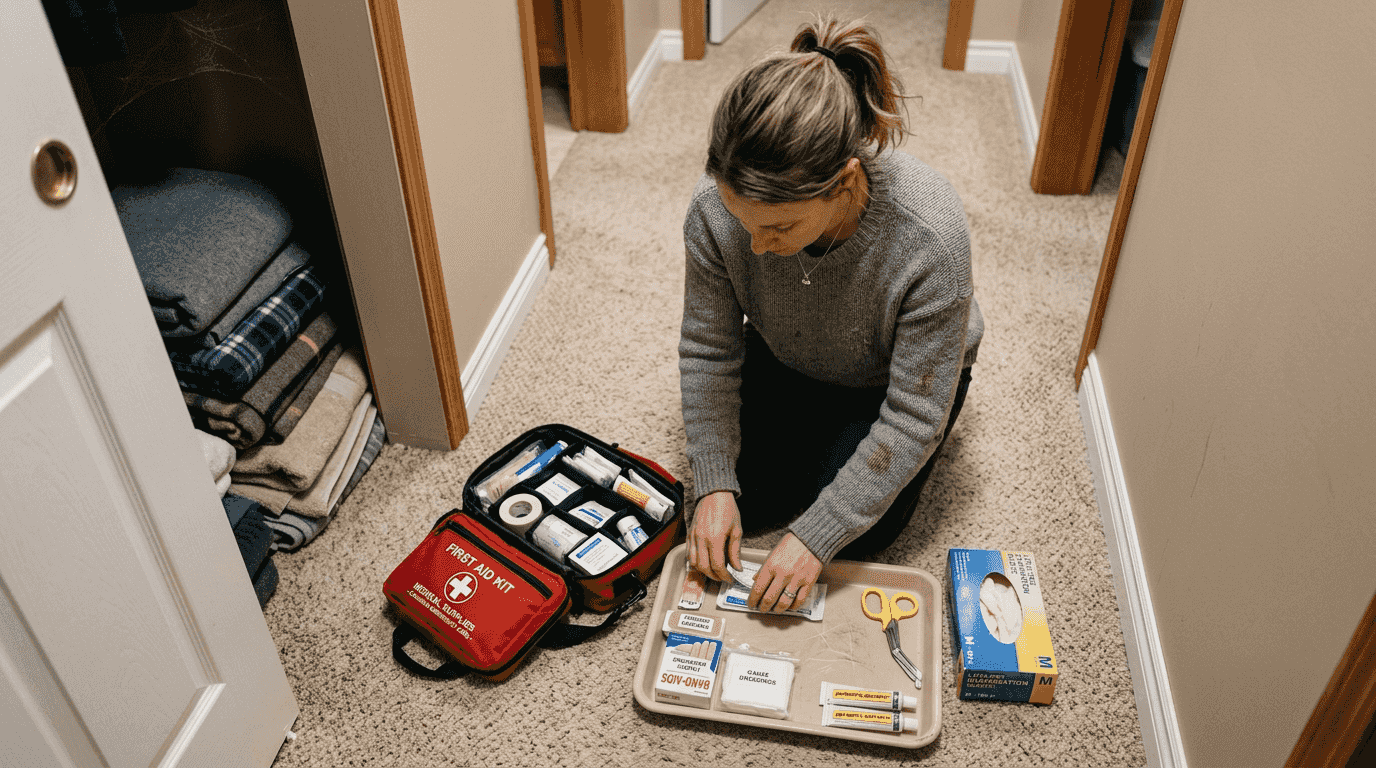
Pro Tip: Store a complete change of clothing and sturdy shoes in your emergency kit. Glass and debris make bare feet dangerous, and you may need to evacuate quickly without time to dress properly.
Grab and Go bags serve a specific purpose distinct from home storage kits. These portable backpacks must be light enough to carry whilst evacuating, not exceeding one quarter of the carrier’s body weight. Pack only essentials: water, food for 72 hours, first aid basics, flashlight, radio, copies of important documents, cash, and personal medications. Store these bags near exits where you can grab them instantly during evacuation.
- Water purification tablets or portable filters
- Battery powered or hand crank radio for emergency broadcasts
- Flashlights with extra batteries or solar charging capability
- Multi tool or Swiss Army knife for various tasks
- Duct tape and plastic sheeting for emergency repairs
- Matches in waterproof container or reliable lighter
- Whistle for signalling rescuers if trapped
- Local maps in case GPS systems fail
Regular maintenance keeps supplies effective. Check your personal earthquake supplies every six months, replacing expired food, updating medications, and adjusting for family changes like new babies or dietary restrictions. Mark your calendar for April and October reviews, aligning with daylight saving time changes as an easy reminder.
| Supply Category | Minimum Quantity | Recommended Quantity | Replacement Schedule |
|---|---|---|---|
| Water | 12 litres per person | 56 litres per person | Every 6 months |
| Food | 3 days | 14 days | Check expiry dates |
| First aid items | Basic kit | Comprehensive kit | Annual review |
| Batteries | One set | Three sets | Replace when testing |
Enhancing safety with early warning systems and preparedness practices
Technology now provides precious seconds of warning before earthquake shaking arrives. The Canadian earthquake early warning system detects initial seismic waves and sends alerts to smartphones and automated systems before the more destructive waves reach populated areas. These seconds allow you to drop, cover, and hold on, potentially preventing serious injuries. The system can also trigger automatic safety measures like stopping trains, opening fire station doors, and shutting down industrial equipment.
Personal safety practices matter as much as supplies. The ‘Drop, Cover, and Hold On’ technique has been proven to significantly reduce injuries during earthquakes. When shaking starts, immediately drop to hands and knees to prevent being knocked down. Take cover under a sturdy desk or table, protecting your head and neck with your arms. Hold on to your shelter and be prepared to move with it until shaking stops. This simple procedure prevents the most common earthquake injuries from falling objects and loss of balance.
Regular practice builds muscle memory that functions even during panic. Participate in the Great BC ShakeOut drill every October 17th, when millions of British Columbians simultaneously practise earthquake response. Conduct family drills quarterly, timing how quickly everyone can get to safe positions. Discuss what to do in different locations: at home, at work, in a vehicle, or outdoors. Children especially benefit from repeated practice that reduces fear and builds confidence.
Pro Tip: Install an early earthquake warning system in your home that provides local alerts seconds before shaking begins, giving you crucial time to protect yourself and family members.
Mechanical safeguards prevent injuries before earthquakes strike. Secure heavy furniture like bookcases and water heaters to wall studs using appropriate brackets. Move heavy objects to lower shelves where they pose less danger if they fall. Install safety latches on cabinet doors to prevent contents from spilling out during shaking. Identify safe spots in each room where you can take cover quickly.
“The combination of early warning technology and practiced response procedures creates a powerful safety advantage. People who regularly drill earthquake procedures respond instinctively during actual events, significantly reducing injury rates.”
- Identify safe spots in every room of your home and workplace
- Secure heavy furniture and objects that could fall during shaking
- Practice Drop, Cover, and Hold On with all family members monthly
- Install earthquake early warning apps on all household smartphones
- Establish communication plans for family members in different locations
- Know how to shut off gas, water, and electricity if needed
- Keep sturdy shoes near beds to protect feet from broken glass
Combining technological warnings with mechanical safeguards and practiced responses creates comprehensive protection. You cannot prevent earthquakes, but you can dramatically reduce their impact on your family through intelligent preparation and regular practice.
Insurance and long-term preparedness considerations
Earthquake insurance presents complex decisions for British Columbia homeowners. Unlike fire or theft coverage included in standard policies, earthquake protection is optional. Currently, 60 to 70% of BC homeowners carry earthquake insurance, but many misunderstand their coverage details. Policies typically include high deductibles, often 10 to 20% of the home’s value, and exclude certain types of damage like landscaping or detached structures.
Review your policy carefully with an insurance professional who specialises in earthquake coverage. Understand exactly what is covered and what exclusions apply. Some policies limit coverage for contents separately from structural damage. Others have sublimits for specific items like jewellery or electronics. The deductible amount can be substantial, potentially tens of thousands of dollars, so ensure you have emergency funds available. Consider whether your coverage adequately reflects current replacement costs, as construction expenses have risen significantly in recent years.
Emergency kits must account for every household member’s unique needs. Infants require formula, nappies, and specific medications. Seniors may need mobility aids, extra medications, or special dietary items. People with disabilities require equipment batteries, backup supplies, and accessibility considerations. Choosing earthquake kits for families involves customising contents to match your household’s specific requirements rather than relying on generic checklists.
- Include comfort items for children like favourite toys or books
- Store extra prescription medications for chronic conditions
- Pack pet supplies including food, water, and vaccination records
- Keep copies of important documents in waterproof containers
- Include cash in small denominations as electronic payment systems may fail
- Store backup eyeglasses or contact lenses with solution
- Pack entertainment items like cards or puzzles for extended sheltering
Pro Tip: Store critical documents like insurance policies, identification, and property deeds in a fireproof, waterproof safe that you can access quickly after an earthquake. Keep digital copies in secure cloud storage as additional backup.
Long-term recovery requires planning beyond immediate survival. Well-stocked, well-understood emergency kits correlate with better coping outcomes during extended recovery periods. Consider how your family will manage if your home becomes uninhabitable for weeks or months. Where will you stay? How will you continue working or attending school? What financial resources can you access if banks are closed?
| Coverage Type | Typical Inclusion | Common Exclusions | Consideration |
|---|---|---|---|
| Structural damage | Main dwelling | Detached structures | Verify all buildings covered |
| Contents | Personal belongings | Valuables over limits | Document high value items |
| Additional living | Temporary housing | Extended timeframes | Understand duration limits |
| Deductible | Percentage based | Usually 10 to 20% | Ensure adequate savings |
Regular review and adjustment maintain preparedness as circumstances change. Update emergency contacts when family members move. Replace children’s clothing as they grow. Adjust food supplies for dietary changes or new allergies. Review insurance coverage annually to ensure it reflects current property values and replacement costs. This ongoing attention keeps your preparedness relevant and effective rather than becoming outdated and useless when you need it most.
Explore earthquake kit solutions for British Columbia residents
Preparing comprehensive emergency supplies can feel overwhelming, but pre-assembled kits simplify the process whilst ensuring nothing critical gets overlooked. Basic earthquake kits provide essential supplies for individuals or couples, including food, water, first aid, and safety items specifically selected for British Columbia’s earthquake risks. These foundational kits offer an excellent starting point that you can customise with personal items and preferences.
Families and larger households benefit from deluxe earthquake kits that include expanded quantities and additional comfort items for extended emergencies. Businesses and organisations require group earthquake kits designed to support multiple people simultaneously, meeting workplace safety requirements whilst ensuring employee wellbeing during disasters.
Choosing ready-made kits ensures quality, completeness, and convenience. Professional emergency preparedness suppliers understand BC’s specific challenges and include regionally appropriate items. Regular restocking services help maintain freshness without requiring you to track expiry dates manually. Customisation options let you add personal medications, dietary preferences, or special equipment whilst maintaining the core essentials that keep families safe and comfortable during extended emergencies.
Frequently asked questions
What are the best emergency supplies for an earthquake?
The best emergency supplies include water at four litres per person daily, non-perishable food for at least three days, comprehensive first aid supplies, flashlights with extra batteries, and a battery powered radio. Add personal medications, important documents in waterproof containers, sturdy shoes, warm clothing, and hygiene items. Include tools like a multi-purpose knife, duct tape, and plastic sheeting for emergency repairs.
How often should I update my emergency supplies?
Check and replace expired items in your emergency kit every six months, ideally in April and October when daylight saving time changes. Review medications for expiry dates, test batteries and replace if weak, rotate water supplies, and update children’s clothing sizes. Adjust contents for family changes like new babies, dietary restrictions, or medical conditions that develop.
What insurance coverage do I need for earthquake damage?
Earthquake coverage is optional and separate from standard homeowner policies in British Columbia. Verify what structural and contents damage is included, understanding that most policies have deductibles of 10 to 20% of your home’s value. Consult an insurance professional to review exclusions, sublimits on valuables, and whether coverage adequately reflects current replacement costs for your property.
How heavy should my Grab and Go bag be?
Your Grab and Go bag should not exceed one quarter of the carrier’s body weight to ensure you can evacuate quickly without exhaustion. For a 70 kilogramme adult, this means a maximum of 17.5 kilogrammes including the backpack itself. Pack only 72 hours of essential supplies, prioritising water, food, medications, and critical documents over comfort items.
Where should I store my earthquake emergency supplies?
Store emergency kits in cool, shaded locations away from direct sunlight, chemicals, and concrete floors that can damage containers over time. Keep supplies accessible near exits for quick evacuation, but secure heavy items so they won’t fall during shaking. Distribute supplies across multiple locations including your home, vehicle, and workplace to ensure access regardless of where you are when an earthquake strikes.