

What is a multi-day kit? Essential guide for BC families
Posted by Karl Lundgren on
Many BC families believe a basic emergency kit will suffice after an earthquake, but this common misconception leaves them vulnerable. When the Big One strikes along the Cascadia fault line, emergency services may take 72 hours or longer to reach affected areas. A multi-day kit ensures your family can remain self-sufficient during this critical period. This guide explains what belongs in a proper multi-day kit, how to assemble one tailored for families with young children, and why regular maintenance keeps your household earthquake-ready.
Table of Contents
- Understanding What A Multi-Day Kit Is
- Core Contents Of A Multi-Day Kit For Families With Young Children
- How To Prepare And Maintain Your Multi-Day Kit
- Comparing Different Types Of Emergency Kits For BC Families
- Explore Earthquake Kits Designed For BC Families
- Frequently Asked Questions About Multi-Day Kits
Key takeaways
| Point | Details |
|---|---|
| Multi-day kits support 72-hour self-sufficiency | These kits contain everything needed to survive independently after earthquakes when help is delayed |
| Family kits require child-specific items | Include formula, nappies, comfort toys, and age-appropriate food alongside standard supplies |
| Biannual checks maintain kit effectiveness | Inspect and rotate perishable items every six months to ensure freshness and usability |
| Lightweight backpacks improve portability | Choose carriers weighing no more than one-quarter of the person’s body weight |
| Family planning enhances readiness | Involving children in preparation reduces fear and builds confidence for emergencies |
Understanding what a multi-day kit is
A multi-day kit contains supplies to sustain you for 72 hours or more following a major earthquake. Unlike basic first aid kits or small emergency pouches, these comprehensive collections address every survival need: water, food, shelter, hygiene, and communication. BC’s coastal geography and earthquake risk mean that when disaster strikes, you may be completely isolated from emergency services for days.
The typical delay in emergency assistance across British Columbia stems from several factors. Road damage, bridge collapses, and overwhelmed emergency responders create bottlenecks that prevent timely help. Remote communities face even longer waits. Provincial emergency management experts consistently warn residents that self-sufficiency for at least three days is not optional, it’s essential for survival.
Beyond earthquakes, BC families face multiple scenarios requiring multi-day preparedness:
- Severe winter storms knocking out power for extended periods
- Flooding that isolates neighbourhoods and damages infrastructure
- Wildfires forcing evacuations with limited notice
- Landslides blocking critical transportation routes
Families with young children face unique challenges during emergencies. Infants require formula, nappies, and specific comfort items. Toddlers need familiar foods and toys to manage stress. School-age children benefit from activities that provide distraction during frightening situations. Your multi-day kit must account for these developmental needs alongside standard survival supplies.
“Being prepared means having the right supplies ready before disaster strikes. Families cannot rely on last-minute shopping or emergency services arriving quickly.” This mindset shift from reactive to proactive saves lives.
Understanding BC preparedness requirements helps you build confidence that your family will weather any emergency safely. The investment in a proper multi-day kit provides peace of mind that extends far beyond earthquake scenarios.
Core contents of a multi-day kit for families with young children
Building an effective multi-day kit requires balancing essential survival items with child-specific necessities. A grab and go bag should contain items for personal comfort and well-being, but families need expanded supplies to cover everyone’s needs adequately.
Core items every multi-day kit must include:
- Water: four litres per person per day for drinking and hygiene
- Non-perishable food: energy bars, tinned goods, dried fruits, nuts
- First aid supplies: bandages, antiseptic, medications, tweezers
- Hygiene items: toilet paper, soap, hand sanitiser, menstrual products
- Clothing: one complete change plus sturdy shoes for each family member
- Tools: flashlight, battery-powered radio, whistle, multi-tool
- Documents: copies of identification, insurance papers, emergency contacts
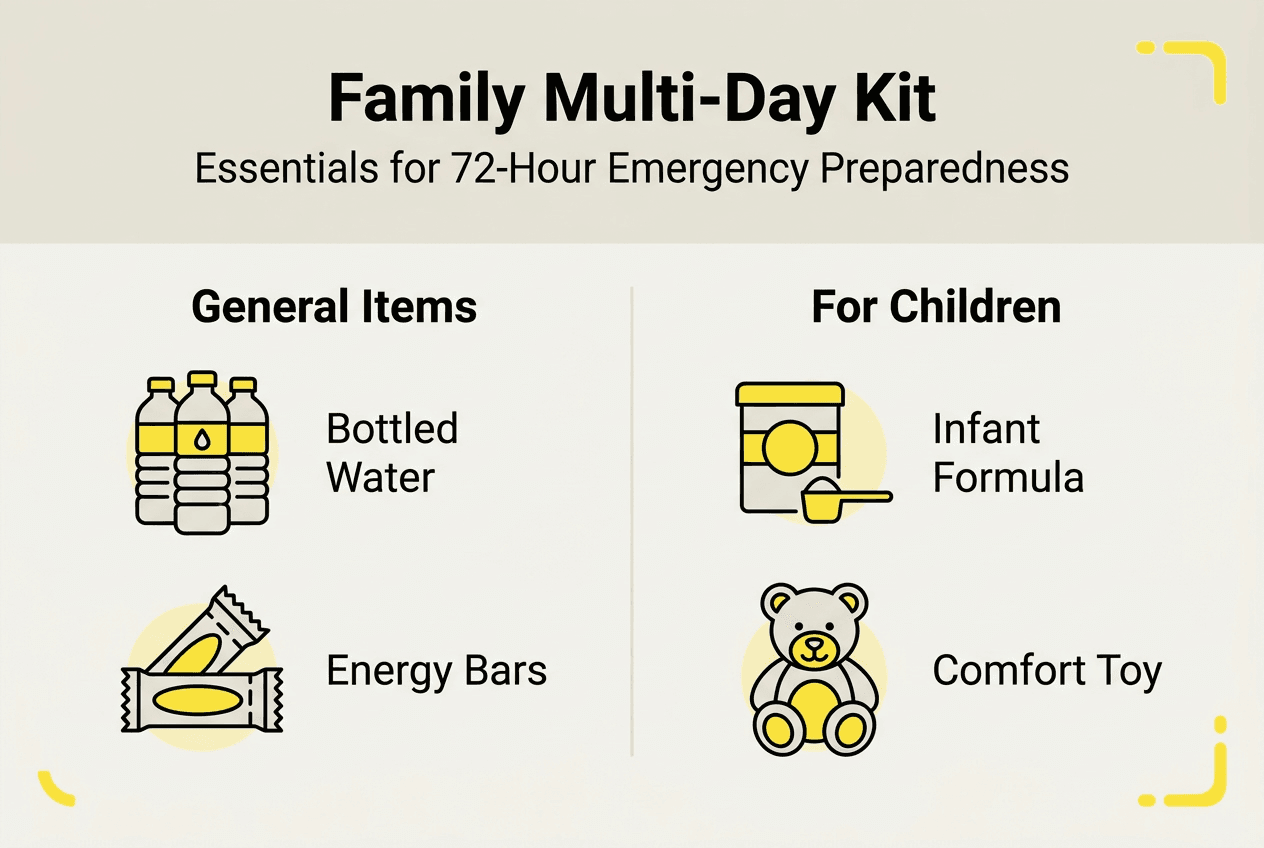
| General items | Child-specific essentials |
|---|---|
| Bottled water | Infant formula and bottles |
| Energy bars | Age-appropriate snacks and purees |
| Adult medications | Children’s paracetamol and any prescriptions |
| Standard first aid | Nappy rash cream and children’s plasters |
| Blankets | Favourite comfort toy or blanket |
| Torch | Glow sticks for distraction |
| Radio | Colouring books and crayons |
The Gov BC earthquake kit provides a solid foundation, but personalisation ensures your family’s unique needs are met. Consider dietary restrictions, allergies, and preferences when selecting food items. Include familiar snacks that provide comfort during stressful situations.
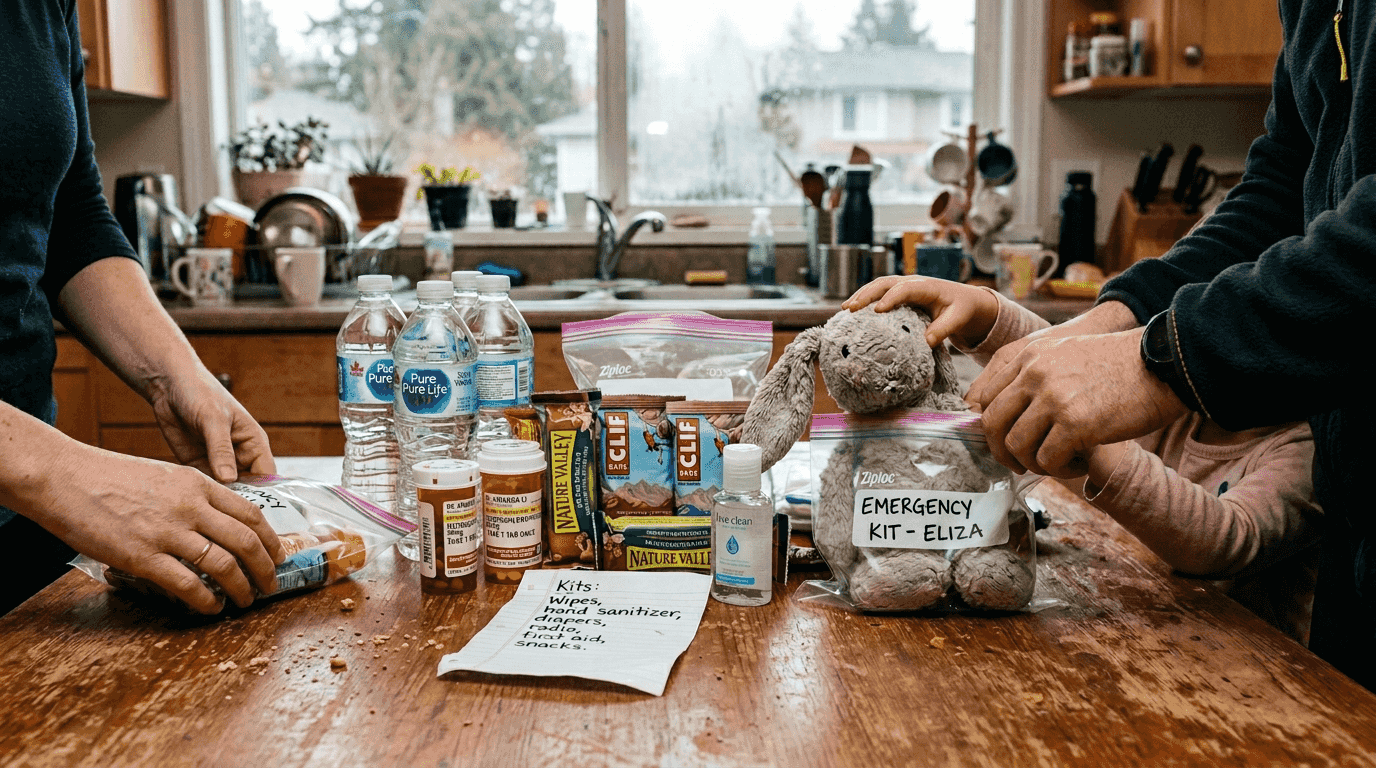
Choosing the right backpack matters significantly. Select lightweight options that distribute weight evenly across shoulders and hips. The total packed weight should never exceed one-quarter of the carrier’s body weight. For a 70-kilogram adult, this means keeping the kit under 17.5 kilograms. Families with multiple children may need several smaller packs rather than one massive bag.
Pro Tip: Rotate perishable items every six months by using them in daily life and replacing them immediately. Mark your calendar for March and September to coincide with daylight saving time changes, making the routine easier to remember.
Organisation within your kit prevents chaos during emergencies. Use clear plastic bags to group similar items: one for first aid, another for hygiene, a third for food. Label everything clearly. This systematic approach, detailed in our earthquake kit organisation guide, ensures you can find critical supplies quickly when stress levels run high.
Don’t forget items that address sensory needs. Young children often struggle with darkness, so include extra torches and glow sticks. Pack noise-cancelling headphones if your child is sensitive to loud sounds. These thoughtful additions, combined with our earthquake preparedness checklist, create a comprehensive safety net.
How to prepare and maintain your multi-day kit
Assembling your multi-day kit systematically ensures nothing gets overlooked. Follow these steps to build a reliable emergency resource:
- Create an inventory list based on your family size and specific needs
- Gather all non-perishable items first, checking expiry dates carefully
- Purchase child-specific supplies including comfort items and familiar foods
- Organise items into clear, labelled bags grouped by category
- Pack the backpack with heaviest items closest to your back
- Test the packed weight by wearing it around your home
- Store the kit in an accessible location known to all family members
- Document the contents and update dates in a maintenance log
Involving children in kit preparation transforms anxiety into empowerment. Let them choose their comfort toy and favourite non-perishable snacks. Explain each item’s purpose in age-appropriate language. Practice retrieving the kit together so children know exactly where it lives. This hands-on approach reduces fear and builds confidence that your family can handle emergencies together.
Contents should be checked and updated every six months to maintain freshness and functionality. Set recurring reminders on your phone or link the task to seasonal events. During each inspection, verify that water bottles show no damage, food remains within expiry dates, batteries still hold charge, and clothing fits growing children.
Pro Tip: Store your multi-day kit near your home’s main exit, never in a basement or attic. During earthquakes, stairs may become impassable, trapping essential supplies. Choose a hall cupboard, garage shelf, or bedroom wardrobe that remains accessible regardless of structural damage.
Maintenance extends beyond simple inspections. Replace batteries annually even if they appear functional. Update clothing as children grow, donating outgrown items to charity. Refresh comfort toys if interests change. These small adjustments, outlined in our earthquake kit organisation guide, keep your kit relevant and genuinely useful.
Creating a family emergency plan complements your multi-day kit perfectly. Establish meeting points both near your home and outside your neighbourhood. Designate an out-of-province contact person everyone can reach. Practice your plan quarterly, treating it like a fire drill. Our family emergency plans for BC earthquakes resource provides templates and scenarios to guide your planning.
Document your kit’s contents photographically. Take clear pictures of each category and store them digitally. If disaster strikes and you must evacuate quickly, these images help you verify nothing was forgotten. They also assist with insurance claims if items are lost or damaged.
Consider seasonal adjustments to your kit. Winter requires additional blankets and hand warmers. Summer demands extra water and sun protection. These modifications, combined with our earthquake readiness steps, ensure year-round preparedness regardless of when disaster strikes.
Comparing different types of emergency kits for BC families
Understanding the spectrum of available emergency kits helps you select the option that best matches your family’s size, budget, and specific requirements. Resources geared towards practical steps for emergency preparedness emphasise that one size never fits all.
| Kit type | Contents | Duration supported | Approximate cost | Best for |
|---|---|---|---|---|
| Basic earthquake kit | Water, food, first aid, light | 72 hours, 1-2 people | Low | Singles, couples |
| Deluxe earthquake kit | Expanded supplies, tools, hygiene | 72 hours, 2-4 people | Medium | Small families |
| Group earthquake kit | Comprehensive provisions, shelter | 72 hours, 4-8 people | High | Large families, groups |
| Government-recommended kit | Meets provincial standards | 72 hours, customisable | Variable | Compliance-focused households |
Each kit type offers distinct advantages and limitations. Basic earthquake kits provide essential coverage at accessible price points but may lack child-specific items. Deluxe earthquake kits include more comprehensive supplies and better-quality tools, making them ideal for families who want robust protection without assembling items individually.
Group earthquake kits excel for households with multiple children or extended family situations. These larger collections distribute supplies efficiently and often include shelter components like emergency blankets and tarps. Government BC earthquake kits meet provincial recommendations precisely, offering peace of mind that you’ve covered all official requirements.
Factors to consider when choosing your kit:
- Budget constraints and whether phased purchasing makes sense
- Number of family members and their ages
- Special dietary requirements or medical needs
- Physical ability to carry the packed weight
- Storage space available in your home
- Preference for ready-made versus customised solutions
Many families benefit from combining approaches. Purchase a quality base kit, then supplement it with personalised additions addressing your children’s specific needs. This hybrid strategy balances convenience with customisation, ensuring comprehensive coverage without overwhelming complexity.
Remember that preparedness remains deeply personal and practical. A family with an infant requires vastly different supplies than one with teenagers. Households managing chronic health conditions need medication reserves and medical equipment. Your kit should reflect your actual circumstances, not generic recommendations that ignore individual realities.
Regularly reassess your kit choice as your family evolves. Growing children, new pets, or changing health situations may warrant upgrading from basic to deluxe options. Conversely, empty nesters might downsize from group to smaller kits. Flexibility ensures your emergency preparedness grows alongside your household.
Explore earthquake kits designed for BC families
Preparing your family for earthquake emergencies becomes simpler when you start with professionally assembled kits designed specifically for British Columbia’s unique challenges. EarthquakeKit.ca offers reliable options covering every family size and budget, from basic earthquake kits perfect for couples to comprehensive deluxe earthquake kits that support entire households.
Families with multiple children benefit from group earthquake kits that provide extended coverage without requiring extensive research or assembly time. Each kit meets provincial standards whilst remaining customisable to your specific needs. Pair any purchased kit with personalised additions like your children’s comfort items, prescription medications, and familiar snacks to create truly comprehensive protection. Visit EarthquakeKit.ca today to explore trusted options backed by expert guidance and BC-focused design.
Frequently asked questions about multi-day kits
How long should a multi-day kit last?
Your multi-day kit should sustain your entire family for a minimum of 72 hours without external assistance. Many emergency preparedness experts recommend extending this to five or seven days, especially for families in remote areas where rescue operations face additional delays. Calculate supplies based on the longest reasonable isolation period for your specific location.
What is the difference between a grab-and-go bag and a full multi-day kit?
A grab-and-go bag contains essentials for immediate evacuation, focusing on portability and speed. A full multi-day kit provides comprehensive supplies for sheltering in place or sustained displacement. Many families maintain both: a lightweight bag for quick exits and a larger kit for extended emergencies. Our earthquake preparedness checklist helps you determine which approach suits your situation.
How often should I check and update my multi-day kit?
Inspect your kit every six months, replacing expired food, refreshing water supplies, and updating clothing as children grow. Link this maintenance to memorable dates like daylight saving changes or your children’s birthdays. Regular checks ensure everything remains functional when you need it most.
How can I prepare young children emotionally for emergencies?
Involve children in kit preparation, letting them choose comfort items and understand each supply’s purpose. Practice emergency scenarios through age-appropriate games and drills. Read books about emergency preparedness together. Normalise the kit’s presence in your home so it represents safety rather than fear. This proactive approach builds resilience and confidence that serves children throughout their lives.
Recommended
Share this post
- 0 comment
- Tags: en, what is a multi-day kit