

Pet earthquake preparedness guide for BC owners 2026
Posted by Karl Lundgren on
TL;DR:
- BC families must prepare comprehensive pet emergency kits for 14 days of food, water, and medical supplies.
- Creating a pet-inclusive disaster plan involves identification, safe spaces, evacuation routes, and pre-arranged shelters.
- During an earthquake, protect pets in place, avoid chasing them outside, and conduct calm post-shock checks.
When the ground starts shaking in British Columbia, seconds matter. Most families run through a mental checklist during those first terrifying moments, but pets are often an afterthought. Your dog bolts under the bed. Your cat vanishes behind the wall. Without a deliberate plan, the chaos compounds fast. BC sits directly above the Cascadia Subduction Zone, where a major megathrust earthquake is not a matter of if, but when. This guide walks you through exactly what your pet needs in an earthquake kit, how to build a family plan that treats animals as essential members, and what to do in the critical moments during and after shaking.
Table of Contents
- What pets need for earthquake preparedness in BC
- Build a complete pet-inclusive family earthquake plan
- In-the-moment earthquake safety with pets
- Handling evacuation and complex situations with pets
- What most guides miss about BC earthquake pet preparedness
- Protect your whole family—pets included—today
- Frequently asked questions
Key Takeaways
| Point | Details |
|---|---|
| Essential supplies matter | Store at least three days’ food and water for every pet, plus meds and comfort items. |
| Plan for all pets | Document each pet, assign caregivers, and practise evacuation drills so no animal is left behind. |
| Shelter-in-place first | After an earthquake, stay put if safe—moving pets too soon can increase risk. |
| Anticipate evacuation barriers | Most shelters are not pet-friendly, so research pet-accommodating options before disaster strikes. |
| Train and rehearse | Teaching your pet calm behaviours and using safe rooms or carriers can reduce chaos during quakes. |
What pets need for earthquake preparedness in BC
Recognising what your pet will require to survive and stay comfortable if an earthquake disrupts your home is the logical first step. Many pet owners assume a bag of kibble and a leash is sufficient. It is not. The BC Government recommends storing between 3 and 14 days of food, water, and supplies for every pet in your household, and the BC pet emergency kit guidelines specify clear benchmarks for quantities.
Food and water benchmarks
| Pet type | Daily water requirement | Food storage target |
|---|---|---|
| Dog (medium) | 30 to 70 ml per kg body weight | 14-day dry food supply |
| Cat | Approximately 1 litre per day | 14-day dry or canned food |
| Small pet (rabbit, hamster) | Varies; check with vet | 7 to 14-day supply |
Beyond food and water, every well-stocked kit must cover medications, veterinary records, and recent photographs. If your dog takes daily medication for a heart condition, a post-earthquake disruption to supply chains could become life-threatening without a reserve. Current vet records also matter if emergency animal shelters or evacuation sites request proof of vaccination.
Essential items to include in your pet earthquake kit:
- Collar with current ID tag and a secondary form of identification such as a microchip card
- Sturdy leash or carrier appropriate to your pet’s size
- Familiar toy or blanket to reduce anxiety
- Copies of vaccination and medical records in a waterproof bag
- A recent photograph of you with your pet (for identification if separated)
- First aid supplies designed for animals
- Waste bags, litter, or appropriate sanitation supplies
Organising these items alongside your basic earthquake kits for the household makes logistical sense. A single, accessible location reduces wasted time during a fast-moving emergency. You can also build on personal earthquake supplies to fill any remaining gaps for human members of the household.
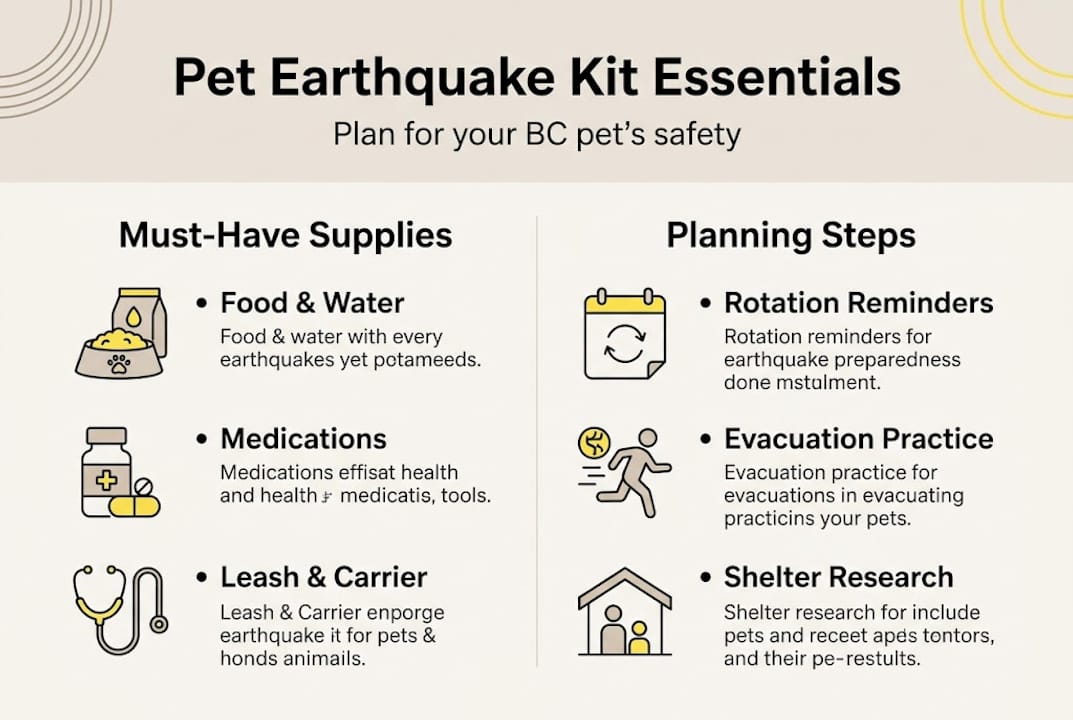
Pro Tip: Rotate all food and medications annually and adjust the kit contents seasonally. A winter kit in BC may need added warmth items for outdoor pets, while summer kits may require extra water reserves.
Build a complete pet-inclusive family earthquake plan
Supplies alone are not enough. Your emergency plan must detail how your entire household, including its pets, will respond when the ground moves. A written plan removes guesswork in high-stress moments when cognitive function is compromised by fear.
Follow these steps to build a pet-inclusive family earthquake plan:
- Document every pet. Record your pet’s breed, colour, markings, weight, and any medical needs. Include two recent photographs stored digitally and in print.
- Register with the BC Pet Registry. The BC Government recommends that pet owners register pets and assign backup caregivers so that authorities can reunite displaced animals with families.
- Identify a safe room. Choose an interior room with minimal hazards and practice guiding your pets there during calm, everyday conditions.
- Map evacuation routes with pets in mind. Identify at least two routes from your home that allow for animals, and mark which routes lead to pet-friendly rest stops or lodging.
- Assign a backup caregiver. Arrange with a trusted neighbour, family member, or friend who can collect your pets if you cannot get home. Give them a key and a copy of your pet plan.
- Locate pet-friendly accommodations in advance. Not all emergency shelters accept animals. Research private accommodations, friends’ homes, or boarding kennels that could serve as temporary refuge.
| Shelter type | Accepts pets? | Notes |
|---|---|---|
| Government emergency shelter | Usually no | Service animals only in most cases |
| Pet-friendly motel/hotel | Often yes | Confirm pet policy before disaster |
| Friend or family home | Varies | Arrange ahead of time |
| Boarding kennel | Often yes | May fill quickly; pre-register if possible |
Guidance on choosing emergency kits for BC families can help you align the family plan with the right supplies for every person and pet in the household.
Pro Tip: Practise your evacuation route and safe room drill with pets at least twice a year. Repetition builds familiarity, which reduces panic for both pets and their owners when conditions are real.
In-the-moment earthquake safety with pets
With your plan in place, knowing exactly how to act the moment an earthquake begins is critical. Instinct can mislead you. Many people want to chase their pets or rush them outside, but that impulse can cause serious harm.
Key actions during shaking:
- Drop, cover, and hold on for yourself first. You cannot help your pet if you are injured.
- Keep pets close if they are near you, but do not chase them through an unstable structure.
- Confine pets in a carrier or small room if shaking begins and you are near one.
- Stay away from windows, exterior walls, and heavy objects that may fall.
- Do not immediately evacuate outdoors. Falling debris, downed power lines, and aftershocks make the exterior dangerous in the first minutes.
As earthquake safety guidance for pets from Vancouver trainers makes clear: during a quake, the safest action is to protect your pet in place and secure them from hazards rather than attempting immediate outdoor evacuation.
“The impulse to run outside with your dog during shaking is understandable, but it dramatically increases risk. Shelter in place, keep your dog close, and move to an open area only once shaking stops and the immediate environment is assessed.” — Hustle Up Dog Training, Vancouver
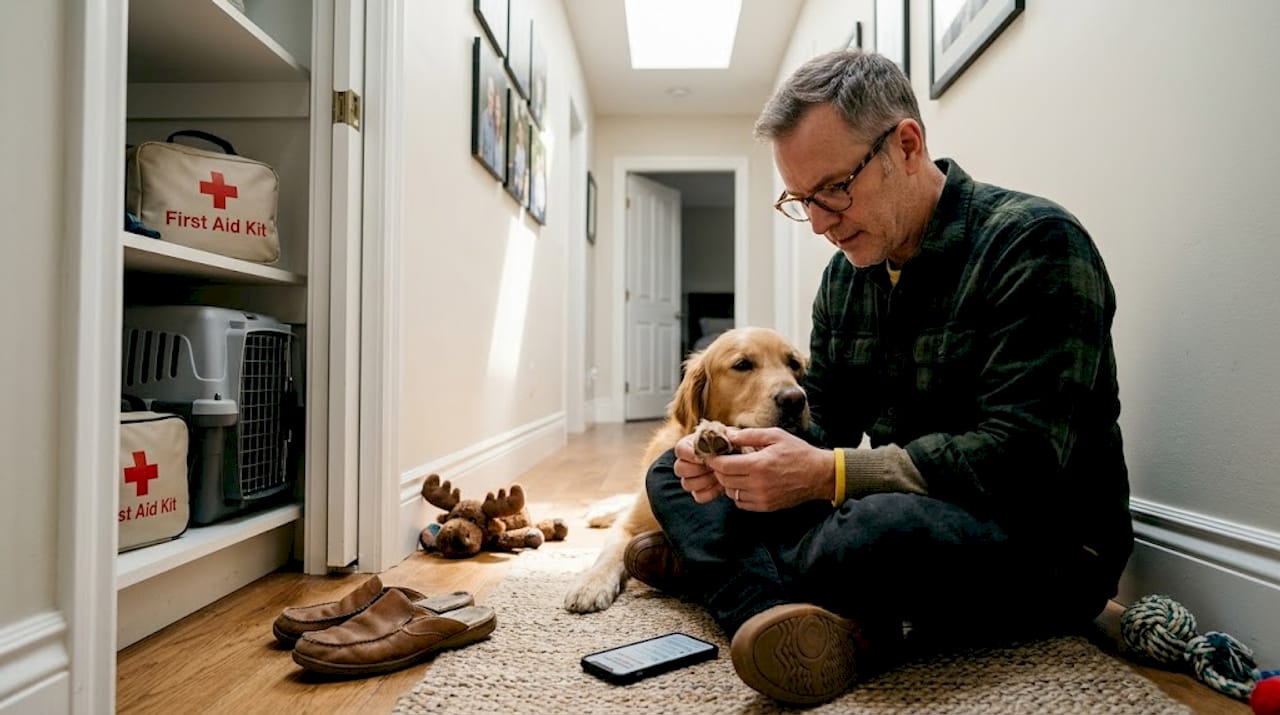
Once shaking stops, conduct a calm, methodical check. Look for injuries on your pet before moving them. Frightened animals may bite or scratch even familiar people, so approach slowly and speak in a low, steady voice. Watch for aftershocks, which can trigger renewed panic in animals. Understanding how kits prepare BC residents for multi-day disruptions helps you appreciate why staying calm and organised in those first hours is so important.
Handling evacuation and complex situations with pets
If you must leave your home, extra steps ensure your animal companions’ survival in crowded, stressful mass-evacuation conditions. Evacuation with pets is significantly more complex than evacuating alone, and it requires pre-planned logistics.
Steps for a safe pet evacuation:
- Confine your pet to a carrier or secure leash before opening any exterior door.
- Do not leave pets tethered outdoors if you must depart without them. Tethered animals cannot escape hazards and are far more vulnerable.
- Bring your pre-packed kit, which should include vet records, food, water, and medications.
- Contact your pre-arranged backup caregiver immediately if you cannot transport all pets.
- Reach out to the BC SPCA helpline if your pet is lost or you cannot care for them during the emergency.
Key considerations for complex situations:
- Multiple pets: Use separate carriers to prevent fighting caused by stress. Load the calmest animals first.
- Escape-prone animals: Secure all latches and use secondary containment like a pillowcase over a carrier. Panicked cats in particular can force open standard latches.
- Livestock: BC’s rural communities face unique challenges. Evacuation of horses, goats, and other livestock requires pre-arranged transport and designated safe zones. Connect with your regional agricultural support services before disaster strikes.
- Dangerous or difficult animals: Never risk your own safety. Speak with your vet about mild sedation options for high-anxiety animals in emergencies.
Most standard emergency shelters in BC do not accept pets other than certified service animals. This means the majority of BC pet owners must arrange alternative shelter privately. PreparedBC resources for pet owners list regional contacts and guidance to help you plan ahead. Group earthquake kits are worth considering for households with multiple animals, as they provide a scalable supply foundation.
Important statistic: Research consistently shows that a significant share of BC emergency shelters are not set up to accommodate household pets, making advance private lodging arrangements essential for pet owners.
What most guides miss about BC earthquake pet preparedness
Most earthquake preparedness checklists treat pets like an add-on. Pack their food, grab the leash, and you are done. That thinking ignores the real challenge in a BC earthquake scenario, which is not a quick evacuation but an extended period of self-sufficiency when infrastructure fails.
As Vancouver trainers highlight, pets significantly increase the logistical demands during a post-quake period, especially when roads are blocked, utilities are down, and support services are overwhelmed. The problem is not the first 24 hours. It is days three through fourteen.
The families who struggle most are those who treated their pets as optional in their plan rather than integral. Your pet cannot self-manage. Every step you skip in planning becomes a crisis you must solve under pressure. A strong kit organisation guide for BC families helps you assign physical roles to supplies and, just as importantly, assign specific family members to specific pets.
Pro Tip: Assign one family member as the sole responsible person for each pet during an emergency. Divided responsibility becomes no responsibility under stress.
Protect your whole family—pets included—today
You have the knowledge. Now the priority is converting it into tangible readiness before the next major seismic event along the Cascadia Subduction Zone. BC families who act today are far better positioned than those who plan to prepare later.
At EarthquakeKit.ca, you can source a purpose-built pet earthquake kit stocked with the essentials BC guidelines recommend. For families who want a complete solution that covers every member of the household, browse the Gov BC earthquake kits collection, which meets provincial preparedness standards. Taking this step today gives you real peace of mind and a concrete plan your whole family, pets included, can rely on.
Frequently asked questions
How much water and food should I store for my pet in case of an earthquake?
Store at least a 3-day supply, but a 14-day pet supply is strongly recommended; dogs need approximately 30 to 70 ml of water per kilogram of body weight daily, while cats require roughly 1 litre per day.
What if my pet is very difficult to handle during emergencies?
Plan to confine your pet in a designated safe room before evacuation and never leave them tethered outdoors; consult your vet in advance about sedation or calming options for high-anxiety animals.
Where can I find pet-friendly emergency shelters in BC?
Most BC emergency shelters do not accept non-service animals, so research private lodging and boarding kennels in advance, and register with the BC Pet Registry for updates on available resources.
How can I train my pet to respond calmly during an earthquake?
Practise regular carrier drills, reinforce recall commands, and run calm in-home exercises so your pet builds a positive stress response to confinement and sudden disruption.
Is BC at higher risk for earthquake-related pet emergencies?
Yes; BC’s position above the Cascadia Subduction Zone means seismic risks are compounded by potential fires, infrastructure failures, and blocked roads, all of which make robust pet planning essential rather than optional.
Recommended
- Earthquake preparedness guide for BC residents 2026 – EarthquakeKit.ca
- Earthquake preparedness checklist for BC residents 2026 – EarthquakeKit.ca
- Earthquake readiness steps for BC families in 2026 – EarthquakeKit.ca
- Emergency preparedness tips for BC residents in 2026 – EarthquakeKit.ca
- How To Move Abroad With Pets: Essential Guide 2026