

How to prepare kids for earthquakes: BC family safety guide
Posted by Karl Lundgren on
TL;DR:
- Families in BC should routinely secure household items and practice earthquake drills.
- Building and maintaining child-specific emergency kits with involvement enhances readiness.
- Regular practice and clear family plans foster confident, automatic responses during earthquakes.
Dinner is on the stove, homework is spread across the kitchen table, and then the house begins to shake. For parents in British Columbia, this scenario is not a remote possibility — it is a recognised risk that seismologists take seriously every day. The Cascadia Subduction Zone, running off BC’s coast, is capable of producing a megathrust earthquake that could shake the region with little to no warning. Children who have never practised what to do in those first critical seconds face far greater danger. This guide walks BC parents through the most practical, field-tested steps to ensure your children know exactly how to respond when the ground moves.
Table of Contents
- Secure your home to prevent injuries
- Build and organise kid-friendly earthquake kits
- Create and practise a family emergency plan
- Practise earthquake drills and reinforce routines
- What most parents in BC miss about earthquake readiness
- Get prepared with trusted BC earthquake kits
- Frequently asked questions
Key Takeaways
| Point | Details |
|---|---|
| Home safety first | Securing heavy furniture and removing household hazards protects children from injury during an earthquake. |
| Empower with kits | Tailor emergency kits to kids’ needs and get them involved in assembling and maintaining their supplies. |
| Practise makes perfect | Routine drills and clear family plans mean children act calmly and quickly in a real event. |
| Reinforcement is key | Consistent routines and positive conversations help build lasting earthquake readiness habits. |
Secure your home to prevent injuries
Once you understand the risks, your home is the first line of defence. Most injuries during earthquakes come not from the ground shaking itself, but from falling objects and collapsing furniture. Bookshelves, television sets, water heaters, and overhead cabinets are among the most dangerous items in a typical home. The good news is that simple, low-cost changes can dramatically reduce these risks.
Start with these must-dos for child-safe earthquake preparation:
- Strap heavy furniture such as bookshelves, wardrobes, and filing cabinets to wall studs using anti-tip straps
- Secure your television with a furniture strap or mount it to the wall to prevent it from toppling
- Anchor your water heater to the wall using approved strapping kits available at most hardware stores
- Install safety latches on all kitchen and bathroom cabinet doors so contents do not spill outward
- Move children’s beds away from windows and heavy artwork that could shatter or fall during shaking
- Store heavy items on lower shelves so they have less distance to fall and cause injury
Safety warning: Unsecured televisions and bookshelves are among the most common causes of serious injury in residential earthquakes. A large bookshelf can weigh over 100 kilograms when full, and it takes less than two seconds of strong shaking for it to fall onto a child. Strap it now — before you need to.
Securing home items can dramatically lower the risk of injury from falling objects, according to the Insurance Bureau of Canada.
| Household hazard | Risk to children | Solution |
|---|---|---|
| Unsecured bookshelf | Tipping and crushing | Anti-tip strap to wall stud |
| Freestanding television | Falling forward | Furniture strap or wall mount |
| Cabinet contents | Spilling onto child | Child-proof safety latches |
| Water heater | Toppling, gas leak | Wall-anchor strapping kit |
| Bed near window | Glass injury during shaking | Move bed to interior wall |
| Heavy décor above bed | Falling onto sleeping child | Remove or relocate items |
Pro Tip: Walk through each room with your children and make a game of spotting objects that could fall. When kids help identify the hazards themselves, they remember the risks and are more likely to take drills seriously. Pair this exercise with a review of your earthquake kit organisation tips so the whole family understands where supplies are stored.
Build and organise kid-friendly earthquake kits
With hazards addressed, next ensure your supplies empower your family. An earthquake kit is not a one-size-fits-all purchase. For families with children, the contents need to account for age-specific needs: comfort items for young children, enough water for growing bodies, and activities to manage anxiety during extended shelter-in-place situations.
Follow these steps to assemble a kit suited for your children:
- Calculate water first. Store at least four litres of water per person per day, for a minimum of 72 hours. For a family of four, that is 48 litres minimum.
- Pack age-appropriate food. Include calorie-dense, familiar foods your children will actually eat, such as granola bars, nut butter packets, and dried fruit.
- Add a flashlight and spare batteries for each child old enough to use one. Familiarity with the tool reduces panic in a dark or dusty environment.
- Include a basic first-aid kit with child-appropriate bandages, antiseptic wipes, and any prescription medications your child requires.
- Pack comfort items. A small stuffed animal, a favourite book, or a simple card game can significantly reduce a child’s stress during and after an earthquake.
- Add written contact information. Young children may not have phone numbers memorised. Include a laminated card with family names, phone numbers, and your designated meeting place.
- Include a copy of your emergency plan so every family member, including older children, knows exactly what to do.
| Kit type | Best for | Key features |
|---|---|---|
| Basic kit | Individuals or couples | 72-hour water and food supply, first aid, flashlight |
| Family kit | Parents with young children | Expanded supplies, comfort items, child-specific food |
| Group/classroom kit | Schools or community groups | Bulk water, multiple first-aid kits, group communication tools |
As outlined in EarthquakeKit.ca’s child-friendly kit packing guide, child-focused emergency gear is available and measurably improves readiness for families in BC. When selecting a pre-built option, review the guidance on choosing earthquake kits for BC families to match the kit to your household size and children’s ages.
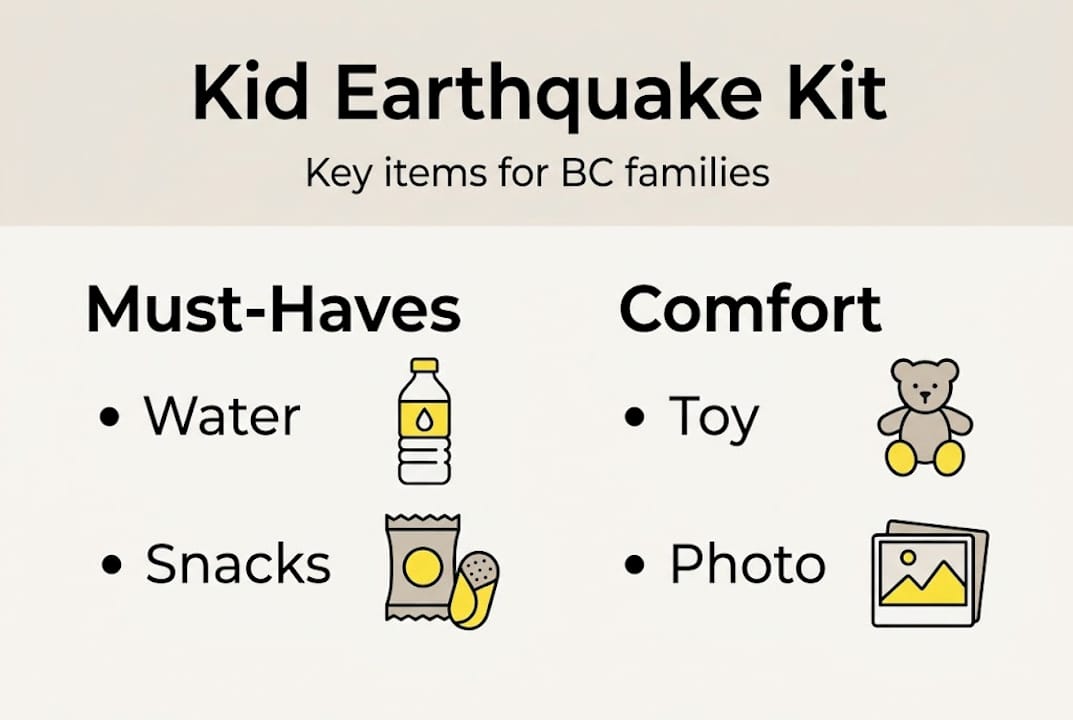
Pro Tip: Label each child’s kit with their name and photo, then let them help restock it every six months. Children who are involved in maintaining their own kit treat emergency preparedness as a normal part of life, not something scary.
Create and practise a family emergency plan
Once your family has supplies, it is time to make sure everyone knows exactly what to do. A written emergency plan is the backbone of earthquake readiness. Supplies sitting in a closet mean little if your children do not know where to go or who to contact when shaking stops.
Here are the critical elements every BC family’s plan should include:
- Designate a safe meeting place within one block of your home in case you cannot re-enter the building after a quake.
- Choose an out-of-province contact — often it is easier to reach someone outside BC than within the affected region immediately after a major event.
- Assign roles appropriate to each child’s age. Older children can help younger siblings, carry a kit, or turn off a gas valve with adult guidance.
- Teach children your full home address and the out-of-province contact’s phone number by memory, or keep the number on a laminated card in their backpack.
- Identify utility shut-offs for gas, water, and electricity, and show older children and teens where they are located.
- Store both digital and physical copies of your plan. A printed version stored in your emergency kit will work even if your phone has no power.
Choosing a meeting place and regularly practising the plan helps children respond calmly, according to School District 68’s emergency preparedness guidelines. Schools across BC invest significant effort into reunification planning — your home plan should mirror that same structure.
Pro Tip: Have each child practise calling your out-of-province contact once, so the number feels familiar before an emergency. Pair this with a walkthrough of your basic earthquake kit options to make the full preparedness picture feel tangible and manageable.
Practise earthquake drills and reinforce routines
Practising makes earthquake safety second nature for children. Knowing what to do and actually doing it under stress are two very different things. Regular drills at home bridge that gap, and BC families have a powerful resource to support them: the Great BC ShakeOut.
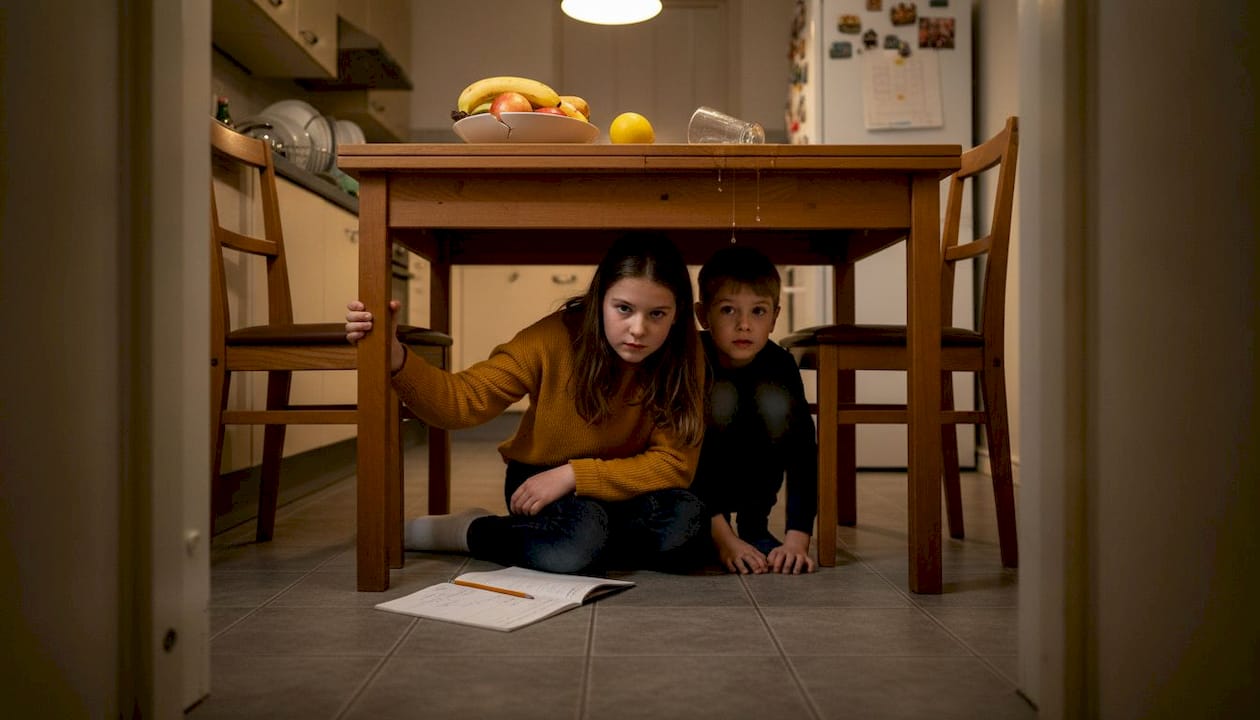
Held every October, the ShakeOut is a province-wide earthquake drill where participants practise Drop, Cover, and Hold On simultaneously. Over 730,000 BC residents participate annually, building the kind of muscle memory that genuinely improves emergency response. You can register your family at shakeoutbc.ca and treat the event as an annual earthquake preparedness check-in.
Top earthquake drill routines to practise at home:
- Drop to your hands and knees immediately when shaking begins, before you can fall
- Cover your head and neck with one arm, and get under a sturdy desk or table if one is nearby
- Hold On to your shelter until the shaking fully stops — do not try to run outside during shaking
- Post-quake safety check: Walk through the home to assess damage, check for gas smells, and account for all family members
- Reunification rehearsal: Practise the route to your designated meeting place so children can walk it independently if needed
“Annual participation in the ShakeOut drill correlates directly with improved household emergency response. Families who rehearse the Drop, Cover, and Hold On technique consistently outperform those who have only read about it.” — Insurance Bureau of Canada, ShakeOut Success Report
For younger children, frame the drill as a practiced game where speed and calm are rewarded. For teenagers, involve them in the post-quake checklist and assign genuine responsibilities. Adapting the drill to the setting — whether at home, in a backyard, or at a community event — ensures the response becomes automatic regardless of where shaking finds them.
What most parents in BC miss about earthquake readiness
Many BC parents buy a kit, read an article like this one, and feel they have done their part. That is a reasonable start, but it is not enough. Readiness is not a product you purchase or a checklist you complete once. It is a routine you build.
The families who fare best after a serious seismic event are those who have talked about earthquakes more than once, who have practised drills until the response feels boring, and who have involved their children in every step — from hazard-spotting to kit restocking. Children who learn safety behaviours through repeated, narrative-based experience carry those responses into adulthood and pass them on.
Owning the right gear matters. Reviewing choosing the right kits is a worthwhile step. But the families who stay safest are not the ones with the most expensive kits — they are the ones whose children instinctively drop and cover before an adult has time to say a word. That kind of response only comes from consistent practice, not a one-time conversation.
Get prepared with trusted BC earthquake kits
Families ready to take the next step can ensure their kits are up-to-date and reliable. EarthquakeKit.ca offers age-appropriate, BC-compliant emergency kits designed specifically for families navigating the realities of Cascadia Subduction Zone risk.
Whether you are outfitting your home with personal earthquake kit supplies or preparing an entire classroom with group earthquake kits, our solutions are built for proactive families who understand that preparation cannot wait. Do not wait for the shaking to start. Review your current supplies, involve your children, and build the routine that will actually protect your family when it matters most.
Frequently asked questions
What should my child do during an earthquake at school?
Children should Drop, Cover, and Hold On immediately, then follow their teacher’s instructions. BC schools prioritise safety checks and engage in regular earthquake drills, including structured reunification plans so parents know exactly where to collect their children.
How often should we practise earthquake drills at home?
Practise at least twice a year, ideally timed with the Great BC ShakeOut every October. Annual ShakeOut participation correlates with measurably better household preparedness and faster, calmer responses during actual events.
What should I include in a child’s earthquake kit?
Include water, familiar snacks, a flashlight, comfort items, basic first aid, written contact information, and a copy of your family emergency plan. A child-friendly kit improves overall family readiness and helps children feel in control during a stressful situation.
How can I help my child feel less anxious about earthquakes?
Demystify the process by practising drills as a family and focusing on the actions everyone can control. Children who practise regularly and understand their role in the family plan tend to feel empowered rather than frightened by earthquake preparedness.
Recommended
- Family earthquake preparedness: Protecting your loved ones in BC – EarthquakeKit.ca
- Family earthquake safety workflow for BC families 2026 – EarthquakeKit.ca
- Family emergency planning for earthquakes: A BC guide – EarthquakeKit.ca
- How to pack child-friendly emergency kits for earthquake readiness – EarthquakeKit.ca
- Essential Family Event Safety Tips for Kid-Friendly Fun