

How to pack child-friendly emergency kits for earthquake readiness
Posted by Karl Lundgren on
TL;DR:
- Prepare for at least one to two weeks of self-sufficiency due to BC’s isolation risks.
- Personalize children’s earthquake kits with age-specific items, comfort objects, and clear labeling.
- Regularly inspect and practice emergency drills to ensure children understand and stay confident.
Imagine a major earthquake striking coastal BC while your children are home. Roads are blocked, power is out, and emergency services are stretched thin. In that moment, what you packed ahead of time determines your family’s safety and your children’s sense of security. PreparedBC recommends preparing for at least 72 hours, and ideally one to two weeks of self-sufficiency, because post-earthquake access delays are common in BC. This guide walks you through every step of building earthquake kits that protect and comfort your children when it matters most.
Table of Contents
- Understanding the essentials: What every child’s earthquake kit needs
- Step-by-step: How to personalise kits for every child
- Storage, access, and maintenance for family earthquake kits
- Empowering your children: Practice, drills, and involving kids in preparedness
- Why BC parents must think beyond the 72-hour rule
- Take the next step: Equip your family with the right earthquake kits
- Frequently asked questions
Key Takeaways
| Point | Details |
|---|---|
| Prioritise child comfort | Add comfort items like toys and snacks to reduce stress in emergencies. |
| Build for 1–2 weeks | Prepare for up to two weeks of isolation, not just 72 hours, in BC’s earthquake zones. |
| Involve your kids | Children who help pack and practise feel more prepared and calm. |
| Rotate kits semi-annually | Update contents every 6 months to keep kits fresh and fitted for your child’s needs. |
Understanding the essentials: What every child’s earthquake kit needs
Children are not simply small adults. Their physical needs, emotional responses, and daily routines differ significantly from those of older family members, and that distinction must shape how you build their emergency kits. A well-prepared child’s kit addresses survival, safety, and emotional comfort in equal measure.
The most fundamental difference is weight. Waterproof backpacks weighing no more than one-quarter of the carrier’s body weight are recommended for children’s grab-and-go bags, which means a 30-kilogram child should carry no more than 7.5 kilograms. Choosing the right bag matters as much as what goes inside it.
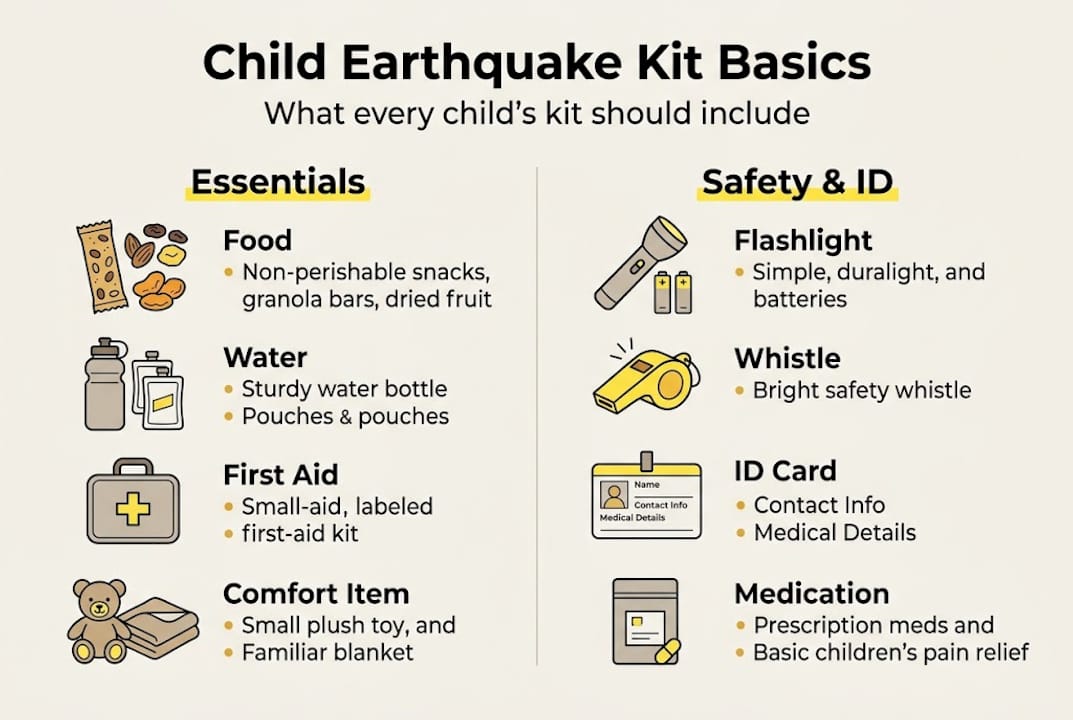
Here is a quick-reference table of core contents for a child’s earthquake kit:
| Category | Items to include |
|---|---|
| Food and water | Non-perishable snacks, 4 litres per person per day, water purification tablets |
| Safety and first aid | Child-sized gloves, dust mask, basic first aid kit, emergency whistle |
| Comfort and emotional support | Small stuffed animal, family photos, favourite book, playing cards |
| Clothing and hygiene | Seasonal layers, spare underwear, toothbrush, hand sanitiser |
| Documents and contacts | Emergency contact card, copy of health card, allergy information |
Comfort items are not luxuries. During a disaster, children experience fear and confusion that can be just as destabilising as physical danger. A familiar toy or a family photo provides genuine emotional reassurance that helps children stay calm and cooperative.
For families exploring basic earthquake kit options, pre-built kits can serve as a strong foundation that you personalise with child-specific additions. You can also review guidance on choosing emergency kits for BC families to understand what features matter most in this region.
Key supplies to prioritise for any child’s kit include:
- A waterproof, well-fitting backpack sized for the child’s frame
- Three to seven days of familiar, non-perishable food items
- A personal water supply plus purification backup
- First aid supplies including any prescription medications
- Comfort items chosen by the child themselves
- An emergency kit checklist for families to verify completeness
“The best emergency kit is one your child recognises, trusts, and knows how to use. Familiarity breeds confidence under stress.”
Step-by-step: How to personalise kits for every child
Once you understand what to pack, it is time to personalise each kit for your children’s unique needs. A kit that works for a ten-year-old is very different from one designed for a toddler or an infant. Here is a clear, stepwise process to guide you.
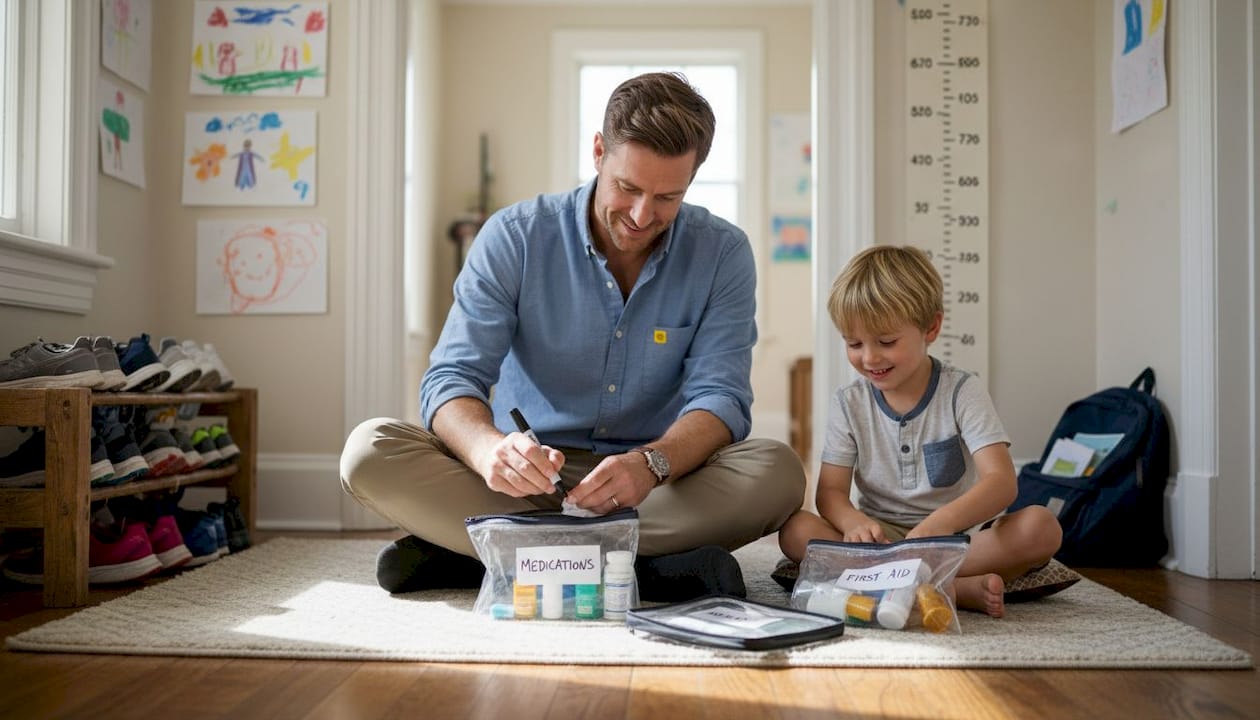
Step 1: Take inventory of each child’s daily needs. Consider medications, dietary restrictions, sensory sensitivities, and comfort routines. Write these down before you start shopping or packing.
Step 2: Personalise by age and development. Older children can carry more and understand instructions. Younger children need simpler, lighter kits with more comfort items. For infants, HealthLinkBC recommends packing three to seven days of formula, breastfeeding supplies, diapers, and any special foods or allergy-safe alternatives.
Step 3: Add medical and comfort essentials. Include any prescription medications with clear dosage instructions, allergy information, and a list of your child’s health conditions. Then add the comfort items your child chose, whether that is a small stuffed animal, a deck of cards, or a favourite book. Comfort items like books and small toys are specifically recommended in emergency kit guidance because they support emotional stability.
Step 4: Pack and label clearly. Use waterproof labels with your child’s name, emergency contact number, and any critical medical information. Organise items so the most urgent supplies are easiest to reach. Review earthquake kit organisation tips for practical packing strategies.
Step 5: Double-check against your inventory list. Confirm every item is present, nothing is expired, and the bag weight is appropriate for your child.
Pro Tip: Involve your child in packing their kit. Let them choose their comfort item and help organise the bag. Children who participate in the process feel a sense of ownership and control, which significantly reduces anxiety during an actual emergency.
For children with special needs, consider sensory-friendly items, noise-cancelling earmuffs for those sensitive to sound, and a written or pictorial emergency plan they can follow independently.
Storage, access, and maintenance for family earthquake kits
Personalising and assembling kits is only half the work. Making sure those kits stay usable when disaster strikes requires deliberate storage choices and a consistent maintenance routine.
The general principle is straightforward: store kits where you can reach them quickly, even in darkness or chaos. Keep home kits in a hall closet or near an exit, grab-and-go bags close to bedroom doors, and a separate vehicle kit in your car for times when emergencies happen away from home.
Here is a comparison of common storage options:
| Storage location | Advantages | Disadvantages |
|---|---|---|
| Hall closet near exit | Easy to grab quickly, protected from weather | May be blocked by fallen debris |
| Under bed in child’s room | Immediately accessible to the child | Limited space, may be forgotten |
| Vehicle | Available during travel or commute emergencies | Extreme temperatures can degrade supplies |
| Garage storage shelf | High capacity, organised | Potentially inaccessible after structural damage |
For families with vehicles, a dedicated car earthquake kit ensures you are never caught unprepared during school runs or travel.
Maintenance is where many families fall short. Rotate kit contents every 6 months, replacing expired food, water, and medications, and updating clothing sizes and seasonal layers as your children grow. Set a recurring calendar reminder tied to a memorable date, such as the start of school in September or the spring time change.
Key maintenance habits to build into your routine:
- Test flashlight batteries and replace them proactively
- Check water container seals and replace stored water annually
- Review your child’s emergency contact card for accuracy
- Update comfort items as your child’s preferences change
- Confirm medications are current and dosages reflect your child’s current weight
Pro Tip: Use the ShakeOutBC annual drill each October as your reminder to inspect and update all family kits. It ties maintenance to a meaningful event and keeps preparedness part of your household culture.
Empowering your children: Practice, drills, and involving kids in preparedness
Knowing how to use a kit is just as important as packing it. Children who understand what to do in an earthquake are calmer, safer, and better able to support younger siblings or follow instructions from adults.
Research and community experience both confirm that involving children in drills builds genuine confidence and improves recall during real emergencies. When a child has practised finding their bag and knows the Drop, Cover, Hold On sequence, their response becomes instinctive rather than panicked.
Here is a simple numbered process for building earthquake readiness with your children:
- Introduce the kit together. Show your child what is inside, explain why each item is there, and let them handle the supplies so nothing feels unfamiliar.
- Practise Drop, Cover, Hold On at home. Walk through the motion slowly, then at realistic speed. Do this in different rooms so children know what to do wherever they are.
- Run a grab-and-go drill. Have your child locate their bag, put it on, and move to your designated family meeting point. Time it and make it a game.
- Review your family emergency plan. Ensure every child knows the meeting location, the out-of-province contact number, and what to do if they are at school when an earthquake occurs.
- Repeat drills seasonally. Children grow and forget. Regular repetition keeps the knowledge fresh and normalises preparedness as part of family life.
For a structured approach to drills, the BC earthquake drill guide provides age-appropriate frameworks for families. You can also review earthquake safety practices from PreparedBC for additional guidance.
Tips for encouraging your children’s participation:
- Frame drills as skills, not scary scenarios
- Praise effort and recall, not just speed
- Let older children help teach younger siblings
- Celebrate completing a drill with a small reward or activity
“Every family that practises together is a family better prepared to stay together.”
Why BC parents must think beyond the 72-hour rule
Most preparedness checklists are written for a general audience across Canada. They are useful starting points, but they do not fully account for the realities facing families on Vancouver Island, the Sunshine Coast, or other isolated coastal communities in BC.
The standard 72-hour guideline assumes emergency services will reach you within three days. After a major Cascadia Subduction Zone event, that assumption may be dangerously optimistic. Roads can be severed, bridges destroyed, and ferry routes disrupted for weeks. BC sources emphasise extending preparedness to one to two weeks for exactly this reason.
For families with children, the stakes are even higher. Children’s emotional needs do not pause during a prolonged emergency. A three-day comfort supply runs out quickly. Longer-term kits should include more varied food, additional comfort items, and activities that help children maintain a sense of routine and normalcy.
What we see overlooked most often is the psychological layer of preparedness. Parents focus on water and food, which is correct, but the families who cope best are those who have also prepared their children emotionally, practised together, and built a kit their child actually recognises. Explore choosing earthquake kits for families to find options designed with BC’s specific risks in mind.
Take the next step: Equip your family with the right earthquake kits
Building a child-friendly earthquake kit takes thought, but it does not have to be overwhelming. Pre-built, verified kits designed for BC conditions give you a reliable foundation to work from.
At EarthquakeKit.ca, you will find basic BC earthquake kits that meet provincial preparedness standards, along with individual personal earthquake kit supplies for customising each child’s bag. Whether you are starting from scratch or upgrading an existing kit, the right supplies are ready for you. Give your family the confidence that comes from being genuinely prepared for BC’s seismic risks.
Frequently asked questions
How much should a child’s earthquake kit weigh?
A child’s kit should weigh no more than one-quarter of the child’s body weight to keep it safe and manageable during an evacuation.
What is the minimum supply duration recommended for earthquake kits in BC?
PreparedBC recommends at least 72 hours as a minimum, but one to two weeks is strongly advised given the isolation risks common after major BC earthquakes.
How often should I check and update the contents of child-friendly kits?
Inspect and update your kits every 6 months, replacing expired items and adjusting clothing sizes and seasonal layers as your children grow.
Should my child help pack their emergency kit?
Absolutely. Children who participate in packing and practise drills feel more confident and are better able to recall what is in their kit during a real emergency.