

Why updating emergency kits annually matters for BC readiness
Posted by Karl Lundgren on
TL;DR:
- Outdated emergency kits may contain expired supplies that fail during an earthquake.
- Regular biannual checks are recommended to ensure kit contents remain effective and tailored to household needs.
- Updating kits for household changes, seasons, and expiry dates enhances overall preparedness and safety.
Many BC residents own an earthquake kit, yet far fewer maintain one that would actually work when the ground starts shaking. The gap between owning a kit and having a reliable one is wider than most people realise. Emergency kits must be updated regularly because food, water, batteries, and medications expire or degrade over time. With the Cascadia Subduction Zone capable of producing a megathrust earthquake at any moment, that gap is not a minor inconvenience. It is a serious safety risk for you, your family, and your neighbours across British Columbia.
Table of Contents
- The hidden dangers of outdated emergency kits
- BC’s official recommendations and local best practices
- Household changes: customising your kit for new needs
- How to make kit updates easy and reliable
- Why annual updates aren’t enough: what actually keeps you safe in BC
- Stay prepared with earthquake kit solutions for BC residents
- Frequently asked questions
Key Takeaways
| Point | Details |
|---|---|
| Check kits every 6 months | BC authorities recommend updating emergency kits twice yearly for maximum safety. |
| Replace expired essentials | Food, water, medications, and batteries degrade and must be refreshed to ensure reliability. |
| Adapt kits for life changes | Adjust kit contents for seasonal shifts, babies, pets, medical needs, and new household members. |
| Set reminders for updates | Use calendar events or phone reminders tied to daylight saving changes for consistent kit maintenance. |
The hidden dangers of outdated emergency kits
An earthquake kit sitting in a closet for two or three years without a single check is not a safety net. It is a false sense of security. Supplies degrade quietly, and you will not know they have failed until you need them most.
Food stored beyond its best-before date can cause illness rather than sustain you. Water containers develop bacterial growth or leach chemicals from degraded plastic. Batteries lose their charge, leaving flashlights and radios useless. Medications lose potency or, worse, become harmful. These are not edge cases. They are predictable failures that happen in every neglected kit.
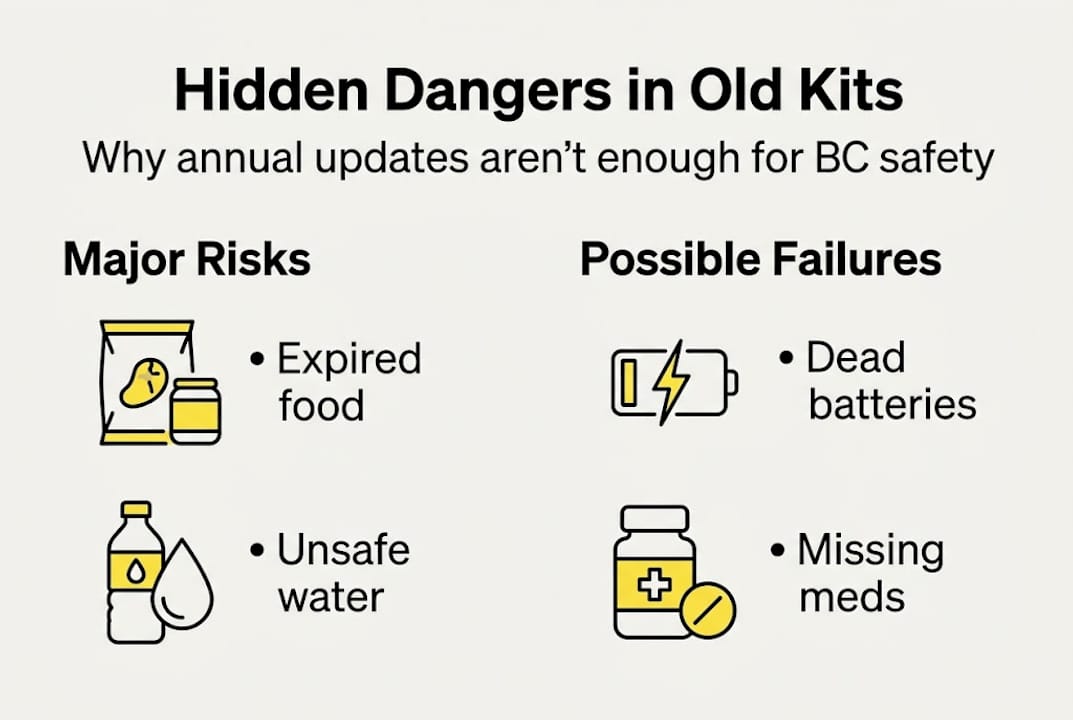
The primary reason for regular updates is to prevent reliance on expired or ineffective supplies that could fail in the aftermath of an earthquake. BC’s emergency management authorities are clear on this point, and for good reason. After a major seismic event, access to stores, pharmacies, and utilities may be cut off for days or weeks.
| Supply item | Fresh kit performance | Expired kit performance |
|---|---|---|
| Emergency food | Full caloric value, safe | Reduced nutrition, potential illness |
| Stored water | Safe for drinking | Possible contamination or taste degradation |
| Batteries | Full power output | Partial or zero charge |
| Prescription medications | Full therapeutic effect | Reduced potency or unsafe |
| First aid supplies | Sterile and effective | Compromised sterility, degraded adhesives |
Beyond the obvious items, many households overlook subtler expiry risks. Essential earthquake kit items like dust masks, hand sanitiser, and emergency blankets also have shelf lives. Pet food and formula for infants expire. Clothing packed for adults no longer fits children who have grown. Copies of important documents become outdated as addresses, insurance policies, and identification change.
“Relying on an emergency kit that has not been checked in years is like relying on a smoke detector with a dead battery. The equipment is there, but it will not protect you when you need it.”
Official BC guidelines advise checking and replacing kit contents at least every six months. That is not bureaucratic caution. It reflects how quickly supplies degrade under real storage conditions. Reviewing your emergency kit guide BC is a practical starting point for understanding what a complete, current kit should contain. Regional districts like the RDN also publish specific kit guidelines that reflect local conditions and risks.
BC’s official recommendations and local best practices
Knowing that kits expire is one thing. Knowing exactly when and how to refresh them is another. BC authorities do not leave this to guesswork.
Regional districts and the City of Surrey advise checking kits every six months to update for expiry and seasonal needs. This biannual schedule is more demanding than most residents expect, but it reflects the reality of how supplies behave in storage.
| Update cycle | Recommended by BC authorities | Typical household behaviour |
|---|---|---|
| Every 6 months | Yes, strongly encouraged | Rarely followed |
| Annually | Minimum acceptable | Sometimes followed |
| When disaster strikes | Not recommended | Common in practice |
The BC government encourages refreshing kits with changing seasons or during events like the Great BC ShakeOut, focusing on expiry-driven maintenance rather than rigid annual mandates. Seasonal changes are particularly important in BC, where temperatures, precipitation, and conditions vary dramatically between summer and winter.
Pro Tip: Use the twice-yearly daylight saving time changes as your built-in reminder to check your emergency kit. It is the same habit recommended for smoke detector batteries, and it works just as well for earthquake preparedness.
Here is a straightforward process for completing a kit review:
- Pull every item out of the kit and lay it flat for inspection.
- Check every expiry date and set aside anything past its date.
- Test all battery-powered devices, including radios, flashlights, and portable chargers.
- Swap seasonal clothing items for the upcoming season.
- Update documents, including insurance papers, identification copies, and emergency contacts.
- Replenish any items used or removed since the last review.
- Repack everything neatly and note the date of the review on a label inside the kit.
When choosing earthquake kits for your home, look for designs that make this review process straightforward. A well-organised kit with clear compartments and visible expiry labels is far easier to maintain than a disorganised bag of supplies. Do not forget your car emergency kit BC, which faces additional stress from temperature extremes and vibration and needs its own separate review. The PreparedBC guide is a reliable reference for both home and vehicle kits.
Household changes: customising your kit for new needs
A kit assembled three years ago for a couple without children may be dangerously inadequate for a family that now includes an infant, a toddler, and a dog. Households change. Kits must change with them.
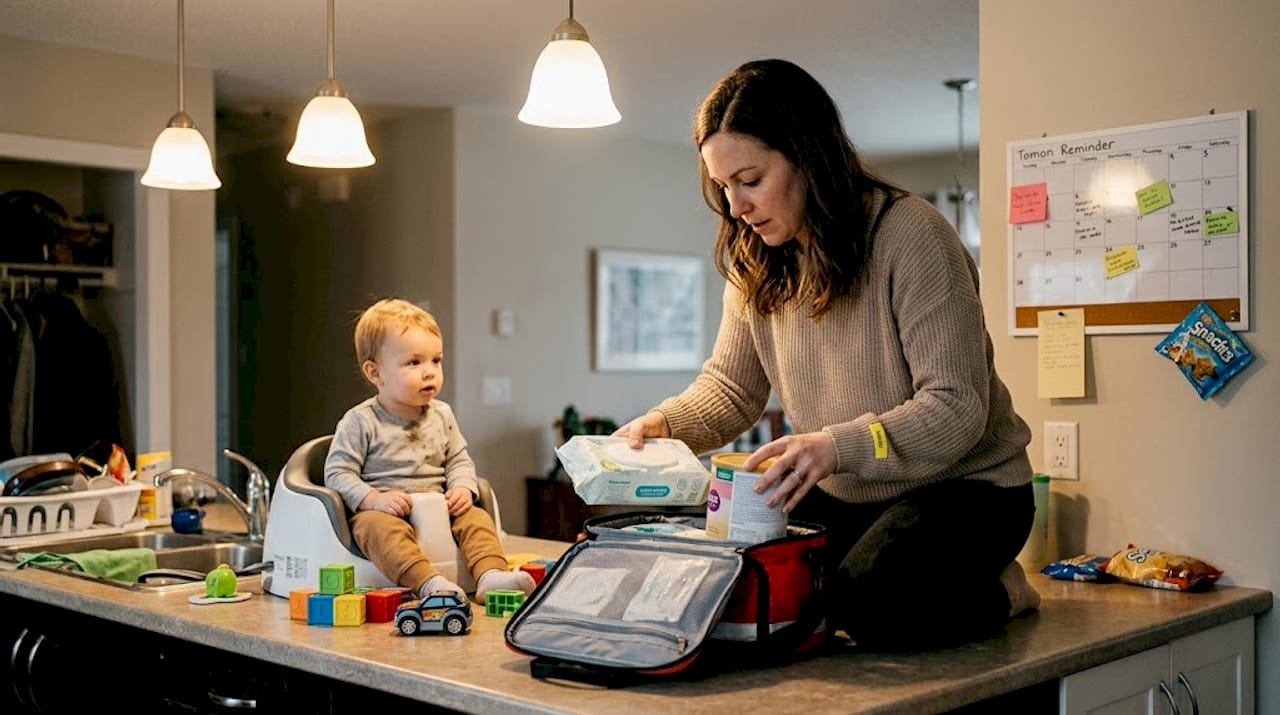
This is one of the most commonly overlooked aspects of emergency preparedness. People update their kits for expiry dates but forget to reassess whether the kit still matches their household’s actual needs. Prescription medications are a clear example. Rotating stock and reassessing household changes such as new babies or pets, and rotating prescription medications with each refill, ensures that what is in your kit reflects what your family actually needs.
The scale of what you store has also shifted in recent years. BC earthquake preparedness now recommends two-week supplies rather than the older 72-hour standard. That is a significant increase, and it reflects what emergency managers learned from real disasters where infrastructure took far longer to restore than initially expected.
Here are items to review and potentially add or swap annually based on household changes:
- Baby formula, diapers, and infant medications if a new child has joined the family
- Pet food, water, medications, and a carrier or leash for any pets
- Updated prescription medications for every household member
- Clothing sized to fit current family members, including children who grow quickly
- Mobility aids or accessibility equipment for elderly or differently-abled household members
- Updated copies of prescriptions, health cards, and insurance documents
- Additional water storage if the household has grown
Pro Tip: Keep a printed checklist inside your kit and attach a refill reminder to it. Each time a household member gets a prescription renewed, check whether the emergency supply also needs refreshing. This simple habit prevents one of the most common kit failures.
For workplace kit tips, the same logic applies. Staff changes, medical needs, and office relocations all affect what a workplace kit should contain. Reviewing Gov BC kit updates can help businesses and households alike stay aligned with current provincial standards.
How to make kit updates easy and reliable
The biggest obstacle to regular kit maintenance is not knowledge. It is friction. If the process feels complicated or time-consuming, it gets postponed indefinitely. Simplifying the system is the key to actually doing it.
Batch replenishment is one of the most effective strategies. Rather than replacing items one at a time as you notice them, set a dedicated review date and replace everything that needs refreshing in a single session. This takes less total time and ensures nothing is missed.
Rotating stock, testing gear, and storing supplies in cool, dry spaces maximises the reliability of your kit between reviews. Heat and humidity accelerate the degradation of almost every supply category, from food to electronics to first aid materials. A cool interior closet or a dedicated storage bin in a climate-controlled space is far better than a garage or car boot.
Replacing expired food and medications now, rather than waiting for an annual date, is the approach BC emergency managers advocate. Expiry-driven maintenance is more responsive and more reliable than calendar-driven maintenance alone.
Here is a quick review process designed for busy BC households:
- Set two calendar reminders per year, ideally aligned with daylight saving time changes.
- Use a printed or digital checklist to move through the kit systematically.
- Check every expiry date and photograph the kit contents for insurance and reference purposes.
- Test every battery-powered device and replace batteries as needed.
- Confirm that the kit still matches your current household size and medical needs.
Useful tricks for tracking expiry dates include:
- Write the purchase date and expiry date on each item with a permanent marker when you first add it
- Group items by expiry year in separate labelled bags inside the kit
- Keep a running list of expiry dates in a notes app on your phone
- Add essential kit items BC to a shared household shopping list so replacements are purchased automatically
Pro Tip: Set a recurring digital calendar event titled “Earthquake kit review” every six months. Include a link to your checklist in the event notes. This removes the need to remember and makes the review feel like a routine task rather than an emergency project.
Why annual updates aren’t enough: what actually keeps you safe in BC
Here is an uncomfortable truth: the annual update habit, while better than nothing, creates a particular kind of false confidence. Families who check their kits once a year often feel genuinely prepared. But a lot can change in twelve months, and a lot of supplies can expire in far less time than that.
The households that are truly ready for the Big One are not the ones who set a yearly reminder. They are the ones who tie kit maintenance to real life events: a new prescription, a new pet, a seasonal clothing swap, a move to a new address. These triggers are more reliable than a calendar date because they reflect actual changes in what the kit needs to contain.
BC’s seismic risk is not seasonal. The Cascadia Subduction Zone does not wait for your annual review date. Treating preparedness as a living habit rather than a yearly task is the mindset shift that separates households that will cope from those that will struggle. We encourage you to revisit your emergency kit guide BC residents with fresh eyes and ask not just “is this kit current?” but “does this kit still match our lives?”
Stay prepared with earthquake kit solutions for BC residents
Maintaining a current, reliable earthquake kit does not have to be complicated. EarthquakeKit.ca offers a range of options designed specifically for BC households, built to meet provincial guidelines and ready to be customised for your family’s needs.
Whether you are starting fresh or upgrading an outdated kit, you will find deluxe earthquake kits with extended supplies for larger households, basic earthquake kits for individuals or couples, and government-approved kits that align with BC’s official preparedness standards. Each option is designed to make the update and maintenance process straightforward, so staying ready for the next seismic event becomes a manageable part of your household routine.
Frequently asked questions
How often should emergency kits be updated in British Columbia?
Emergency kits should be checked and refreshed every six months according to BC official guidelines, focusing on replacing expired food, water, batteries, and medications.
What items expire most quickly in earthquake kits?
Food, water, batteries, and medications are the most frequent expiry items and should be replaced regularly to ensure safety and effectiveness.
Should kits be updated for seasonal changes?
Yes, BC authorities recommend updating kits for seasonal clothing and gear, especially as weather changes or during daylight saving time. Seasonal updates are advised by regional districts and PreparedBC.
Do pets and infants require special emergency kit updates?
Absolutely. Kits should be customised for all family members including pets and babies. Kits must be tailored with items like formula, diapers, pet food, and extra water as household needs change.
Is it okay to update kits just once a year?
Annual reviews are a helpful baseline, but best practice is biannual checks to catch expired items and adapt to household changes. Regional and BC government sources encourage biannual checks, not just annual ones.
Recommended
- How emergency kits help BC residents prepare for earthquakes – EarthquakeKit.ca
- Essential emergency kit items for BC earthquake prep – EarthquakeKit.ca
- Why a home emergency kit is essential for BC earthquake safety – EarthquakeKit.ca
- Why earthquake kits matter: Be ready, stay safe in BC – EarthquakeKit.ca
Share this post
- 0 comment
- Tags: en, why update kits annually