

How to organise community earthquake preparedness in BC
Posted by Karl Lundgren on
British Columbia faces serious earthquake risks that demand more than individual readiness. While stocking your own emergency kit matters, true resilience emerges when neighbours work together. Communities that organise collectively can support vulnerable members, share resources, and coordinate response efforts during the critical first 72 hours after a major seismic event. This guide walks you through practical steps to build neighbourhood preparedness programs, engage with regional initiatives, and create the collaborative networks that transform isolated households into resilient communities ready to face BC’s earthquake realities together.
Table of Contents
- Key takeaways
- Understanding earthquake risks in British Columbia
- Building personal and family earthquake preparedness
- Organising your neighbourhood emergency preparedness program
- Engaging with broader community events and resources
- Explore earthquake kits and supplies at EarthquakeKit.ca
- Frequently asked questions
Key Takeaways
| Point | Details |
|---|---|
| Neighbourhood readiness matters | Communities that prepare together can sustain each other during the first 72 hours after a major earthquake. |
| Regular drills and events | Engaging in drills like Great BC ShakeOut helps residents practise roles, routes and resources before disaster strikes. |
| Family neighbourhood and formal prep | Combining family, neighbourhood and formal group planning strengthens resilience and coordination. |
| Resource mapping and vulnerable residents | Mapping local resources and identifying vulnerable neighbours enables targeted support when services are strained. |
Understanding earthquake risks in British Columbia
British Columbia sits atop one of the planet’s most dangerous fault systems. The Cascadia Subduction Zone stretches along the coast, capable of generating magnitude 9.0 earthquakes that would shake communities for several minutes. BC faces a 30% chance of a significant earthquake in the next 50 years, with high exposure affecting 92% of the population, especially in southwest BC. These aren’t distant possibilities. They represent mathematical certainties that demand immediate attention from families and community leaders.
The potential destruction staggers the imagination. A magnitude 9.0 Cascadia quake could destroy 18,000 buildings and cause $128 billion in damage across the province. Coastal communities face additional tsunami threats that could arrive within minutes of the shaking. Emergency services would be overwhelmed immediately, with roads blocked, bridges collapsed, and communication networks offline. Your neighbourhood would need to function independently for days, possibly weeks, before external assistance could reach you.
Geographic vulnerability varies across the province, but no region escapes risk entirely:
- Southwest BC, including Metro Vancouver and Victoria, faces the highest exposure to Cascadia events
- Interior communities must prepare for crustal earthquakes along smaller fault lines
- Coastal towns confront combined earthquake and tsunami dangers requiring dual evacuation plans
- Northern BC experiences less frequent but still significant seismic activity
Understanding these hazards transforms abstract statistics into concrete motivation. When you grasp that your street might be cut off from help for 72 hours or longer, the value of knowing your neighbours and organising collective resources becomes crystal clear. Individual preparedness provides your family’s foundation, but community collaboration builds the structure that keeps everyone safe. Learning earthquake readiness steps helps families understand how personal and collective preparation reinforce each other.
“Communities that prepare together respond more effectively during disasters. Neighbourhood networks save lives when professional responders cannot reach everyone immediately.”
The challenge isn’t whether an earthquake will strike BC, but when. Communities that organise now gain precious advantages when the ground starts shaking. You’ll know which neighbours need assistance, where to gather safely, and how to pool resources efficiently. That knowledge transforms chaos into coordinated action.
Building personal and family earthquake preparedness
Community readiness starts with household readiness. You cannot effectively help neighbours if your own family lacks basic supplies and plans. Families should prepare 72-hour emergency kits, secure home items, practise the Drop, Cover, and Hold On drill, and know tsunami evacuation routes if coastal. These individual preparations form the building blocks of broader community resilience.
Your family emergency kit requires specific supplies that sustain everyone through the critical first three days. Stock four litres of water per person daily, non-perishable food requiring no cooking, a manual can opener, flashlights with extra batteries, a battery-powered radio, first aid supplies, essential medications, copies of important documents in waterproof containers, cash in small denominations, and comfort items for children. Review and rotate supplies every six months to maintain freshness. A comprehensive earthquake preparedness checklist helps families track essential items and identify gaps in their readiness.
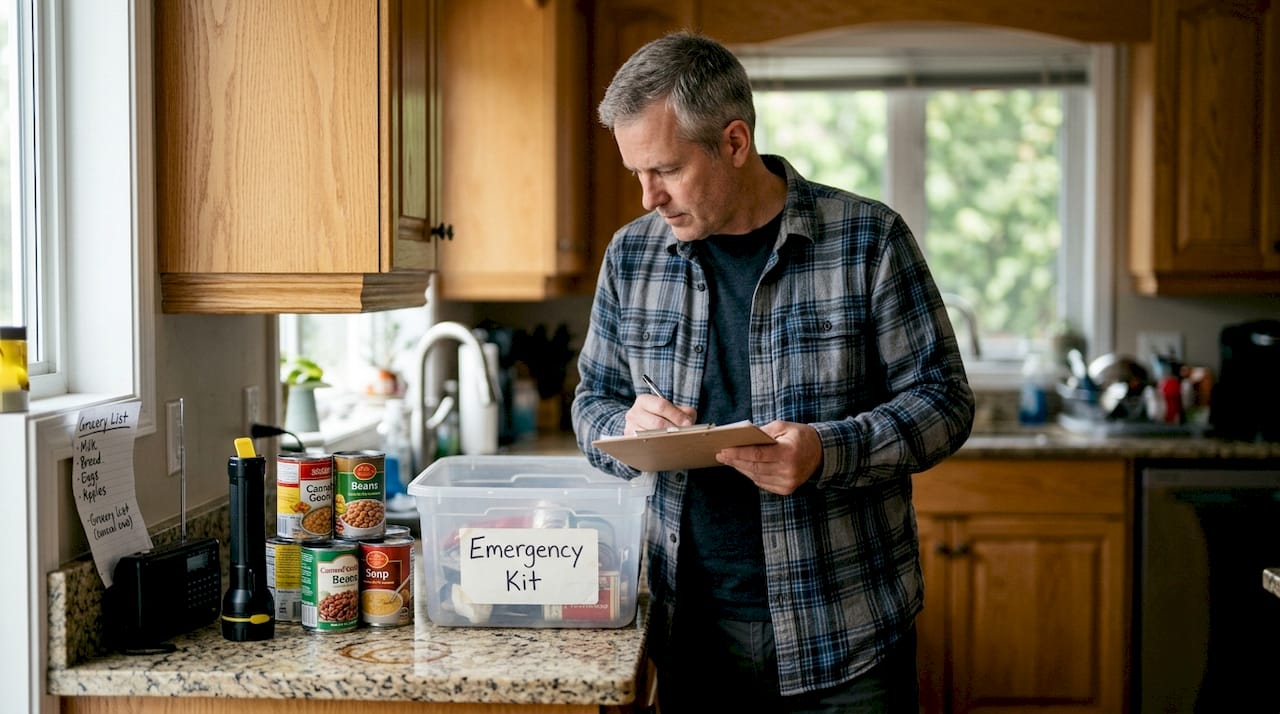
Home safety measures prevent injuries during shaking and enable faster recovery afterward. Secure tall furniture to wall studs using brackets and straps. Move heavy objects to lower shelves where they cannot fall on occupants. Install flexible gas line connectors and know how to shut off utilities at the main valves. Identify safe spots in each room, typically under sturdy tables or against interior walls away from windows. Store one pair of sturdy shoes and a flashlight beside every bed for safe movement through debris-filled rooms.
Practising protective actions builds muscle memory that overrides panic during actual earthquakes:
- Conduct Drop, Cover, and Hold On drills monthly until everyone reacts automatically
- Time how long family members take to reach safe positions from different rooms
- Practise covering heads and necks while holding onto table legs
- Discuss what to do if shaking occurs while driving, shopping, or at work
- Review evacuation routes and establish meeting points outside the home
Coastal families face additional tsunami considerations. Learn your elevation and distance from shore. Identify high ground evacuation routes and practise walking them with your family. Understand that ground shaking lasting more than 20 seconds near the coast means a tsunami may follow. Move inland and uphill immediately without waiting for official warnings.
Pro Tip: Store copies of insurance policies, identification, medical records, and property deeds on a USB drive in your emergency kit. Digital backups let you file claims and prove ownership even if your home sustains severe damage.
Digital communication plans help families reunite when local networks fail. Designate an out-of-province contact whom everyone calls to relay status updates. Text messages often work when voice calls cannot connect. Programme ICE (In Case of Emergency) contacts into every family member’s phone. Teach children their full address and how to use emergency services. Consider investing in a government-approved earthquake kit that meets provincial readiness standards and provides peace of mind through verified supplies.
Organising your neighbourhood emergency preparedness program
Individual readiness gains exponential power when neighbours coordinate their efforts. Neighbourhood Emergency Preparedness Programs in BC regions like Surrey, RDN, and Cowichan enable teams for shelter, communications, search and rescue, and first aid, ensuring self-sufficiency for the first 72 hours post-disaster. These formal structures provide frameworks that transform scattered households into coordinated response units.
Starting a neighbourhood program requires less effort than most people imagine. Follow these steps to build your local network:
- Begin with informal coffee meetups inviting 5 to 10 nearby households to discuss earthquake readiness
- Contact your municipal emergency program office to request NEPP training materials and guidance
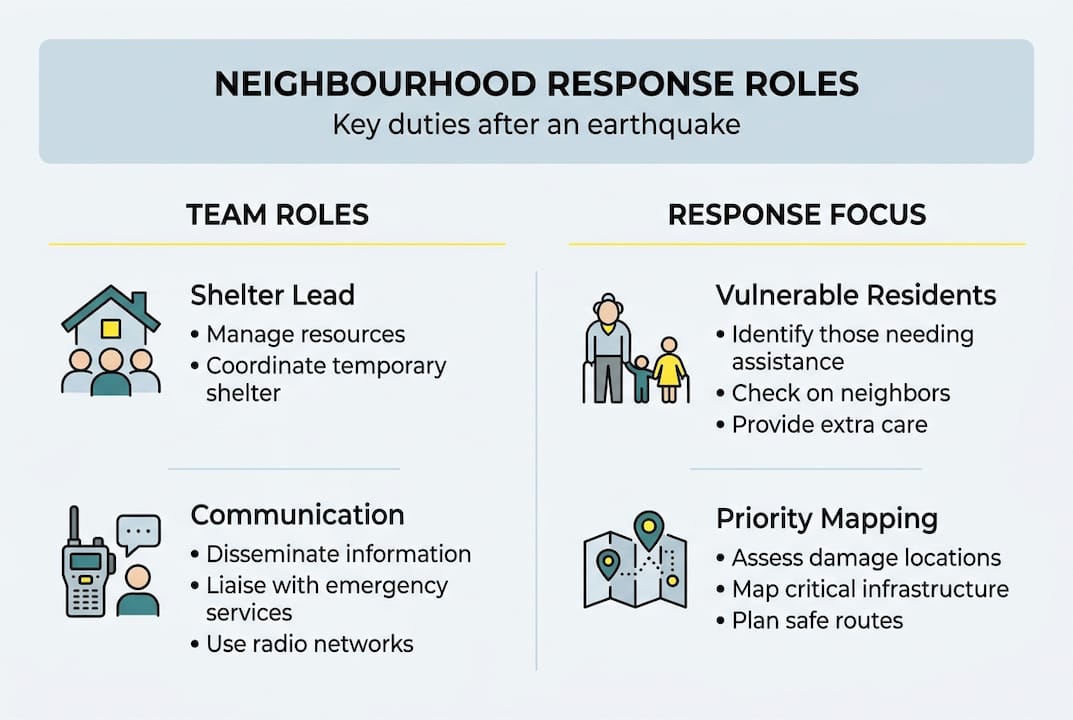
- Identify willing volunteers for core roles: program coordinator, communications lead, shelter manager, first aid coordinator, and search and rescue captain
- Map your neighbourhood boundaries, typically 50 to 150 households within easy walking distance
- Survey residents to identify medical professionals, tradespeople, and others with useful disaster skills
- Create a simple resident registry noting addresses, contact information, and special needs
- Establish a central meeting location accessible even if roads become impassable
- Schedule quarterly meetings and annual drills to maintain engagement and skills
Role assignments distribute responsibility and prevent coordinator burnout. Your shelter team identifies suitable gathering spaces and organises basic supplies. Communications volunteers maintain contact lists and establish backup systems like ham radios or message boards. Search and rescue members receive training in safe building assessment and victim location without endangering themselves. First aid coordinators ensure multiple neighbours hold current certifications and maintain medical supplies.
Mapping vulnerable populations guides your response priorities. Identify elderly residents living alone, people with mobility challenges, families with infants, and anyone requiring daily medications or medical equipment. Assign specific volunteers to check on these neighbours immediately after shaking stops. Document locations of fire extinguishers, emergency shut-offs, generators, chainsaws, and other useful equipment residents would share during crises.
| Approach | Structure | Advantages | Limitations |
|---|---|---|---|
| Informal meetups | Casual gatherings, flexible participation | Easy to start, low commitment, builds relationships | Limited accountability, inconsistent attendance, minimal training |
| Formal NEPP | Official roles, regular drills, municipal support | Structured training, recognised authority, sustained engagement | Requires dedicated volunteers, ongoing administration, formal processes |
Both approaches deliver value, and many neighbourhoods blend elements from each model. Start informally to gauge interest, then formalise structure as participation grows. The key lies in maintaining momentum through regular activities that keep earthquake preparedness visible and relevant.
Pro Tip: Schedule neighbourhood drills immediately after the annual ShakeOut event while earthquake awareness peaks. Piggyback on provincial publicity to boost participation and demonstrate your program’s value to hesitant neighbours.
Sustaining engagement challenges every community program. Combat participation fatigue by rotating leadership responsibilities, celebrating milestones, incorporating social elements into meetings, sharing success stories from other neighbourhoods, and connecting preparedness to other community interests like block parties or emergency communications. Consider purchasing group earthquake kits that centralise neighbourhood supplies and demonstrate collective commitment to readiness.
Engaging with broader community events and resources
Neighbourhood programs gain strength by connecting to regional preparedness networks. Events like the annual Great BC ShakeOut drill and Earthquake Preparedness Tours draw thousands and improve awareness and readiness across the province. These initiatives provide training resources, coordination frameworks, and peer support that individual neighbourhoods cannot generate alone.
The BC Earthquake Alliance coordinates multiple events throughout the year that reinforce local readiness efforts. The Great BC ShakeOut drill occurs every October, engaging hundreds of thousands of participants in simultaneous Drop, Cover, and Hold On practice. Earthquake Preparedness Tours offer guided experiences at emergency operations centres and seismic monitoring facilities. Preparedness Hikes combine outdoor recreation with emergency planning education along scenic BC trails. Each event builds public awareness while providing practical skills your neighbourhood can immediately apply.
Participating in these regional initiatives delivers concrete benefits:
- Access to professionally developed training materials and presentation templates
- Networking opportunities with experienced community leaders facing similar challenges
- Visibility that attracts new volunteers and maintains existing member engagement
- Credibility that helps secure municipal support and potential funding
- Updated information on evolving best practices and new preparedness technologies
The Virtual Community of Practice connects neighbourhood program leaders across BC through online forums and video conferences. Members share successful strategies, troubleshoot common challenges, and coordinate resources. This network proves especially valuable for rural communities with limited local emergency management support. You gain instant access to collective wisdom from dozens of established programs.
Alert systems provide critical information during actual emergencies and help maintain awareness between events. Services like Alertable and Voyent deliver location-specific warnings directly to mobile devices. Sign up your entire neighbourhood to ensure everyone receives tsunami warnings, evacuation orders, and recovery information simultaneously. These systems complement neighbourhood communication networks by providing authoritative information when rumours spread rapidly.
Casual awareness events broaden your program’s reach beyond committed volunteers. Host neighbourhood barbecues featuring earthquake safety demonstrations. Organise kit-building workshops where families assemble supplies together. Screen earthquake preparedness videos at community centres followed by discussion sessions. Distribute simple checklists door-to-door with invitations to upcoming meetings. Every interaction plants seeds that may bloom into active participation later.
Connecting personal readiness to community resources helps families understand how individual and collective preparation reinforce each other. Learning to choose the right earthquake emergency kits for household needs ensures families contribute strength rather than burden to neighbourhood response efforts. Well-prepared households become community assets during crises.
Explore earthquake kits and supplies at EarthquakeKit.ca
Building community resilience requires reliable equipment that performs when everything else fails. After organising your neighbourhood program and connecting with regional networks, ensure every household and your collective response teams have access to quality emergency supplies.
EarthquakeKit.ca specialises in earthquake preparedness products designed specifically for British Columbia families and communities. Browse basic earthquake kits that provide essential 72-hour supplies for individuals and small families, or explore group earthquake kits sized for neighbourhood response teams and community centres. Every product meets or exceeds provincial emergency preparedness standards, giving you confidence that your investment will deliver when disaster strikes. The government-approved earthquake kit offers peace of mind through verified compliance with official recommendations. Supporting a BC-focused supplier means your preparedness dollars strengthen local resilience while equipping your community to face the Big One together.
Frequently asked questions
How do I start a neighbourhood emergency preparedness program?
Begin by securing your own family’s readiness, then invite 5 to 10 nearby households to an informal coffee meetup discussing earthquake preparedness. Contact your municipal emergency program office to request training materials and guidance on establishing a formal Neighbourhood Emergency Preparedness Program. Start small with simple activities like contact list creation and safety walks, then expand structure as participation grows.
What are the most important items for a family earthquake kit?
Water, non-perishable food, first aid supplies, flashlight, battery-powered radio, and copies of personal documents form the core of every family kit. Adapt these basics for your household size, adding infant supplies, pet food, prescription medications, or mobility aids as needed. A comprehensive earthquake preparedness checklist helps identify items specific to your family’s circumstances.
How can communities support vulnerable members during an earthquake?
Map vulnerable residents during your neighbourhood planning phase, noting elderly people living alone, individuals with mobility challenges, and anyone requiring daily medications or medical equipment. Designate specific volunteers to check on these neighbours immediately after shaking stops, and ensure your community meeting location offers accessibility for people with disabilities. Regular wellness checks before disasters build relationships that enable effective support during crises.
When is the best time to participate in earthquake drills in BC?
The annual Great BC ShakeOut earthquake drill occurs every October and draws widespread participation across the province. This coordinated event provides excellent timing for neighbourhood programs to conduct their own drills while provincial awareness peaks. Schedule additional practice sessions quarterly to maintain skills and accommodate new residents joining your community throughout the year.