

Build your BC earthquake preparedness checklist for safety
Posted by Karl Lundgren on
TL;DR:
- A BC earthquake preparedness checklist involves planning, practicing, and customizing for local hazards.
- Regular review and drills are essential for effective household safety and resilience.
- Generic lists often miss BC-specific risks like tsunamis and regional alert systems.
Most BC residents believe they are prepared because they have a bag of supplies somewhere in the house. That assumption is understandable, but it is also dangerous. A preparedness checklist for British Columbia residents is far more than a shopping list. According to PrepareBC, it is a structured set of actions and items designed to mitigate risks, prepare households, and support an effective response when an earthquake strikes. The difference between a supply list and a real checklist could determine whether your family stays safe or struggles through the critical hours after the Big One.
Table of Contents
- What is a preparedness checklist?
- Building your BC earthquake checklist: The core elements
- Must-have items: Emergency kit essentials for families and individuals
- Practice, update, and adapt: Making your checklist effective
- Why most preparedness checklists aren’t good enough: An insider’s perspective
- Take the next step: Equip your household for BC earthquakes
- Frequently asked questions
Key Takeaways
| Point | Details |
|---|---|
| Comprehensive planning is key | A true preparedness checklist covers family planning, kits, drills, and hazard proofing—not just supplies. |
| Customise for BC risks | Tailor checklists to BC’s unique earthquake, tsunami, and evacuation challenges for real safety. |
| Regular updates ensure readiness | Update your checklist and practise drills every six months to keep your preparedness relevant. |
| Emergency kits must be thorough | Include essentials like water, food, documents, medication, and family- or pet-specific supplies for up to two weeks. |
What is a preparedness checklist?
A preparedness checklist is not a grocery run. It is an intentional, action-oriented document that covers what you need to have, what you need to do, and what you need to practise before disaster arrives. Many people confuse it with a grab-and-go supply list, which is only one small piece of the picture.
For British Columbians, the stakes are particularly high. The Cascadia Subduction Zone sits just offshore, capable of producing megathrust earthquakes of magnitude 9.0 or greater. Coastal communities face the added threat of tsunamis arriving within minutes of shaking. That reality means a BC earthquake preparedness checklist must account for far more than bottled water and a flashlight.
BC residents need a structured checklist for earthquake readiness, not just a supply list. Official guidance consistently emphasises three pillars: a family emergency plan, a well-stocked kit, and regular practice. Removing any one of those pillars weakens the entire structure.
The table below illustrates the core difference between a basic supply list and a robust BC emergency checklist:
| Feature | Basic supply list | BC preparedness checklist |
|---|---|---|
| Focus | Items to purchase | Actions + items + plans |
| Family plan included | No | Yes |
| Drills and practice | No | Yes |
| Hazard-specific content | Generic | Earthquake and tsunami focused |
| Regular review cycle | Rarely | Every six months |
| Customised for household | No | Yes |
“Preparedness is not a one-time purchase. It is an ongoing commitment to planning, practising, and adapting as your household and your community evolve.” This is the standard that BC emergency management professionals hold themselves to, and it should be yours as well.
The tsunami and earthquake guide developed for coastal BC communities reinforces this point clearly. Self-sufficiency for 72 hours is the minimum expectation, but many experts now recommend planning for up to two weeks, particularly for those in remote or coastal areas where infrastructure damage may delay outside assistance considerably.
Building your BC earthquake checklist: The core elements
With a clear definition in mind, it is time to see what a real BC earthquake preparedness checklist should cover. The official Canadian earthquake guide and PreparedBC both agree on five foundational elements.
1. A family emergency plan This means identifying two meeting locations (one near home, one further away), establishing an out-of-province contact, and knowing how to shut off your home’s gas, water, and electricity. Every adult in the household should know this plan without needing to look it up.
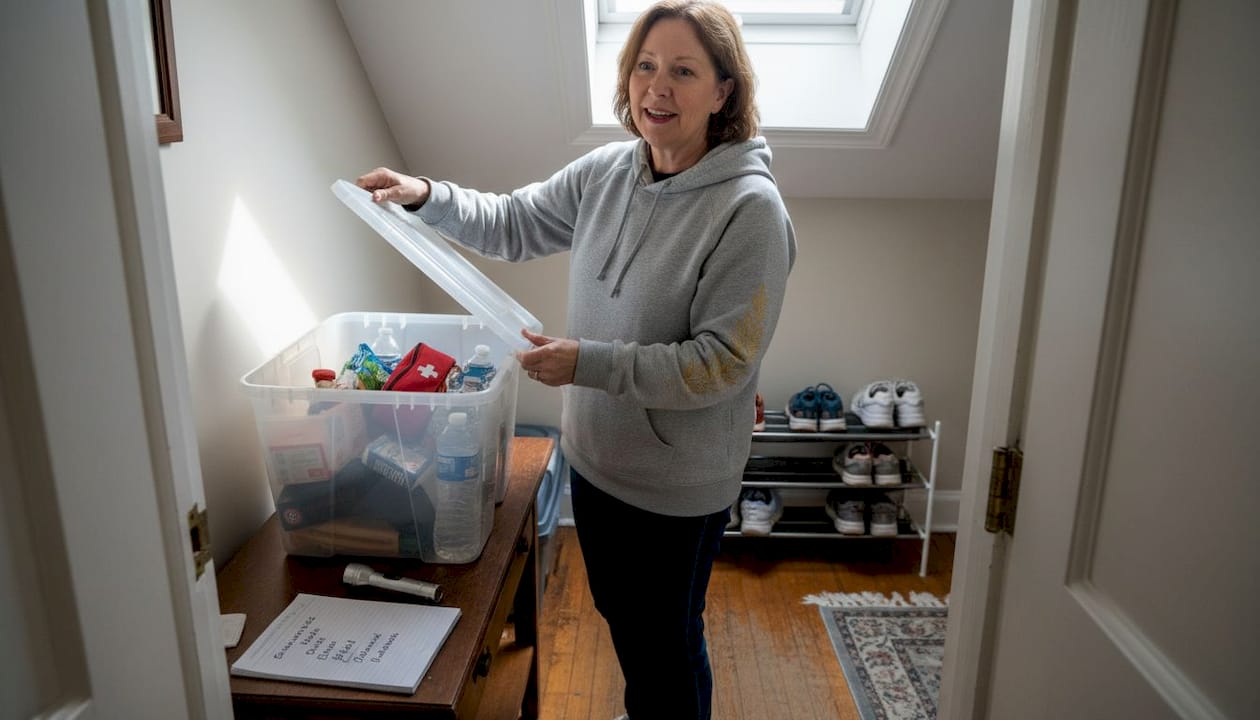
2. Emergency kits Understanding how emergency kits help BC residents is essential before you start buying supplies. A 72-hour bag is the starting point, but your kit should also support extended self-sufficiency. Review the essential earthquake kit items specific to BC conditions before finalising your list.
3. Home safety measures Secure tall furniture and heavy appliances to walls. Store heavy items on low shelves. Identify and remove hazards that could injure you during violent shaking. In older homes, seismic retrofitting may be worth investigating.
4. Drills and situational awareness Knowing Drop, Cover, and Hold On is not optional. It is the single most effective protective action during an earthquake. Sign up for Emergency Alert notifications on your mobile device so you receive seismic warnings without delay.
5. Neighbourhood networks Connect with neighbours, particularly those who may need assistance. Community resilience is a documented factor in disaster recovery outcomes.
The core checklist mechanics recommended by PreparedBC confirm this framework: plan, build kits, secure your home, practise drills, and stay informed.
Pro Tip: Customise your checklist for every member of your household. Children need comfort items and school emergency contacts. Pets need food, carriers, and vaccination records. Anyone with medical needs should have a minimum two-week supply of medications stored separately.
Must-have items: Emergency kit essentials for families and individuals
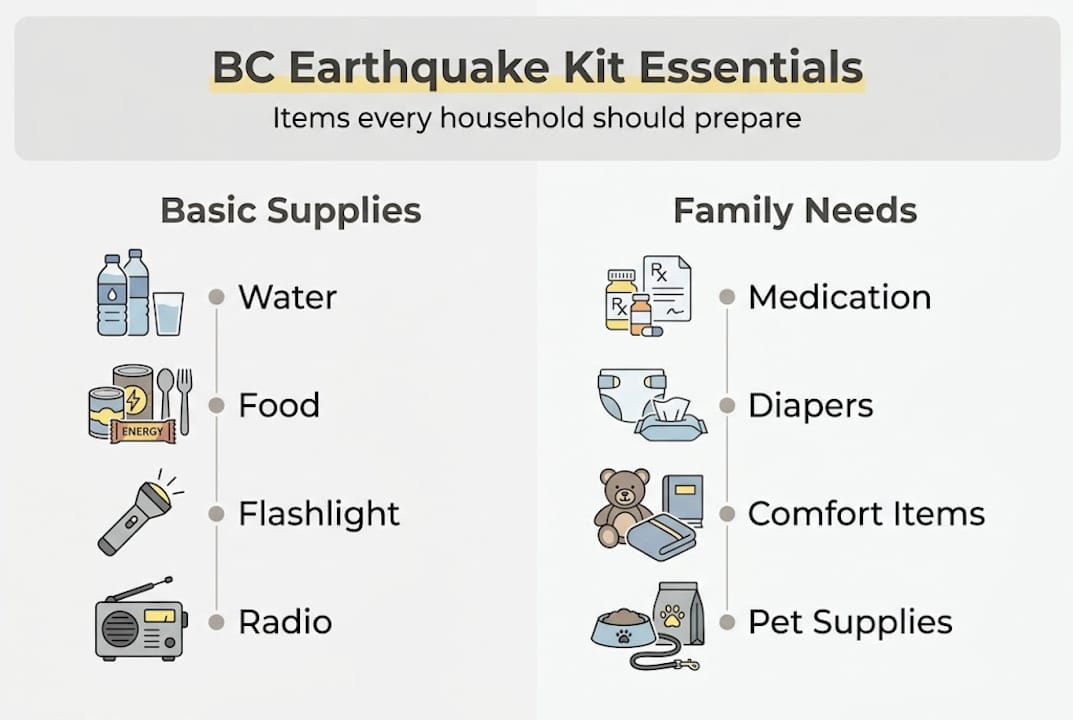
Knowing the core elements, next you need to build your kit around these essential supplies. The emergency kit essentials for a 72-hour to two-week supply include water, food, first aid supplies, medications, a flashlight, batteries, hygiene items, cash, copies of important documents, and warm clothing.
Here is a prioritised list of what every BC household should have ready:
- Water: At minimum 4 litres per person per day. For a family of four over three days, that is 48 litres. Store more if you have the space.
- Food: Non-perishable, easy-to-prepare items. Think canned goods, energy bars, dried fruit, and nut butters. Rotate stock regularly.
- First aid kit: Include bandages, antiseptic, pain relievers, and any prescription medications your household depends on.
- Lighting and power: A hand-crank or battery-powered flashlight, spare batteries, and a portable phone charger.
- Warmth: Thermal blankets, extra layers, and rain gear suited to BC’s variable climate.
- Cash in small bills: ATMs and card readers will not function if power is out.
- Document copies: Identification, insurance policies, medical records, and emergency contacts stored in a waterproof container.
| Item | Recommended quantity | Notes |
|---|---|---|
| Water | 4L per person per day | Minimum 3 days, ideally 14 |
| Food | 3 to 14 days’ supply | Non-perishable, allergen-aware |
| First aid supplies | One full kit | Check expiry dates every 6 months |
| Flashlight and batteries | 2 flashlights minimum | Hand-crank preferred |
| Cash | Small bills only | No denomination over $20 |
| Warm clothing | One full change per person | Waterproof outer layer for BC weather |
Families with young children should add diapers, formula, comfort items, and copies of school emergency contacts. Pet owners need food, water, a carrier, and vaccination records for each animal.
Pro Tip: Review your earthquake emergency supplies every six months and check the emergency kit guide for BC-specific additions you may have overlooked, such as allergen-safe foods or cold-weather gear for winter emergencies.
Practice, update, and adapt: Making your checklist effective
After assembling the essentials, regular practice and updates will make your checklist a real safety tool rather than a document that sits in a drawer.
Drills matter enormously. Drop, Cover, and Hold On takes seconds to practise and can prevent serious injury during violent shaking. Participating in ShakeOutBC connects your household to a province-wide culture of preparedness and reinforces the muscle memory your family needs when adrenaline takes over.
Checklist maintenance is equally important. Here is what a six-month review should cover:
- Check expiry dates on food, water, and medications
- Replace batteries and test all electronic devices
- Update emergency contacts and document copies
- Adjust supplies for any new household members, including pets
- Review your family emergency plan for any changes to meeting locations or contacts
- Inspect and restock first aid supplies
Regular maintenance every six months and participation in drills like ShakeOutBC are key priorities for BC’s Ministry of Emergency Management and Climate Readiness. The province’s goal is high adoption of preparedness tools and genuine household self-sufficiency.
Adaptability is often the most overlooked quality of a strong checklist. A household with a newborn has different needs than one with teenagers. A family that moves from Vancouver to a coastal community near Tofino faces different tsunami risks than one in the Interior. Your checklist should reflect your current reality, not the situation you were in when you first wrote it.
Good kit organisation also plays a role in effectiveness. A kit that cannot be found or accessed quickly in the dark is not much use. Store your main kit in an accessible location, and consider keeping a smaller kit in your vehicle. When choosing emergency kits, look for options that are already structured around BC’s specific hazards.
Why most preparedness checklists aren’t good enough: An insider’s perspective
Here is what our hands-on experience in BC has actually shown: most people who believe they are prepared are working from a generic list that was never designed for this province.
A checklist downloaded from a general preparedness website may cover water and food, but it will not mention tsunami evacuation routes, aftershock sequences, or the specific alert systems used in BC. It will not prompt you to connect with your neighbours or to think about what happens if the earthquake strikes while your children are at school.
Generic lists also skip the practice component almost entirely. That is a serious gap. Knowing what to do and being able to do it under stress are two very different things. Families who have rehearsed their plan perform measurably better in real emergencies.
The most resilient households we see are the ones that treat their checklist as a living document. They revisit it, argue about it, update it, and test it. That is precisely why earthquake kits matter beyond the contents of the bag. The process of preparing is itself a form of protection.
Take the next step: Equip your household for BC earthquakes
Your checklist is only as strong as the supplies and plans behind it. If you have identified gaps in your current kit, now is the right time to address them.
EarthquakeKit.ca offers basic BC earthquake kits designed specifically for British Columbia households, covering the essentials recommended by provincial and federal authorities. For those who want a fully vetted option, the officially recommended earthquake kit aligns directly with BC government guidance. Start with a solid foundation, customise it for your household’s specific needs, and commit to reviewing it every six months. Preparedness is not a destination. It is a practice.
Frequently asked questions
How often should I update my preparedness checklist?
Update your checklist and emergency kit every six months, or any time your household situation changes, such as a new family member, a move, or a change in medical needs.
What is the minimum amount of water I should store per person?
Store at least 4 litres per person per day, aiming for a supply that covers 3 to 14 days depending on your household’s circumstances and storage capacity.
What drills should families in BC practise for earthquake preparedness?
Families should routinely practise Drop, Cover, and Hold On and participate in ShakeOutBC, the annual province-wide earthquake drill that reinforces protective actions under realistic conditions.
How is a BC preparedness checklist different from generic emergency lists?
A BC checklist addresses specific regional hazards such as tsunamis, aftershock sequences, and provincial alert systems, which generic lists do not cover.
Can I use the same checklist for earthquakes and floods?
Some fundamentals overlap, but official guides emphasise tailoring your checklist to each specific hazard, since evacuation routes, timing, and supply priorities differ significantly between the two.