

Build your complete home preparedness list for BC earthquakes
Posted by Karl Lundgren on
TL;DR:
- British Columbia faces a high earthquake risk from the Cascadia Subduction Zone, affecting millions.
- Essential preparedness includes a one-week supply of water, food, first aid, and emergency tools.
- Regularly review and practice your emergency plans and kit to ensure ongoing readiness.
Living in British Columbia means accepting that earthquakes are not a distant possibility but a present reality. The Cascadia Subduction Zone, a major fault system running along the Pacific coast, is capable of producing a megathrust earthquake that would affect millions of people simultaneously. 92% of BC’s population is exposed to significant seismic risk. Many residents own partial kits, store expired supplies, or haven’t thought through what their household would actually need. This checklist changes that. Whether you own your home or rent a suite, working through a thorough, research-backed list gives you something far more valuable than a bag of supplies: it gives you genuine confidence.
Table of Contents
- Understanding earthquake risks in British Columbia
- What every home preparedness kit should include
- Grab-and-go bags: What, why, and how to pack them
- Tools and actions for securing your home
- The real test of preparedness: Going beyond the checklist
- Get started with a trusted earthquake kit provider
- Frequently asked questions
Key Takeaways
| Point | Details |
|---|---|
| Every BC home needs a kit | Earthquake risk is high in BC, so both renters and homeowners must be prepared. |
| Aim for 1-2 weeks of supplies | Three days is a minimum, but extended disruptions mean more supplies offer better safety. |
| Grab-and-go bags save lives | Portable bags tailored for each person and pet ensure quick, effective evacuation. |
| Secure your home, not just your kit | Bracing furniture and knowing emergency procedures adds vital protection beyond a checklist. |
Understanding earthquake risks in British Columbia
Now that you understand the purpose of a preparedness list, let’s look at why BC residents especially need to pay attention.
British Columbia sits directly above one of the most geologically active regions in North America. The Cascadia Subduction Zone runs approximately 1,000 kilometres along the Pacific coast, from northern California to Vancouver Island. Scientists and emergency planners agree that a major rupture along this fault is not a matter of “if” but “when.” The last great Cascadia event occurred in January 1700, and the energy building along the fault has been accumulating ever since.
Urban centres like Vancouver, Victoria, Surrey, Kelowna, and Prince George all sit within earthquake-affected zones. BC’s seismic exposure is extraordinary by any measure, with the overwhelming majority of the province’s population living in areas where a significant quake could cause widespread disruption. The insurance industry and provincial emergency managers have been clear on this point for years.
What makes a major BC earthquake particularly challenging is the cascade of secondary effects that follows shaking. Roads may buckle, bridges may become impassable, and essential utilities including water, electricity, and natural gas may be cut for days or even weeks. Emergency responders will be stretched thin, and neighbourhoods may be on their own for 72 hours or considerably longer. This is why the concept of shelter-in-place preparedness is central to every official BC emergency guide.
Beyond the shaking itself, BC residents on the coast must also account for tsunami risk. The PreparedBC Earthquake and Tsunami Guide outlines critical edge case hazards that many people overlook:
- Aftershocks can occur for hours, days, or weeks after the main quake, complicating rescue and recovery.
- Tsunamis pose an immediate danger to coastal communities; evacuation routes and plans must be pre-identified.
- Glass and debris hazards are common indoors; keeping sturdy shoes near your bed allows you to move safely in the dark.
- Utility shutoffs are often necessary and must be done correctly to prevent gas leaks and fires.
- Isolation from services and support networks can last far longer than most people anticipate.
“Being prepared to shelter-in-place after an earthquake is essential. Roads and utilities may be damaged, making it impossible to access services for days.” — PreparedBC Earthquake and Tsunami Guide
Understanding these risks isn’t meant to frighten you. It’s meant to help you shape a preparedness plan that matches what you will actually face, not what you hope will happen. Your earthquake kit personal supplies need to reflect the full reality of a major seismic event in BC, not just the basics covered in a generic emergency guide.
What every home preparedness kit should include
With the risks in mind, let’s break down the essentials you’ll need in your preparedness kit.
PreparedBC’s official guidance provides a solid baseline for what a household emergency kit must contain. The full list is broader than most people expect, and every item on it has a specific purpose grounded in real emergency scenarios.
Here are the core categories you need to cover:
- Water: Store a minimum of 4 litres per person per day. For a family of four preparing for one week, that means over 100 litres. Include a water filter or purification tablets as a backup.
- Food: Non-perishable, easy-to-prepare items including canned goods, dried fruit, nuts, protein bars, and foods your family will actually eat. Don’t forget a manual can opener.
- First-aid kit: Include bandages, antiseptic, gauze, scissors, pain relievers, and any prescription medications your household members need. Include at least a seven-day supply of critical medications.
- Light and communication: A battery-powered or hand-crank flashlight and radio with extra batteries. A fully charged battery bank for phones is equally important.
- Hygiene supplies: Moist towelettes, garbage bags, plastic ties, hand sanitiser, and feminine hygiene products if applicable.
- Documents and cash: Copies of identification, insurance policies, passports, and emergency contact lists in a waterproof bag. ATMs and card readers may not function after a quake, making cash essential.
- Clothing and warmth: Seasonal clothing, sturdy footwear, and an emergency blanket for each household member.
- Infant, pet, and accessibility needs: Formula, diapers, pet food, medications, mobility aids, and anything specific to your household’s situation.
| Category | Minimum standard | Recommended standard |
|---|---|---|
| Water | 4 L/person/day for 3 days | 4 L/person/day for 7 days |
| Food | 3 days non-perishable | 7 to 14 days variety |
| Medications | 3-day supply | 7-day supply or more |
| Batteries/power | 1 set spare batteries | Battery bank plus spares |
| Cash | Small amount | Varied denominations, $200+ |
The Regional District of Nanaimo’s guidance is direct: three days of supplies is the minimum, but one to two weeks is strongly recommended. Disruptions from BC emergencies in recent years, including floods and wildfires, have shown that services can remain offline far longer than 72 hours. Review and refresh your kit every six months, and the easiest way to remember is to do it when you change your clocks for daylight saving time.
Renters and homeowners need essentially the same core supplies, but renters specifically benefit from building a portable kit first. Homeowners may have the flexibility to store larger quantities, while renters should focus on what they can carry quickly if evacuation is required. For a deep look at all your options, explore earthquake kit alternatives or read our guidance on selecting BC earthquake kits suited to different households.
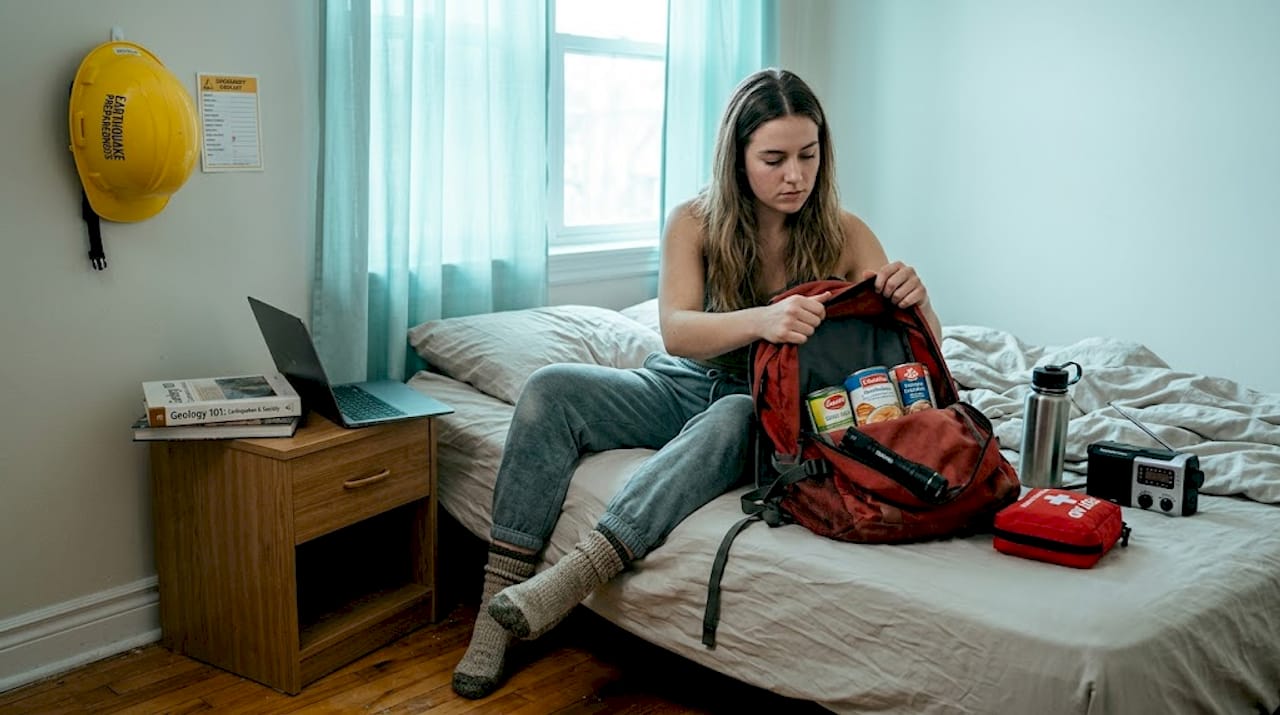
Pro Tip: Label all containers clearly and store your kit in a single location that every household member can reach in the dark, without searching. A hallway closet near the front door is ideal for most homes.
Grab-and-go bags: What, why, and how to pack them
Besides your main kit, quick evacuation demands specialised bags.
Your home preparedness kit is designed for shelter-in-place scenarios where you stay put and wait for services to resume. A grab-and-go bag serves a completely different purpose: it is what you take with you in the first minutes of an emergency when you may have no time to gather anything else. These bags should be packed, accessible, and ready at all times, not assembled in the chaos of an emergency.
PreparedBC recommends preparing a grab-and-go bag for every member of your household, including pets. Each bag should contain:
- Ready-to-eat food and water for at least 72 hours
- Phone charger and fully charged battery bank
- Small hand-crank or battery-powered flashlight and radio
- Personal first-aid kit and a supply of any critical medications
- Toiletries, spare glasses or contact lenses if needed, and an emergency blanket
- Copies of your emergency plan, important documents, and insurance papers in a waterproof pouch
- Cash in small denominations and a local map (don’t rely solely on your phone for navigation)
- Seasonal clothing and sturdy footwear
- A whistle and a multi-tool or pocket knife
- Infant or child supplies as relevant: formula, diapers, comfort items
- Pet food, medication, leash, and a copy of vaccination records for animals
Here is a quick comparison to help you distinguish between your home kit and a grab-and-go bag:
| Feature | Home preparedness kit | Grab-and-go bag |
|---|---|---|
| Primary purpose | Shelter-in-place | Rapid evacuation |
| Duration of supplies | 7 to 14 days | 72 hours minimum |
| Portability | Not required | Essential, fits in a backpack |
| Location | Closet, storage room | Near bed or front door |
| Documents included | Originals or copies | Copies only, waterproofed |
| Weight | Not a limiting factor | Lightweight, manageable per person |
Pro Tip: Hang your grab-and-go bag on a hook near your bedroom door or store it under your bed. If you need to leave in the middle of the night, you should be able to grab it within seconds.
Every adult and older child in your household should have their own bag that they can carry independently. Consider assembling personal grab-and-go supplies that are designed specifically for portability, or explore group earthquake kit options if you are preparing for a larger household or workplace.
Tools and actions for securing your home
Having your kits ready is crucial, but making your home safer adds an extra layer of protection.
Preparedness is not only about what you store. It is also about reducing the hazards that a major quake will create inside and around your home. Many earthquake injuries happen not during the shaking itself but from falling objects, broken glass, and structural failures that occur immediately after. Taking time now to secure your home can prevent serious injury to you and your family.
PreparedBC’s earthquake guidance recommends these specific actions and tools:
- Anchor tall furniture to wall studs using L-brackets or furniture straps. Bookshelves, wardrobes, and refrigerators are particularly hazardous when unsecured.
- Secure your water heater with approved straps to prevent it from toppling, which can rupture gas lines.
- Store heavy items low. Anything stored above shoulder height becomes a projectile during violent shaking.
- Keep sturdy shoes near your bed so you can walk safely through broken glass in the dark without hesitation.
- Have a gas shutoff wrench accessible near your gas metre or main shutoff valve, and ensure every adult in your household knows how to use it.
- Store work gloves and a pry bar in your kit so you can safely move debris and search for trapped family members or neighbours after the quake.
“Knowing Drop, Cover, and Hold On is your most important in-the-moment skill. Drop to hands and knees, take cover under a sturdy table or against an interior wall, and hold on until the shaking stops.” — PreparedBC: Know Your Hazards, Earthquakes
The Insurance Bureau of Canada identifies structural retrofitting as one of the highest-impact protective measures available. Homes built before 1990 in BC are especially vulnerable, as older construction standards did not account for the seismic loads a major Cascadia event would generate. If your home falls into this category, consulting a licensed engineer about a brace-and-bolt retrofit is a meaningful investment in your family’s safety, above and beyond any kit you assemble.
For households starting their preparedness journey, exploring basic earthquake kit options is a practical first step. If you commute or spend significant time in your vehicle, keeping a car earthquake kit in your boot is equally important, as a major quake may strand you far from home.
The real test of preparedness: Going beyond the checklist
There is a quiet comfort in completing a preparedness checklist. You gather the supplies, tick the boxes, and feel a sense of relief. That relief is earned, but it should not be mistaken for full readiness.
The honest truth is that a kit sitting in a closet and never reviewed is only marginally better than no kit at all. Medications expire. Water containers degrade. Family needs change as children grow, relatives move in, or health conditions evolve. A checklist reflects your household’s situation on the day you completed it, not necessarily today.
The Regional District of Nanaimo is explicit: the 72-hour standard that shaped early preparedness campaigns is now considered outdated by most regional districts in BC. Events like the 2021 floods and widespread wildfire evacuations demonstrated that communities can be cut off for a week or more. Planning only for three days is planning to fall short.
Real preparedness also means practising. Running a family drill, even informally, reveals gaps that no checklist will catch. Where exactly would everyone meet if you couldn’t return home? Who carries the grab-and-go bag for the youngest child? Does everyone know how to turn off the gas? These questions are best answered before a quake, not during one.
We believe that the most resilient households are the ones that treat preparedness as an ongoing habit rather than a one-time project. Review your emergency supplies at least twice a year, simulate a drill with your household, and stay current with updates from PreparedBC and your local emergency programme. A checklist opens the door. What you do with it is what makes the real difference.
Get started with a trusted earthquake kit provider
Ready to take the next step towards real peace of mind? Building or buying your kit has never been easier.
At EarthquakeKit.ca, we specialise in earthquake preparedness for BC residents and businesses. Professionally assembled kits take the guesswork out of the process, ensuring you haven’t missed a critical supply that you’d only notice when it’s too late.
Whether you need a foundational basic earthquake kit for your household, personal supply additions to round out what you already have, or a custom solution for your workplace or vehicle, we have options for every need. You can also customise and expand as your household grows or your situation changes. Visit EarthquakeKit.ca to browse our full catalogue and find the right starting point for your family’s preparedness journey.
Frequently asked questions
How often should I update my home preparedness kit?
Review and refresh your kit every six months, ideally when you change your clocks for daylight saving time, so expired supplies and changed household needs are caught regularly.
How much water should I store for my family?
Store at least 4 litres per person per day for a minimum of three days, with one full week of water storage strongly recommended for BC households.
Do renters and homeowners need different emergency kits?
Both need the same core supplies, but renters should prioritise portable grab-and-go bags for quick evacuation, while homeowners can additionally focus on securing their home’s structure.
What is the minimum and recommended supply duration for BC earthquake kits?
Three days of supplies is the minimum, but one week or more is now recommended by regional districts across BC, based on how long disruptions have lasted in recent major emergencies.
Where should I store my emergency kit at home?
Keep your kit in a clearly known, easily accessible location that every household member can reach without assistance, ideally near an exit and not blocked by other stored items.
Recommended
Share this post
- 0 comment
- Tags: en, home preparedness list