

Understanding the role of kits for workplace earthquake safety
Posted by Karl Lundgren on
When an earthquake strikes your workplace, the building’s structural integrity matters less than whether your team can survive the critical hours that follow. Most employers assume their offices are safe zones, but without proper emergency kits, employees face dehydration, injury complications, and isolation when infrastructure collapses. British Columbia’s seismic reality demands more than evacuation plans. This guide explains how earthquake preparedness kits function as essential survival tools, meet legal obligations, and protect your workforce when the ground stops shaking but help hasn’t arrived.
Table of Contents
- Key takeaways
- Earthquake preparedness kits and workplace safety in BC
- Legal requirements and employer responsibilities for workplace kits
- Recommended contents and maintenance of workplace earthquake kits
- Implementing kits and training for workplace earthquake preparedness
- How EarthquakeKit.ca supports workplace preparedness
- What should employers know about workplace earthquake kits?
Key Takeaways
| Point | Details |
|---|---|
| 72 hour self sufficiency | Earthquake kits are designed to provide water, food, safety gear, and communication tools to sustain employees for at least 72 hours after a quake. |
| BC legal duties | British Columbia requires employers to include emergency kits and documented locations in safety plans under the OHS Regulation. |
| Annual drills required | Annual emergency drills and training on kit contents and procedures are mandatory for workplaces. |
| Regular kit inspections | Regular monthly kit inspections aligned with fire alarm testing help identify expired food, depleted batteries, and missing items before an emergency. |
Earthquake preparedness kits and workplace safety in BC
British Columbia sits directly above the Cascadia Subduction Zone, where tectonic plates create constant seismic risk. When the Big One strikes, your workplace becomes a survival environment for hours or days. Earthquake kits provide critical support by delivering water, food, safety equipment, and communication tools that keep employees alive and functional until rescue arrives or safe evacuation becomes possible.
These kits serve three immediate functions during seismic events. First, they supply drinking water when municipal systems fail or become contaminated. Second, they provide first aid materials and protective gear that address injuries sustained during tremors. Third, they include communication devices that work when phone networks collapse. Without these resources, employees face life-threatening dehydration within 24 hours and cannot treat even minor injuries that worsen without intervention.
Different workplace environments demand tailored kit configurations. Office buildings require basic supplies for white-collar workers who may shelter in place. Manufacturing facilities need additional safety equipment for workers handling hazardous materials. Retail locations must account for both staff and customers who cannot immediately evacuate. Coastal workplaces face tsunami risks that compound earthquake dangers, requiring specialised emergency supplies that address multiple disaster scenarios.
Pro Tip: Schedule monthly kit inspections on the same day you test fire alarms. This routine catches expired food, depleted batteries, and missing items before emergencies expose gaps in your preparedness.
The Insurance Bureau of Canada emphasises that workplace preparedness directly reduces injury rates and property damage during earthquakes. Employees who access kits immediately after tremors avoid panic-driven decisions that increase harm. They remain calm because survival resources are visible and accessible, not theoretical elements of a forgotten emergency plan.
“Earthquake preparedness transforms workplaces from vulnerable spaces into resilient environments where employees can shelter safely until conditions stabilise and professional help arrives.”
Your kit investment protects more than physical safety. It demonstrates legal compliance, reduces liability exposure, and builds employee confidence that their wellbeing matters to leadership. When workers know their employer has planned for worst-case scenarios, they focus on recovery tasks rather than personal survival fears.
Legal requirements and employer responsibilities for workplace kits
British Columbia’s occupational health and safety framework places clear emergency preparedness duties on employers. Sections 4.13 through 4.18 of the OHS Regulation require risk assessments for emergencies including earthquakes, followed by written rescue and evacuation procedures when hazards exist. These aren’t optional guidelines. They’re enforceable standards that carry penalties for non-compliance.
Your emergency plan must identify specific supply needs and document where kits are stored. WorkSafeBC mandates that plans include comprehensive lists of emergency supplies with precise locations, ensuring employees can locate resources quickly during chaos. This requirement implicitly demands fully stocked kits, even though regulations don’t prescribe exact contents. The obligation to maintain adequate supplies for identified risks creates a practical mandate for earthquake kits in seismically active BC.
Employers must address diverse workforce needs when planning kit provisions:
- Workers with disabilities require accessible kit locations and specialised equipment that accommodates mobility or sensory limitations
- High-risk workplaces handling hazardous materials need additional protective gear beyond basic earthquake supplies
- Multi-shift operations must maintain sufficient kit quantities for maximum occupancy scenarios, not just typical staffing levels
- Remote or isolated work sites need enhanced kits because external help arrives slower than in urban centres
Compliance extends beyond purchasing kits. Annual emergency drills are mandatory, and all workers must receive training on emergency procedures including kit locations and proper use. These exercises test whether your preparedness works in practice or only on paper. They reveal gaps in kit accessibility, identify employees who need additional instruction, and validate that your supply quantities match actual workforce needs.
The regulatory framework connects directly to practical implementation. Government-approved earthquake kits meet provincial standards and simplify compliance for employers unfamiliar with specific supply requirements. Using recognised kit standards reduces the risk of inadequate preparedness that leaves workplaces legally and physically vulnerable. For comprehensive guidance on building compliant emergency supplies, review the complete emergency kit guide that details BC-specific requirements.
Workplaces also need proper emergency communication equipment that meets legal safety standards. Communication failures during disasters create liability when employees cannot signal for help or receive evacuation instructions.
Recommended contents and maintenance of workplace earthquake kits
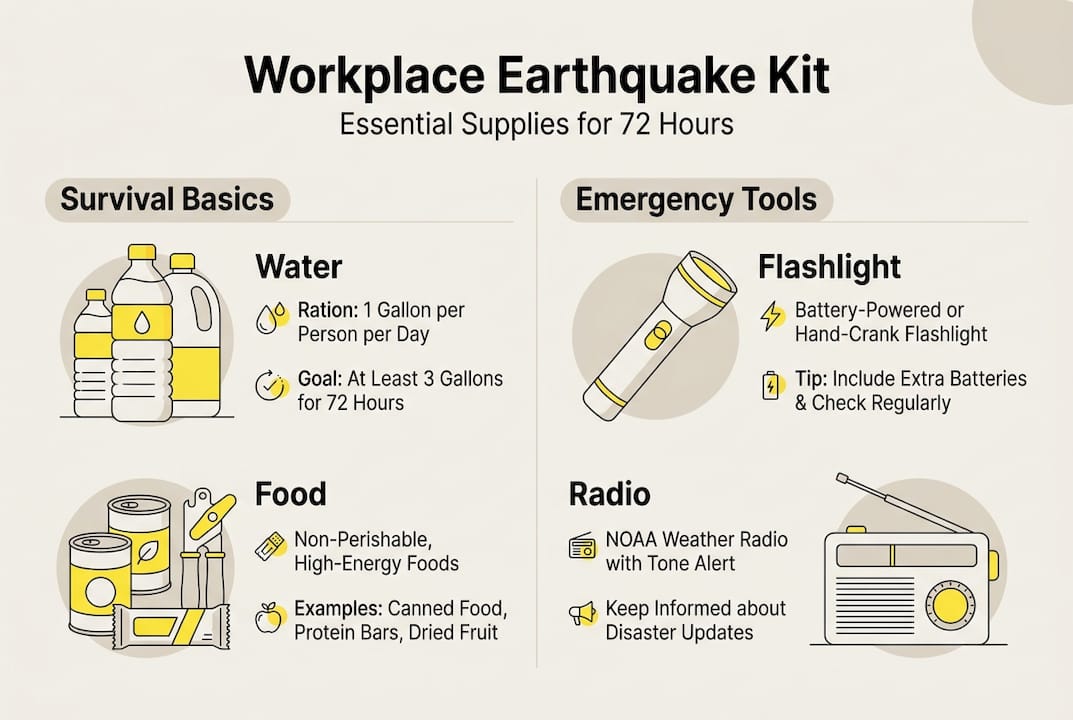
Effective workplace earthquake kits contain specific items that address survival needs during the critical 72-hour period following major seismic events. Standard recommendations include four litres of water per person, non-perishable food sufficient for three days, flashlights with extra batteries, emergency whistles, hard hats, battery-powered radios, phone chargers, cash, essential medications, weather-appropriate clothing, and basic hygiene supplies.

| Supply category | Essential items | Quantity per person |
|---|---|---|
| Water and hydration | Bottled water, purification tablets | 4 litres minimum |
| Food supplies | Energy bars, dried fruit, canned goods | 72-hour supply |
| Safety equipment | Hard hat, safety glasses, work gloves, dust mask | 1 complete set |
| Light and communication | Flashlight, whistle, radio, spare batteries | 1 of each |
| Medical supplies | First aid kit, personal medications, pain relievers | Standard kit plus prescriptions |
| Personal items | Clothing layer, emergency blanket, hygiene products | 1 complete set |
Water represents the most critical kit component because dehydration kills faster than hunger. Four litres per person per day provides drinking water plus minimal hygiene needs. Food should require no preparation since utilities fail during earthquakes. Choose items with long shelf lives that provide quick energy without refrigeration or cooking.
Safety gear protects employees during aftershocks and building damage assessment. Hard hats prevent head injuries from falling debris. Dust masks filter air contaminated by collapsed building materials. Work gloves enable safe debris clearing without hand injuries. These items transform employees from vulnerable victims into capable responders who can assist others.
Communication tools maintain connection when digital infrastructure fails:
- Battery-powered or hand-crank radios receive emergency broadcasts when internet and phone networks collapse
- Emergency whistles signal location to rescuers without requiring electricity or cellular service
- Portable phone chargers extend mobile device functionality for brief periods when towers remain operational
- Waterproof document pouches protect emergency contact lists and building evacuation maps
Pro Tip: Store a laminated building floor plan with marked exits and kit locations inside each kit. During earthquakes, familiar spaces become disorienting, and visual references speed safe evacuation.
Maintaining kit readiness requires systematic attention. Inspect kits quarterly to verify contents remain complete and undamaged. Replace food and water annually before expiration dates, even if packaging appears intact. Test flashlights and radios every six months, replacing batteries that show reduced charge. Document inspections to demonstrate compliance during safety audits.
The Government of BC earthquake kit provides a pre-assembled baseline that meets provincial recommendations. For larger workplaces, group earthquake kits offer economies of scale while ensuring consistent supply standards across your organisation. These professionally assembled options eliminate guesswork about adequate quantities and appropriate item selection.
Implementing kits and training for workplace earthquake preparedness
Purchasing earthquake kits accomplishes nothing if employees don’t know they exist or cannot access them during emergencies. Effective implementation integrates kits visibly into your emergency response plan with clear protocols that all workers understand and practise regularly.
Start by designating primary and secondary kit storage locations that remain accessible even if building damage blocks certain areas. Mark these locations with highly visible signage using universal emergency symbols. Include kit locations on all evacuation maps posted throughout your workplace. Redundancy matters because earthquakes create unpredictable obstacles that may block access to primary supplies.
Consider providing personal grab-and-go options alongside centralised workplace kits:
- Individual basic earthquake kits stored at employee workstations ensure immediate access to critical supplies
- Personal supply kits address specific medical needs or dietary requirements that general workplace kits cannot accommodate
- Desk-based kits reduce crowding around central supply locations during evacuations when multiple employees need simultaneous access
Training transforms kits from passive supplies into active survival tools. Conduct comprehensive sessions that cover:
- Exact kit locations throughout your facility, including alternatives if primary storage becomes inaccessible
- Proper use of each kit component, from water purification to emergency radio operation
- Protocols for kit distribution during emergencies, including who has authority to access supplies
- Procedures for reporting kit damage or missing items to maintain constant readiness
Annual emergency drills are legally required and provide essential opportunities to evaluate whether your kit implementation works under realistic conditions. Design drills that simulate actual earthquake scenarios, including blocked exits, communication failures, and injured employees requiring first aid from kit supplies. Observe how quickly workers locate kits, whether they use contents correctly, and if supply quantities match actual needs.
Pro Tip: Rotate drill leadership among different employees each year. This distributes emergency response knowledge across your workforce and prevents dependence on single individuals who may be absent during actual disasters.
Drills reveal implementation gaps that plans overlook. You might discover that kit storage locations become inaccessible during realistic damage scenarios, or that employees with disabilities cannot reach supplies without assistance. These insights drive continuous improvement that strengthens actual preparedness rather than theoretical compliance.
Engage employees actively in preparedness planning. Solicit feedback about kit contents based on their specific work environments and personal needs. Workers in customer-facing roles may identify supplies that help manage public panic. Employees with medical training can advise on first aid kit adequacy. This participation builds ownership and increases the likelihood that workers will actually use kits effectively during real emergencies.
For comprehensive guidance on integrating earthquake preparedness into broader workplace safety systems, consult detailed emergency management frameworks that address planning, training, and continuous improvement cycles.
How EarthquakeKit.ca supports workplace preparedness
Equipping your BC workplace for earthquake safety requires reliable supplies that meet provincial standards without the burden of researching individual components. EarthquakeKit.ca specialises in comprehensive preparedness solutions designed specifically for British Columbia’s seismic risks and regulatory requirements.
Our group earthquake kits provide scalable options for workplaces of any size, from small offices to large industrial facilities. Each kit includes the essential supplies recommended by emergency management experts, assembled by professionals who understand BC workplace needs. We eliminate the guesswork about adequate quantities and appropriate item selection, delivering complete solutions that satisfy legal obligations while protecting your employees.
For organisations seeking flexible approaches, our basic earthquake kit collection offers foundational supplies that you can supplement based on specific workplace requirements. Combine these with personal supply kits that employees keep at their workstations for immediate access during emergencies. This layered strategy ensures both centralised resources and individual preparedness.
As a BC-based supplier, we understand the unique challenges coastal workplaces face. Our products reflect local expertise about earthquake preparedness, not generic emergency supplies adapted from other regions. Seamless online ordering and expert guidance help you equip your workplace efficiently, meeting compliance requirements while genuinely protecting the people who depend on your preparedness planning.
What should employers know about workplace earthquake kits?
How often should workplace earthquake kits be inspected and updated?
Inspect kits quarterly to verify contents remain complete and undamaged. Replace food and water annually before expiration dates, and test batteries in flashlights and radios every six months to ensure functionality during emergencies.
Are employers legally required to provide earthquake kits in BC workplaces?
BC OHS Regulations require emergency plans with identified supply needs and locations. While regulations don’t mandate specific kit contents, the obligation to maintain adequate emergency supplies for identified risks creates a practical requirement for earthquake kits in seismically active regions.
What training must employers provide about earthquake kit use?
All workers must receive training on emergency procedures including kit locations and proper use of contents. Annual drills that simulate earthquake scenarios are mandatory, testing whether employees can locate and use kits effectively under realistic conditions.
Should workplaces provide individual kits or centralised supplies?
Both approaches offer advantages. Centralised kits ensure consistent supply standards and easier maintenance, while individual desk kits provide immediate access and reduce crowding during evacuations. Many workplaces combine both strategies for comprehensive coverage.
How do earthquake kits differ from general first aid supplies?
Earthquake kits address extended survival needs beyond immediate medical care. They include water, food, shelter, and communication tools for 72-hour self-sufficiency when infrastructure fails, whereas first aid kits focus solely on treating injuries and medical emergencies.
What kit quantities are needed for multi-shift workplaces?
Base kit quantities on maximum occupancy scenarios, not typical staffing levels. If your workplace can hold 100 people during peak shifts, maintain supplies for 100 people even if average occupancy is lower, ensuring adequate resources regardless of when earthquakes strike.
Recommended
- Group Earthquake Kits for Office, Classrooms, Businesses and Groups – EarthquakeKit.ca
- EarthquakeKit.ca - Buy Earthquake Kits - Basic Earthquake Kits
- First aid kits in earthquake readiness for BC families – EarthquakeKit.ca
- Master the difference between earthquake kit types in BC – EarthquakeKit.ca
- Emergency Communication Equipment List for Teams