

What is an earthquake kit: essential guide for BC residents
Posted by Karl Lundgren on
Most British Columbians believe a standard 72-hour emergency kit will see them through an earthquake. This dangerous misconception ignores BC’s unique geography and seismic reality. Coastal regions face extended isolation after a major quake, requiring seven days of complete self-sufficiency. Understanding what an earthquake kit truly is, which items belong inside, and how to tailor it for BC’s specific risks could mean the difference between weathering the Big One comfortably or facing preventable hardship. This guide walks you through assembling a regionally appropriate kit that keeps your family safe when infrastructure fails.
Table of Contents
- Key takeaways
- What is an earthquake kit and why is it important in BC?
- Essential items to include in your earthquake kit
- How to organise and maintain your earthquake kit for BC families
- Special considerations for BC residents: tailoring your kit to local risks
- Earthquake kits tailored for BC residents
- What is an earthquake kit FAQ
Key Takeaways
| Point | Details |
|---|---|
| Seven day kit | BC coastal and island regions may require seven days of self sufficiency with water, food, first aid and tools. |
| Water for seven days | Plan for four litres per person per day for seven days, totalling at least 28 litres per person for a week. |
| Home and grab bags | Prepare both a home kit and individual grab and go bags for all family members and pets. |
| Ongoing kit maintenance | Store kits in accessible locations and rotate stock every six months to stay ready. |
| Regional readiness needs | Regional guidance for BC suggests seven days of self sufficiency for the Capital Region and Vancouver Island, longer than the national 72 hour guideline. |
What is an earthquake kit and why is it important in BC?
An earthquake kit is a collection of essential supplies designed to sustain you and your family when normal services disappear. Think of it as your household’s life support system during the chaotic days following a major seismic event. While many Canadians prepare 72-hour kits, BC residents face a harsher reality.
British Columbia sits atop the Cascadia Subduction Zone, where tectonic plates grind beneath our feet. When the Big One strikes, bridges may collapse, roads will buckle, and ferries won’t run. Vancouver Island and the Capital Region could become completely isolated from mainland support for a week or longer. Your earthquake kit bridges this gap, providing everything you need whilst emergency services work to restore order.
The kit serves multiple critical functions beyond basic survival:
- Shelter-in-place support if your home remains structurally sound
- Medical care when ambulances can’t reach you
- Communication tools when cell towers fail
- Sanitation supplies when water systems break
- Light and warmth during extended power outages
Consider this perspective from emergency planners:
“BC’s geography creates unique challenges. Island communities and coastal regions may wait seven to ten days before help arrives. Your earthquake kit isn’t optional, it’s your family’s primary survival resource during this critical window.”
After the initial shaking stops, aftershocks continue for weeks, damaging already weakened structures. Gas leaks, water main breaks, and electrical fires compound the danger. Your kit helps you navigate these ongoing hazards whilst staying put in a damaged but habitable home. Building a comprehensive emergency kit tailored for British Columbians addresses these regional realities head-on.
Essential items to include in your earthquake kit
Assembling an effective earthquake kit requires understanding which supplies matter most. Start with the foundation: water and food. Everything else builds from there.
Water: Your body needs four litres per person daily for drinking, cooking, and basic hygiene. Multiply this by seven days and every household member. A family of four requires 112 litres minimum. Store commercially bottled water or fill food-grade containers yourself, rotating stock every six months.
| Household size | Daily water needs | Seven-day supply |
|---|---|---|
| 1 person | 4 litres | 28 litres |
| 2 people | 8 litres | 56 litres |
| 4 people | 16 litres | 112 litres |
| 6 people | 24 litres | 168 litres |
Food: Choose items requiring no refrigeration, minimal water, and zero cooking. Canned goods, protein bars, dried fruit, nuts, and crackers work brilliantly. Include a manual can opener. Avoid foods needing extensive preparation since you may lack fuel or clean water.
First aid and medications: Pack bandages, antiseptic, pain relievers, prescription medications for two weeks, and any medical devices you depend on. Include backup batteries for powered equipment.
Tools and equipment: Essential items include:
- Battery-powered or hand-crank radio for emergency broadcasts
- Flashlight with extra batteries
- Whistle for signalling rescuers
- Duct tape for temporary repairs
- Multi-tool or basic toolkit
- Matches in waterproof container
- Plastic sheeting for shelter
Documents and money: Waterproof copies of identification, insurance policies, bank records, and medical information belong in every kit. Cash in small denominations helps when payment systems fail.
Hygiene and sanitation: Toilet paper, feminine products, soap, hand sanitiser, garbage bags, and moist towelettes maintain basic cleanliness. Include a small shovel for waste disposal if plumbing fails.
Clothing and bedding: Pack one complete change of weather-appropriate clothing per person plus sturdy shoes. Sleeping bags or emergency blankets provide warmth during power outages.
Pro Tip: Build your kit gradually over several shopping trips to spread the cost. Start with water and food, then add one category weekly. Dollar stores stock many basic supplies at fraction of specialty retailer prices.
When choosing the right earthquake kit for your household, consider pre-assembled options that include core items, then supplement with personal supplies specific to your family’s needs.
How to organise and maintain your earthquake kit for BC families
Having supplies means nothing if you can’t access them quickly or they’ve expired when needed. Smart organisation and regular maintenance transform a pile of gear into a functional survival system.
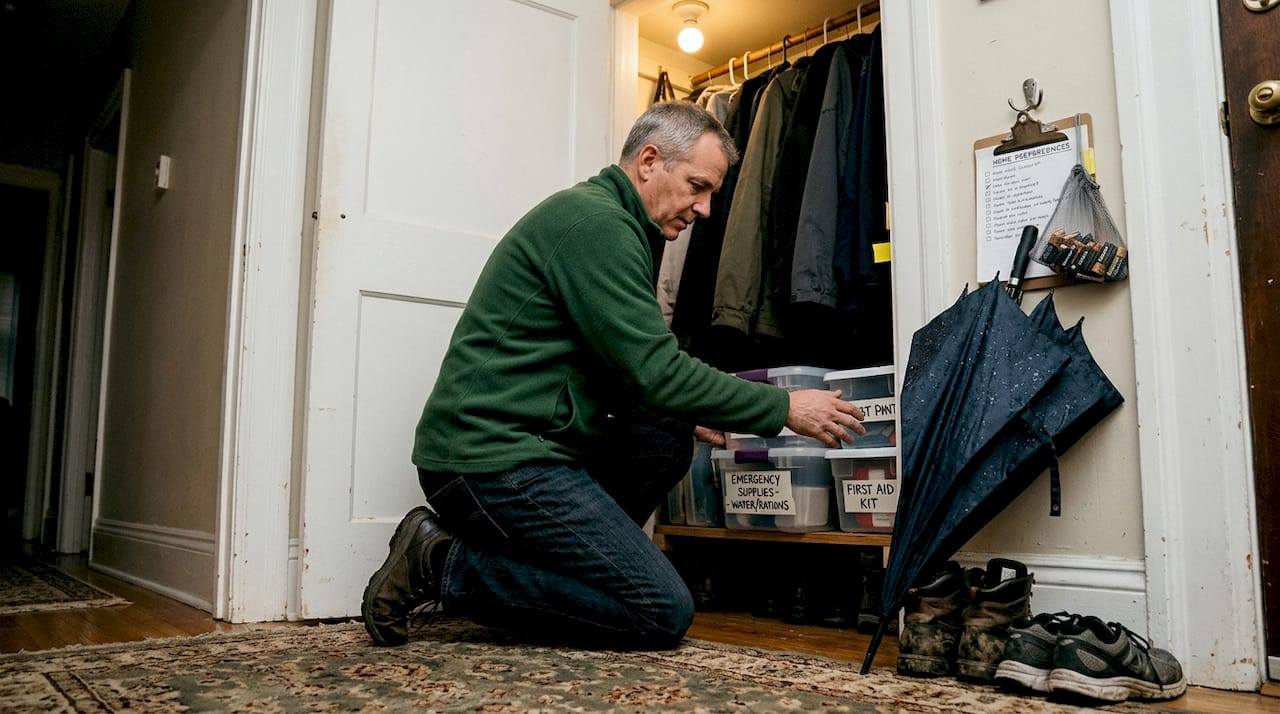
Storage location matters: Choose spots you can reach even if furniture topples or doorways jam. Near exterior exits works best. Avoid basements prone to flooding or upper floors you might not access safely. Keep kits in cool, dry spaces away from temperature extremes that degrade food and medications.
Use waterproof containers with secure lids. Plastic storage bins, sealed buckets, or waterproof duffel bags protect contents from moisture and pests. Label each container clearly with contents and last inspection date.
Maintenance routine: Follow these steps every six months:
- Check all food expiration dates and replace items within six months of expiry
- Test batteries in flashlights, radios, and other devices
- Verify medications haven’t expired and prescriptions remain current
- Confirm clothing still fits all family members, especially growing children
- Update copies of important documents
- Rotate water supplies and inspect containers for leaks
- Replace any items you’ve borrowed for other purposes
Set calendar reminders for spring and autumn to maintain this schedule consistently.
Pro Tip: Create both a comprehensive home kit and individual grab-and-go bags for each family member. Pack smaller backpacks with 72 hours of essentials in case you must evacuate quickly. Include pet supplies if you have animals.
Family-specific organisation: Label bags by person’s name and include any special needs items. Children’s bags should contain comfort items like a favourite toy or book. Elderly family members need extra medications and mobility aids. Organising your earthquake kit around your household’s unique composition ensures everyone’s needs get met.
Store duplicate supplies in your vehicle and workplace if possible. You never know where you’ll be when disaster strikes.
Special considerations for BC residents: tailoring your kit to local risks
BC’s earthquake preparedness requirements differ substantially from other Canadian regions. Understanding these distinctions helps you build truly effective protection.
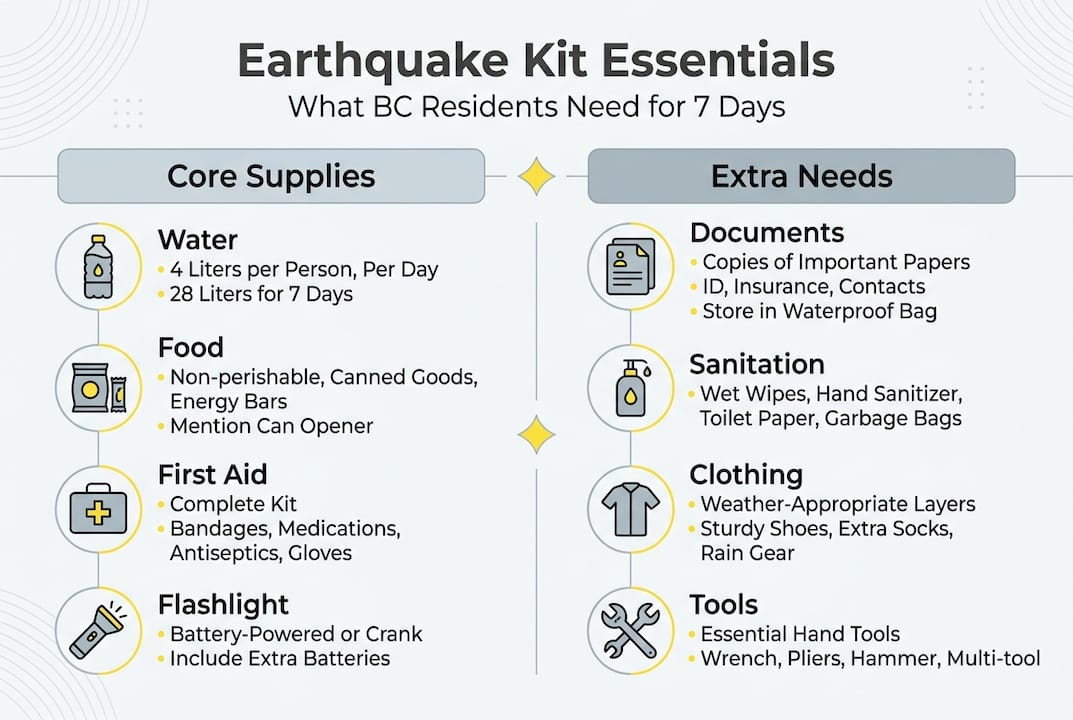
Extended duration requirements: The federal government recommends 72-hour emergency kits for most Canadians. BC regions require seven-day kits due to geographic isolation. This isn’t government overreach, it’s geographic reality.
| Standard | Duration | Rationale |
|---|---|---|
| National guideline | 72 hours | Assumes rapid emergency response and supply chain restoration |
| BC recommendation | 7 days minimum | Accounts for island isolation, damaged infrastructure, and delayed external support |
| Vancouver Island/Capital Region | 7-10 days | Extreme isolation risk if bridges and ferries become inoperable |
This extended timeline affects every aspect of your kit. Seven days of water alone requires significant storage space and planning.
Aftershock preparation: Unlike single-event disasters, earthquakes continue affecting your area for weeks. Aftershocks damage already weakened structures and create ongoing danger. Your kit must support sheltering-in-place through multiple seismic events, not just one.
Key BC-specific factors include:
- Potential bridge and highway failures isolating communities
- Ferry service disruptions cutting off island access
- Landslides blocking mountain passes
- Tsunami risks for coastal residents
- Liquefaction in delta regions destabilising buildings
- Cascadia Subduction Zone’s capacity for magnitude 9.0+ events
Expert guidance emphasises this reality:
“Vancouver Island residents must prepare for complete isolation from mainland support. When the Cascadia fault ruptures, assume no help arrives for at least one week. Your earthquake kit becomes your entire support system during this period.”
Medical device considerations: If you or family members depend on electrically powered medical equipment, plan backup power sources. Battery packs, generators, or manual alternatives prevent life-threatening gaps in care. Discuss emergency protocols with your healthcare provider and include written instructions in your kit.
Shelter-in-place supplies: Post-earthquake scenarios often require staying in your damaged but habitable home rather than evacuating. Include tarps, plastic sheeting, and duct tape for covering broken windows. Heavy gloves and sturdy boots let you clear debris safely. A small shovel helps create makeshift sanitation facilities if plumbing fails.
Review the comprehensive earthquake preparedness checklist for BC residents to ensure you’ve addressed all regional considerations.
Earthquake kits tailored for BC residents
Building a comprehensive earthquake kit from scratch takes time and research. EarthquakeKit.ca simplifies this process with ready-made solutions designed specifically for British Columbia’s unique preparedness requirements.
Our basic earthquake kits provide essential supplies for individuals and small families, whilst deluxe earthquake kits offer extended provisions meeting the seven-day BC standard. Each kit includes regionally appropriate items selected by emergency preparedness experts who understand Cascadia Subduction Zone risks.
Prefer customising your own kit? Browse our earthquake kit personal supplies to supplement existing preparations or replace expired items. We stock everything from water purification tablets to emergency blankets, helping BC families stay prepared without the guesswork. Visit EarthquakeKit.ca today to explore options that fit your household’s specific needs and budget.
What is an earthquake kit FAQ
What should I include in a basic earthquake kit?
Your basic kit needs water, food, first aid supplies, a flashlight, radio, batteries, and essential documents. Include four litres of water per person daily for seven days, along with non-perishable food requiring no cooking. Add hygiene items, a whistle, duct tape, and one change of clothing for each family member.
How often should I check and update my earthquake kit supplies?
Inspect your kit every six months to verify nothing has expired or deteriorated. Replace food within six months of expiration dates, test all batteries, update medications, and confirm clothing still fits. Spring and autumn inspections create an easy-to-remember schedule that keeps your kit functional year-round.
Why do BC residents need a seven-day kit instead of a 72-hour kit?
BC’s geography creates extended isolation risks that don’t affect other Canadian regions. Vancouver Island and coastal communities may lose bridge, ferry, and road access for a week or longer after a major earthquake. Mainland support can’t reach you during this period, making seven days of complete self-sufficiency essential for survival.
Can I prepare an earthquake kit on a budget?
Absolutely. Build your kit gradually over several months, purchasing one category of supplies per shopping trip. Dollar stores stock many basic items like flashlights, batteries, and first aid supplies at low prices. Focus on water and food first, then add other categories as budget allows. Choosing appropriate earthquake kits doesn’t require spending hundreds at once.
Where is the best place to store my earthquake kit at home?
Store kits in accessible locations near exits where you can reach them even if furniture topples. Choose cool, dry spaces away from temperature extremes. Avoid basements prone to flooding or upper floors you might not access safely after structural damage. Use waterproof containers and keep duplicate supplies in your vehicle if possible.
Recommended
Share this post
- 0 comment
- Tags: en, what is an earthquake kit