

Create an earthquake communication plan for BC families
Posted by Karl Lundgren on
When a major earthquake strikes British Columbia, your family could be scattered across the city with no way to reach each other. Cell towers fail, roads become impassable, and the familiar tools you rely on daily suddenly stop working. A well-prepared earthquake communication plan eliminates this uncertainty by establishing clear protocols for how your family will connect, confirm safety, and reunite during and after seismic events. This guide walks you through creating a practical, tested plan that works when BC’s infrastructure doesn’t.
Table of Contents
- Key takeaways
- Understanding why you need an earthquake communication plan
- Preparing your family’s earthquake communication plan
- Executing your plan during and after an earthquake
- Verifying and practising your earthquake communication plan
- Earthquake preparedness kits to support your communication plan
- Frequently asked questions
Key Takeaways
| Point | Details |
|---|---|
| Out of province contact | Designate a reliable person living outside BC to act as a communication hub and relay messages when local networks fail. |
| Two meeting places | Identify a primary nearby meeting spot and a secondary location further away, ensuring everyone can reach them without GPS or phones. |
| Master contact list | Create and print multiple copies of a master contact list and store them in wallets, earthquake kits, vehicles, and workplaces, updating twice yearly. |
| Reliable communication methods | Prioritise reliable methods such as text messages, emails, and social media, and avoid non essential calls during earthquakes. |
| Offline plan storage | Store your complete communication plan in multiple formats including printed copies and offline digital versions on every family member’s device. |
Understanding why you need an earthquake communication plan
British Columbia experiences thousands of small earthquakes yearly, but the province faces a far greater threat from a Cascadia megathrust earthquake that could cause over $128 billion in economic losses and thousands of fatalities. When that event occurs, your ability to communicate with loved ones will determine how quickly you can confirm safety and coordinate next steps.
Communication networks fail during earthquakes due to power outages and overloaded cell towers, often within hours of the initial shaking. The infrastructure you depend on daily becomes unreliable precisely when you need it most. Families struggle to confirm who is safe, where children are located, and how to reunite when roads become blocked or unsafe.
Without a clear plan, confusion takes over. Parents waste precious time trying different communication methods that don’t work. Children panic at school because they don’t know what to do. Elderly family members remain isolated without clear instructions. This chaos is preventable.
An effective earthquake communication plan solves these problems by defining key contacts before the emergency, establishing reliable communication tools that work when networks fail, and designating specific meeting spots everyone knows. Your plan transforms uncertainty into action by answering three critical questions: How will we contact each other? Where will we meet? Who needs special help?
Pro Tip: Store your complete communication plan in multiple formats, including printed copies in your earthquake preparedness kit and digital versions accessible offline on every family member’s phone.
Understanding these risks motivates families to act now rather than hoping for the best. The next sections provide step-by-step guidance to build your plan.
Preparing your family’s earthquake communication plan
Creating your earthquake communication plan requires five essential components that work together to keep your family connected during emergencies.
1. Designate an out-of-province contact
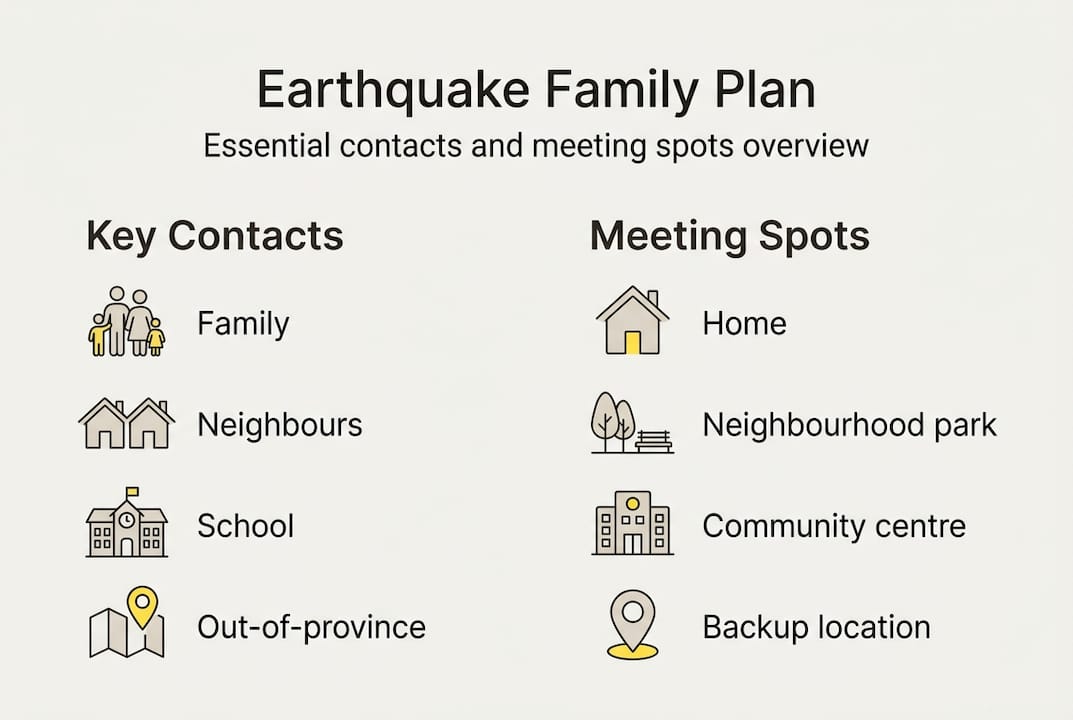
Choose one reliable person living outside BC who can serve as your family’s communication hub. Long-distance phone lines often remain functional when local networks fail, making this person critical for relaying messages between separated family members. Provide this contact with a complete list of everyone in your household, their usual locations during weekdays, and any special medical or mobility needs.
2. Select two meeting places
Identify a primary meeting spot within walking distance of your home for minor emergencies when the house remains safe. Choose a secondary location farther away, such as a community centre or park, for situations where your neighbourhood becomes unsafe due to fire, gas leaks, or structural damage. Make sure every family member can describe how to reach both locations without relying on GPS or phones.
3. Compile your master contact list
Create a comprehensive list including family mobile numbers, work numbers, school contacts, daycare providers, your out-of-province contact, close neighbours, and local emergency services. Print multiple copies and store them in wallets, earthquake kits, vehicles, and workplaces. Update this list twice yearly when you change your smoke detector batteries.
4. Prioritise reliable communication methods
Text messages, emails, and social media consume less bandwidth than voice calls and are more likely to get through when networks become congested. Teach everyone in your family to send brief status updates rather than attempting phone conversations. Include battery-powered or hand-crank radios in your supplies to receive official emergency broadcasts when electronic communications fail completely.
5. Address special needs and responsibilities
Tailor your plan for children by teaching them your out-of-province contact number and primary meeting place. Assign specific adults to handle school pickup if parents cannot reach children. Prepare grab-and-go bags for pets with food, medications, and comfort items. For family members with disabilities, develop customised C-MIST cards that outline Communication needs, Medical requirements, Independence considerations, Supervision preferences, and Transportation arrangements.
Pro Tip: Photograph important documents, medical prescriptions, and insurance policies. Store these images in cloud services accessible from any device so you can prove identity and access critical information even if your home becomes inaccessible.
6. Practice annually with family and neighbours
Schedule a specific date each year to rehearse your entire plan with everyone involved. Practice sending text updates to your out-of-province contact, walking to both meeting places, and retrieving your emergency supplies. Invite neighbours to participate so you can coordinate mutual support and identify community resources available during emergencies.
These preparation steps create a foundation that transforms panic into purposeful action when earthquakes strike.
Executing your plan during and after an earthquake
Your communication plan only works if you follow specific protocols during and immediately after seismic events. These actions keep you safe while maintaining contact with loved ones.
When shaking begins, immediately Drop to your hands and knees, take Cover under a sturdy desk or table, and Hold On until the movement stops. Protecting yourself from falling objects and structural collapse is your first priority. Do not attempt to call or text anyone during active shaking.
Once the shaking stops, avoid non-essential phone and internet use to prevent network overload. Emergency services and people in life-threatening situations need those communication channels. Send one brief text to your out-of-province contact with your status and location, then wait for responses rather than repeatedly calling family members.
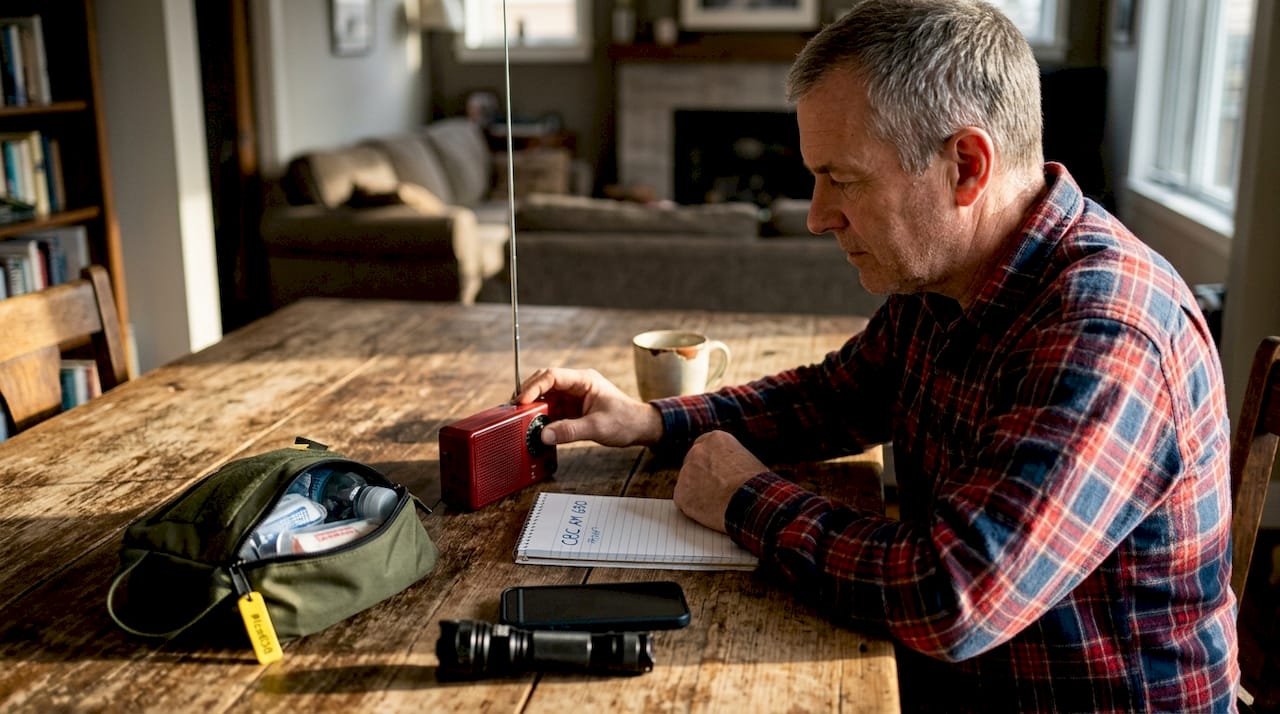
Turn on your battery-powered radio immediately. Official emergency broadcasts on CBC AM 690 provide critical updates about aftershocks, tsunami warnings, evacuation orders, and which roads remain passable. This information helps you decide whether to shelter in place or move to your secondary meeting location.
Before re-entering your home, check for visible structural damage, gas leaks, and electrical hazards. If you smell gas or see sparking wires, move to your primary meeting place and wait for emergency services. Do not use matches, lighters, or electrical switches until you confirm your home is safe.
Pro Tip: Keep a basic earthquake kit near your main exit with a flashlight, sturdy shoes, and work gloves so you can safely navigate debris immediately after shaking stops.
Prepare for aftershocks by reviewing your check-in procedures with family members as they arrive at meeting places. Aftershocks can occur minutes, hours, or days after the initial earthquake and may cause additional damage to already weakened structures. Each time significant shaking occurs, repeat your Drop-Cover-Hold On response and reassess your safety.
Have your grab-and-go bags ready for quick evacuation, especially if you live in tsunami risk zones along the coast. Personal earthquake supplies should include water, food, medications, important documents, and communication tools that function without power or cellular networks.
These execution steps bridge the gap between your prepared plan and real-world emergency response, ensuring your family can act decisively when infrastructure fails.
Verifying and practising your earthquake communication plan
Regular testing transforms your written plan into instinctive action your family can execute under stress. Without practice, even the best-designed plans fail when people forget details or discover gaps during actual emergencies.
Establish an annual drill date that everyone remembers, such as the first weekend after daylight saving time changes. During this drill, simulate realistic conditions by having family members start from their typical weekday locations: work, school, home, or other regular activities. Practice sending text updates to your out-of-province contact, walking to both meeting places, and retrieving emergency supplies from their storage locations.
Annual practice with family and neighbours improves coordination and addresses emotional challenges that arise during real emergencies. Children who rehearse the plan feel less frightened because they know exactly what to do. Adults identify practical problems, such as meeting places that become inaccessible during winter or contact numbers that have changed.
Use this comparison table to evaluate which communication methods work best for your family during practice drills:
| Method | Reliability during quakes | Power requirements | Best use case |
|---|---|---|---|
| Voice calls | Low (networks overload) | Phone battery | Life-threatening emergencies only |
| Text messages | High (low bandwidth) | Phone battery | Status updates and location sharing |
| Medium (requires data) | Phone/computer battery | Detailed information when networks recover | |
| Social media | Medium (requires data) | Phone battery | Public status updates for extended family |
| Battery radio | Very high | Batteries or hand crank | Receiving official emergency broadcasts |
| In-person meetup | Guaranteed | None | Primary communication when tech fails |
Update your contact lists, meeting places, and special needs information every six months. Children change schools, family members switch jobs, neighbours move away, and medical conditions evolve. Your plan must reflect current reality to remain effective.
Pro Tip: Develop customised C-MIST cards for each family member with disabilities or special needs. These wallet-sized cards outline critical Communication preferences, Medical requirements, Independence considerations, Supervision needs, and Transportation arrangements so anyone helping during emergencies understands exactly what support to provide.
Coordinate with neighbours to create a community network of mutual support. Exercises reveal that communication breakdowns remain a top challenge during major earthquakes, but neighbourhood coordination significantly reduces these issues. Share your out-of-province contact information with trusted neighbours who can help relay messages if your family becomes separated.
Consider investing in group earthquake kits that provide supplies for multiple families, enabling neighbours to support each other when professional emergency services become overwhelmed. These larger kits complement individual family plans by creating community resilience.
Regular verification and practice build the confidence and muscle memory your family needs to execute your communication plan successfully when BC’s next major earthquake strikes.
Earthquake preparedness kits to support your communication plan
Even the most carefully designed communication plan requires physical supplies to execute successfully during real earthquakes. EarthquakeKit.ca provides comprehensive solutions that complement your family’s safety and communication efforts.
Our basic earthquake kits include essential communication tools like battery-powered radios, emergency contact cards, and waterproof document storage alongside critical supplies for shelter and first aid. For larger families, deluxe earthquake kits expand these provisions with additional food, water, and medical supplies that support extended periods without external assistance.
Neighbourhood groups benefit from group earthquake kits designed to serve multiple families simultaneously, creating community resilience that strengthens everyone’s preparedness. Combining professionally assembled kits with your tested communication plan ensures your family can respond effectively when BC’s infrastructure fails during major seismic events.
Frequently asked questions
How do I designate an out-of-province contact and why is it important?
Choose a reliable person living outside British Columbia who can serve as a communication hub between family members when local networks fail. This contact should have a complete list of your household members, their typical locations, and any special needs. Long-distance phone lines often remain functional when local systems become overloaded, making this person critical for relaying messages and coordinating family reunification.
What are the best communication methods to use during and after an earthquake?
Text messages, emails, and social media posts are more reliable than voice calls because they consume less bandwidth and can queue for delivery when networks become congested. Battery-powered or hand-crank radios provide critical official information when electronic communications fail completely. Avoid making phone calls unless you face life-threatening emergencies that require immediate professional help.
How often should we practise our earthquake communication plan?
Rehearse your complete plan at least once annually with everyone involved, including neighbours who form part of your mutual support network. Regular drills help identify gaps such as outdated contact information or inaccessible meeting places while reducing emotional stress during real emergencies. Schedule practice sessions on memorable dates like daylight saving weekends so everyone remembers to participate.
How do we include children, pets, and people with disabilities in our plan?
Assign specific adults to handle school pickup and teach children your out-of-province contact number plus primary meeting location. Prepare grab-and-go bags for pets containing food, medications, and comfort items. Use C-MIST cards to document Communication needs, Medical requirements, Independence considerations, Supervision preferences, and Transportation arrangements for family members with disabilities, ensuring anyone providing assistance understands exactly what support to offer.